I remember the chaos of my early parenting days. It seemed impossible to find time for a healthy dinner. That changed when I found a hamburger casserole. It turned simple ingredients into a meal my family loved.
This dish has over 800 positive reviews. It’s loved for its comfort and simplicity. I truly believe that the secret lies in the seasoning. Before starting, check out what spices go well with ground beef. Follow these steps to make a delicious ground beef recipe for your family.
Key Takeaways
- Discover why this classic meal remains a top choice for hectic schedules.
- Learn the essential techniques for browning meat to maximize deep, savory flavors.
- Understand how to layer seasonings to create a complex and satisfying taste.
- Find out why this specific dish has garnered hundreds of positive reviews.
- Master the art of turning basic ingredients into a comforting family favorite.
Selecting the Best Ingredients for Your Casserole
Creating a tasty meal starts with picking the right ingredients. When making ahamburger casserole, I look for fresh, quality items. This turns simpleeasy dinner ideasinto a special meal for your family.
Choosing the Right Ground Beef Ratio
The key to a great meat dish is the protein. I choose lean ground beef to avoid greasiness.
* Go for an 85/15 or 90/10 lean-to-fat ratio.
* This mix keeps the dish moist without too much oil.
* Good meat is key forbudget-friendly beef mealsthat taste great.
Selecting Complementary Vegetables and Aromatics
Fresh aromatics make a recipe shine. Start with diced onions and bell peppers for a savory base.
These veggies add sweetness and depth. For more ideas, try abeef potato casserole. Adding fresh ingredients makes your dish healthier and more vibrant.
The Role of Quality Dairy and Cheese
Dairy holds everything together in a meal. Use sharp cheddar or a Mexican cheese blend for richness and melt.
Thesefamily-friendly recipesneed creamy cheese to balance the beef. Premium dairy ensures a smooth, enjoyable texture. Follow these tips for delicious meals every time.
Essential Kitchen Tools for Casserole Success
My cooking became easier with a few key tools. The right equipment saves time in the kitchen, making one-pot casseroles a breeze. You’ll spend less time prepping and more time enjoying your meals.
Choosing the Right Baking Dish Material
I use a 9×13 baking dish for even heat. This ensures the edges cook as well as the center. Glass dishes keep heat in, while ceramic ones look great for serving.
| Material | Heat Retention | Best Use |
|---|---|---|
| Glass | High | Even browning |
| Ceramic | Moderate | Slow, steady cooking |
| Metal | Very High | Crispy edges |
Preparation Tools for Efficient Cooking
Efficiency is key in cooking. A meat chopper helps me chop beef quickly, which is important for texture. Sharp knives and prep bowls help organize ingredients.
A good silicone spatula ensures no sauce is left behind. These tools make cooking a one-pot casserole easy. A tidy workspace means your hamburger casserole will always be perfect.
Preparing the Ground Beef Base
The secret to tasty, family-friendly recipes often begins in the skillet. When I start cooking ground beef, I aim to create layers of flavor. This ensures every bite of my casserole is full of taste.
Proper Browning Techniques for Maximum Flavor
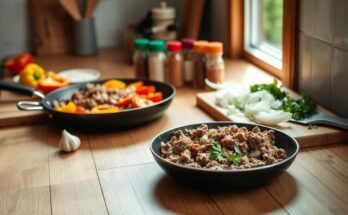
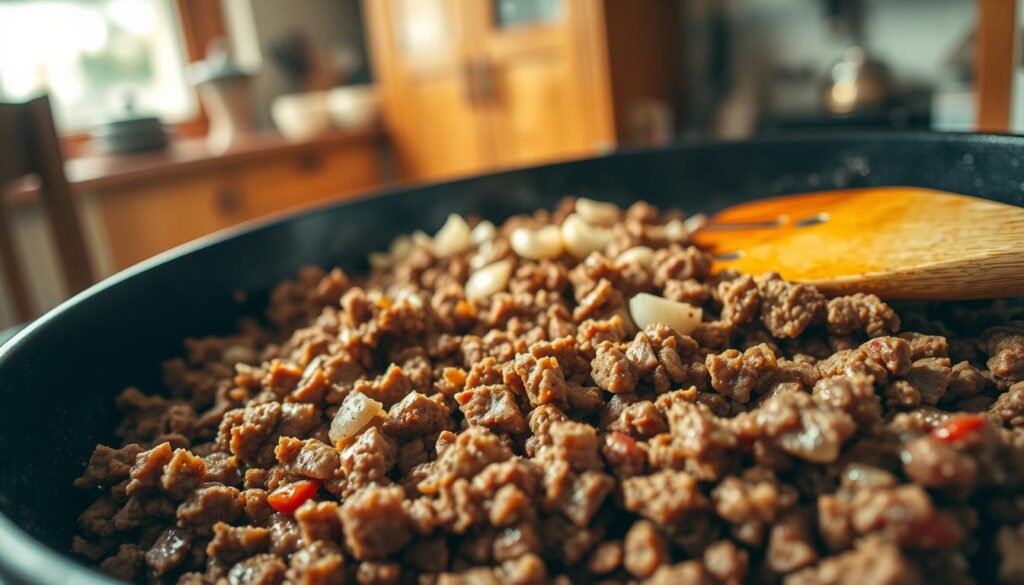
I heat my pan over medium-high heat first. Then, I add the meat, onions, and peppers. They sauté until the veggies are soft and the beef is browned well. This makes a rich, caramelized crust on the meat, adding depth to my ground beef recipes.
Draining Excess Fat Without Losing Moisture
It’s key to remove grease but keep the flavor. I tilt the pan and use a spoon to take out excess fat, leaving a bit behind. This keeps the meat moist during baking.
Seasoning the Meat for Depth
I season my meat early to make sure flavors reach every part. I use a mix of granulated garlic and steak seasoning for a strong taste. These budget-friendly beef meals use common spices to taste like they cost more.
| Technique | Benefit | Best Practice |
|---|---|---|
| High-Heat Browning | Flavor Development | Do not crowd the pan |
| Partial Draining | Moisture Retention | Leave a thin layer of fat |
| Early Seasoning | Flavor Depth | Use dry spices first |
Creating the Perfect Binding Sauce
When I cook a hearty meal, I focus on the sauce. It’s like glue that holds the dish together. A good sauce makes every bite moist and flavorful, not dry or bland. It’s the key to many easy dinner ideas that my family loves.
Homemade Cream-Based Sauces vs. Canned Soups
Many cooks use canned cream soups for ease. But I like making my own sauce. Homemade sauces let me choose the ingredients and avoid preservatives. Fresh herbs and real cream add a flavor that canned soups can’t match.
Yet, canned soups are great when you’re short on time. Opt for low-sodium versions to control the seasoning. Finding a balance between convenience and quality is key in the kitchen.
Balancing Acidity and Saltiness
When making a cheesy beef pasta, I balance cheese’s saltiness with tomatoes’ acidity. I mix tomato paste with marinara for a rich flavor. This combo cuts through the cheese’s richness.
Always taste your sauce before adding salt. Cheeses and canned goods are often salty. A squeeze of lemon or vinegar can brighten the sauce if it’s too one-dimensional.
Thickening Agents for the Ideal Consistency
Getting the sauce’s thickness right is key for a great casserole. You want it to coat the ingredients well without being too watery. This skill is great for budget-friendly beef meals that use pantry staples.
I use a roux of butter and flour to thicken cream-based sauces. For tomato-based sauces, a cornstarch slurry works well. Always mix the thickener slowly to avoid lumps and ensure a smooth sauce.
The Best Casserole to Make with Ground Beef: Step-by-Step Assembly
When making a ground beef casserole, layer order is key for texture. A systematic approach ensures every bite is flavorful. This method is the most reliable casserole to make with ground beef for family dinners.
Layering Ingredients for Even Cooking
I start with a thin sauce layer at the bottom of the dish. This prevents sticking and ensures even cooking. Then, I spread the seasoned meat, followed by starches and vegetables.
It’s important not to pack the ingredients too tightly. This allows the sauce to bubble up and coat everything evenly. Proper spacing is the secret to a perfectly cooked dish.
Managing Moisture Levels During Assembly
One challenge is avoiding a watery dish. I make sure my sauce is thick enough to coat the back of a spoon. If it’s too thin, the starches will become mushy.
“The balance of moisture is the difference between a soggy mess and a restaurant-quality meal. Always err on the side of a thicker sauce to maintain structural integrity.”
Incorporating Starches Like Pasta or Potatoes
For a cheesy beef pasta, I cook the noodles until they’re just al dente. They will soften in the oven, so they should have a slight bite. This prevents the pasta from becoming too soft.
If using potatoes, slice them thinly or parboil them first. This ensures they’re tender by the time the cheese is golden brown. These tips are key for making meal prep casseroles for the week.
- Cook pasta al dente: It holds its shape better during baking.
- Pre-cook dense vegetables: Potatoes and carrots need a head start to soften.
- Sauce consistency: A thicker sauce prevents the dish from becoming watery.
Mastering the Topping and Crust
I think the secret to amazing comfort food meals is the golden, bubbly topping. It turns a simple dinner into a feast for the senses. The topping adds a satisfying crunch to the rich, homemade casserole sauce below.
Achieving the Perfect Golden Brown Cheese Layer
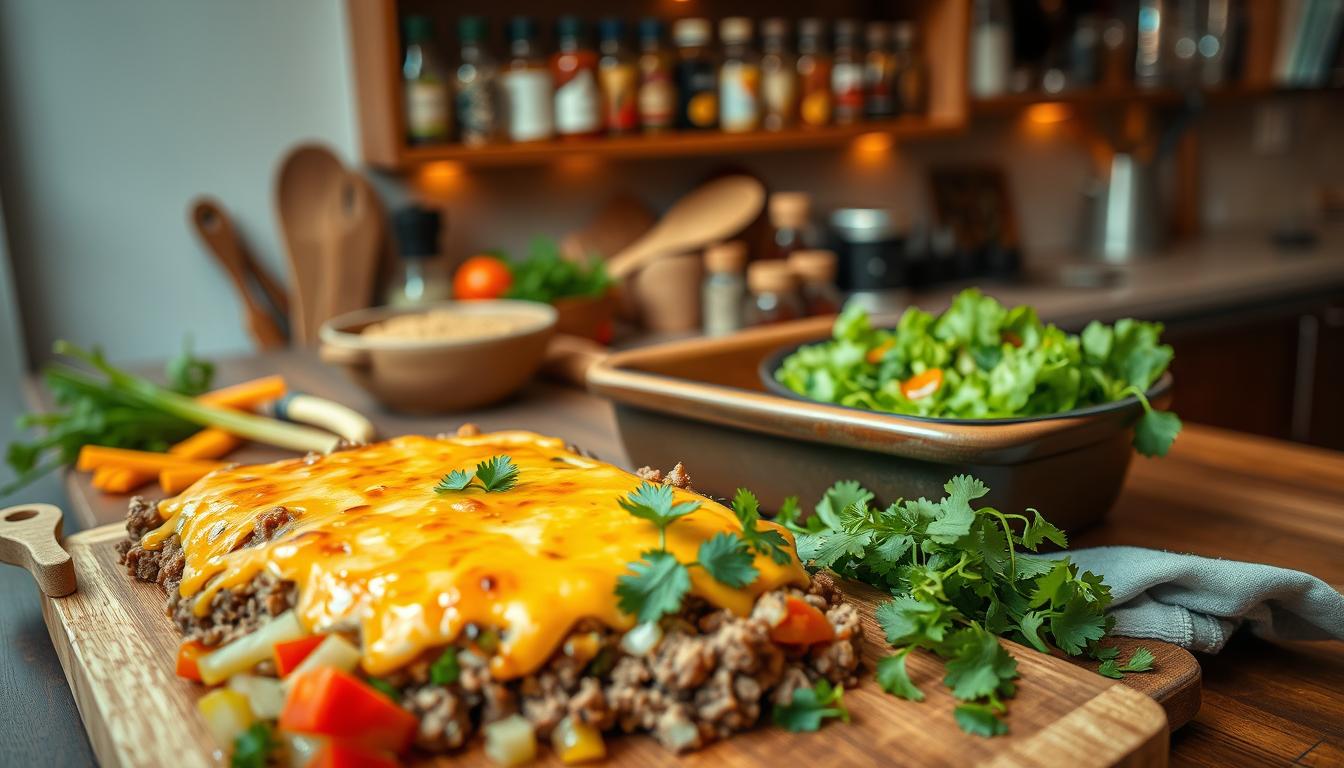
To get that perfect look, I mix sharp cheddar and Monterey Jack cheeses. The cheddar adds a bold flavor, while the jack cheese melts beautifully. A quick broil for two or three minutes creates a stunning, bubbly crust.
Using Breadcrumbs and Crispy Toppings
Breadcrumbs add a nice crunch to your dish. I mix panko breadcrumbs with melted butter and herbs before sprinkling them on. This step makes the dish feel more substantial and adds a delightful crunch.
Balancing Texture and Crunch
The goal is to mix soft, creamy inside with a crisp, flavorful outside. I aim for a topping that’s interesting but doesn’t overpower the dish. This balance makes the meal a hit with everyone.
| Topping Type | Texture Profile | Best Use Case |
|---|---|---|
| Sharp Cheddar | Rich and Gooey | Classic Beef Casseroles |
| Panko Breadcrumbs | Light and Crispy | Creamy Pasta Bakes |
| Parmesan Crust | Salty and Crunchy | Vegetable-Heavy Dishes |
Baking Techniques for Even Heat Distribution
Getting the heat right in your oven is key to making tasty comfort food meals. When I cook a hearty dish, I pay close attention to how the heat spreads around my baking dish. This ensures every layer cooks evenly.
Understanding Oven Rack Placement
I always put my rack in the middle to get even heat for my one-pot casserole. This spot lets hot air move freely above and below the dish. It stops the bottom from burning before the top is ready.
If your oven gets hotter at the bottom, try moving the rack up a notch. But for most recipes, the middle shelf is best for a uniform bake.
Covered vs. Uncovered Baking Times
I usually bake my dishes without a cover to get a nice delightful crust on top. If the top gets too dark, I cover it with foil to protect it while the center cooks.
For dishes that need more moisture, like pasta or potatoes, cover them for the first half of baking. This keeps the steam in, making sure they cook right without drying out.
Testing for Doneness and Internal Temperature
An oven thermometer has changed the game for me. It checks if my oven is at the right temperature for a perfect meal. When cooking ground beef, I use a digital probe thermometer to check the dish’s center.
I aim for an internal temperature of at least 165°F for safety and quality. These casserole baking tips help me avoid the problem of a meal that’s hot on the edges but cold in the middle.
| Casserole Type | Recommended Temp | Covering Strategy | Target Internal Temp |
|---|---|---|---|
| Pasta-Based | 375°F | Cover first 20 mins | 165°F |
| Potato-Topped | 400°F | Uncovered | 170°F |
| Vegetable Heavy | 350°F | Covered throughout | 160°F |
Common Mistakes to Avoid When Making Casseroles
Even with the best recipe, small mistakes can ruin your dinner. Learning these casserole baking tips can make all the difference. They help you cook consistently well.
Preventing Soggy Bottoms
A soggy base is a common problem. It happens when too much liquid from veggies or meat stays at the bottom. Always thoroughly drain your meat after browning to avoid this.
For veggies like zucchini or spinach, sauté them before adding to the casserole. This step removes extra water. Your cheesy beef pasta will stay firm and not soggy.
Avoiding Overcooked Meat and Vegetables
It’s easy to forget about your dish in the oven. But, overcooking can make ingredients mushy. Check your oven often as the timer approaches.
When cooking ground beef, brown it just until it’s not pink anymore. This way, it won’t dry out or get tough during baking.
Managing Salt Content in Pre-Packaged Ingredients
Many convenience items, like canned soups or sauces, are high in sodium. It’s important to taste your sauce before adding more salt. This prevents your dish from becoming too salty.
Choose low-sodium options to control the flavor better. Always taste as you go. This keeps your dish balanced and lets the natural flavors shine.
Creative Variations and Flavor Profiles
I love how a simple casserole can turn into a new meal with just a few ingredients. These ground beef recipes are super versatile. They let me try new things whenever I want to mix things up. Whether it’s a quick weeknight dinner or a meal planned ahead, these changes keep my cooking exciting.
Adapting for Tex-Mex Style Casseroles
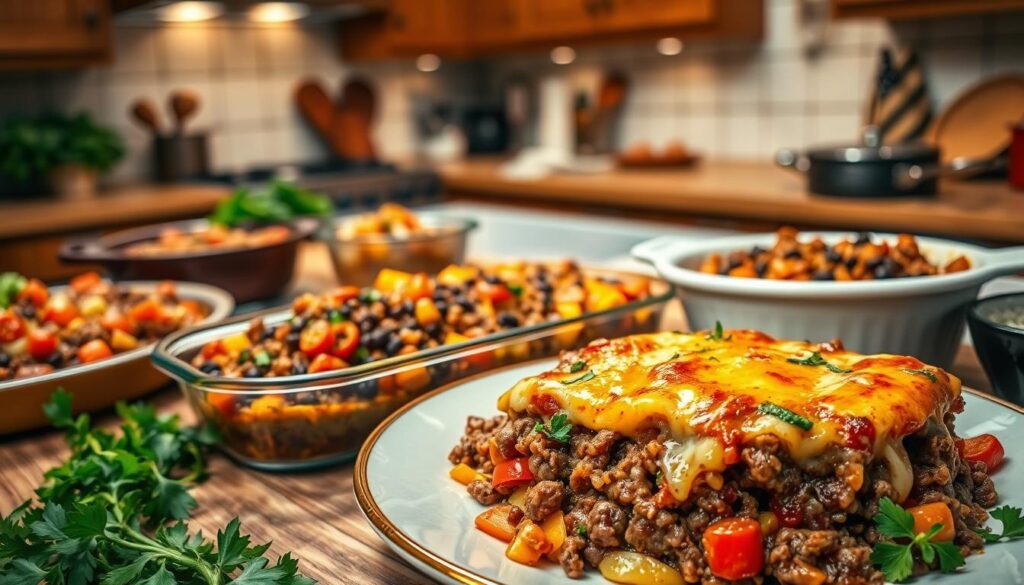
When I want something bold, I make my dish into a Tex-Mex feast. I add diced green chiles, cumin, and chili powder to the meat. These family-friendly recipes get even better with crushed tortilla chips and fresh salsa on top.
Incorporating Mediterranean Flavors
For a lighter dish, I use Mediterranean ingredients. I swap out regular seasonings for dried oregano, kalamata olives, and sun-dried tomatoes. If you like trying new things, check out easy chicken thigh recipes for beginners to broaden your cooking skills.
Making Casseroles Healthier with Whole Grains
I often try to make my meal prep casseroles healthier. I use quinoa or brown rice instead of white pasta for more fiber and a nutty taste. Sometimes, I use ground turkey or bison to keep the dish lean but full of flavor.
| Flavor Profile | Key Ingredients | Best Protein |
|---|---|---|
| Tex-Mex | Green chiles, cumin, salsa | Ground Beef |
| Mediterranean | Olives, feta, oregano | Ground Turkey |
| Whole Grain | Quinoa, brown rice, kale | Ground Bison |
Storing, Reheating, and Freezing Your Casserole
Managing leftovers well means your kitchen efforts last all week. Looking for easy dinner ideas or reducing waste? Proper storage keeps flavors intact. A few minutes of extra effort in packing can greatly improve taste.
Best Practices for Storing Leftovers
After enjoying a one-pot casserole, let it cool down first. Putting hot food in the fridge can raise its temperature. I use airtight glass containers to keep food fresh and odor-free.
Portion leftovers into individual containers for quick lunches. This is great for busy days. These meals stay fresh for up to four days in the fridge.
Reheating Without Drying Out the Dish
Reheating can make food dry if not done right. To keep it moist, add a bit of water or broth. This helps restore the dish’s original texture.
Reheat slowly over low heat in a skillet, not the microwave. If using a microwave, cover with a damp paper towel. This keeps your meal moist and flavorful.
Freezing Tips for Make-Ahead Meals
Freezer-friendly meals are perfect for busy weeks. Wrap your casserole in plastic wrap and foil to avoid freezer burn. Labelled meals stay good for up to three months.
Thaw in the fridge overnight for the best results. Then, bake until hot. Enjoy a homemade meal without the hassle of starting from scratch.
| Storage Method | Recommended Time | Best Practice |
|---|---|---|
| Refrigerator | 3-4 Days | Use airtight containers |
| Freezer | Up to 3 Months | Wrap tightly to prevent burn |
| Reheating | 10-15 Minutes | Add splash of water/broth |
Conclusion
Learning to make a reliable casserole with ground beef changes your meal routine. It lets you turn basic ingredients into a satisfying dinner. This brings everyone together at the table.
Try adding your own twist to the casserole sauce. Whether you like bold spices or creamy textures, there’s room for creativity. You might want to try a cheesy ground beef and rice casserole to see how it all comes together.
Having a stash of freezer meals makes busy nights easier. A pre-made dish saves time and ensures your family eats well. I hope these tips make you more confident in the kitchen as you perfect your recipes.
FAQ
What is the best ratio of ground beef to use for this casserole?
I always choose lean ground beef, like a 90/10 or 93/7 blend. This keeps my dish tasty without being too greasy. I use a Farberware meat chopper to make the beef pieces even while browning it.
How can I prevent my pasta from becoming mushy after baking?
Use regular pasta, like Barilla penne or rotini, and cook it al dente. This way, the pasta stays firm even after baking. Avoid quick-cooking pasta to prevent it from getting soggy.
What equipment do I need for even heat distribution?
A sturdy 9×13 baking dish is key. I prefer Pyrex glass or Le Creuset stoneware for even heat. An oven thermometer helps ensure the right temperature.
How do I achieve a perfectly golden-brown cheese layer?
Sharp cheddar and Mexican cheese blend work best for melting. For a crispy top, broil the dish for two to three minutes. This adds a nice contrast to the creamy inside.
What is the best way to season the meat for maximum depth?
Start by sautéing the beef with onions and bell peppers. Add McCormick granulated garlic and steak seasoning early. Seasoning the meat directly makes every bite flavorful. Drain excess fat to keep the meat moist.
Can I prepare this casserole ahead of time and freeze it?
Yes, it’s great for make-ahead meals. Cool it completely, then wrap it in foil to freeze. It keeps for up to three months. Reheat in a skillet with a bit of water for better moisture.
How do I balance the acidity and saltiness of the sauce?
Use homemade sauce with tomato paste and marinara. This lets you control the thickness. The Mexican cheese blend helps balance the acidity. Taste before adding salt, as packaged ingredients can be salty.
Are there any healthy variations I can try?
Try using ground turkey or bison for less fat. Add green chiles and black beans for a Tex-Mex twist. Use whole grains or sliced potatoes for a heartier dish.