We’ve all felt that dreaded afternoon slump. You eat lunch, but then your energy drops just when you need it most. It’s really frustrating when your body doesn’t support your goals.
Choosing good things to eat for lunch is more than just filling your belly. It’s about giving your body the fuel it needs to stay focused and productive. The right foods can change your whole afternoon.
In this guide, I’ll give you tips on making meals that help you reach your health goals. We’ll look at easy ways to stay energized, even when your schedule is tight. Let’s avoid the traps that make us tired and choose foods that keep us productive and satisfied.
Key Takeaways
- Prioritize whole foods to sustain energy levels throughout the day.
- Plan your meals in advance to avoid impulsive, unhealthy decisions.
- Balance macronutrients to prevent the dreaded post-meal crash.
- Focus on quality ingredients that support long-term health goals.
- Keep preparation simple to ensure consistency during a busy work week.
Defining the Criteria for a Balanced Midday Meal
I believe that the secret to a productive afternoon lies in what you eat for lunch. A healthy midday meal should fuel you for the rest of the day without making you feel tired. I follow the Healthy Eating Plate, filling half my plate with colorful veggies and fruits for the best nutrients.
Understanding Nutritional Density
Nutritional density means how many good stuff like vitamins and minerals a food has compared to its calories. Eating high-quality foods keeps me full longer because my body gets what it needs. Foods rich in nutrients, not empty calories, are key to a healthy diet.
“Let food be thy medicine and medicine be thy food.”
The Role of Fiber and Protein in Sustained Energy
To stay focused, my lunch must have fiber and protein. Fiber helps digestion, preventing blood sugar spikes that cause tiredness. Protein is essential for muscle repair and keeping my mind sharp all day.
The table below shows how different foods affect your energy in the afternoon:
| Food Category | Impact on Energy | Satiety Level |
|---|---|---|
| Refined Carbs | Rapid Spike & Crash | Low |
| Fiber & Protein | Steady Release | High |
| Sugary Snacks | Immediate Drop | Very Low |
Avoiding the Afternoon Slump
We’ve all hit that afternoon energy slump after a bad lunch. Eating balanced meals helps me stay hungry and focused until the day ends. Staying away from sugary and fatty foods keeps my energy up.
Creating a healthy routine is key to long-term health. Quality food means no need for caffeine to get through the day. Making these changes now will greatly improve your health in the long run.
How to Choose Good Things to Eat for Lunch Every Day
I think it’s easy to pick good things to eat for lunch every day. Focus on a whole foods diet for better health and energy. This keeps you going strong in the afternoon.
Assessing Your Daily Caloric Needs
First, figure out how many calories you need. Your lunch should fuel your brain without making you crash or gain weight.
Think about how active you are and what you want to achieve. Use portion control to make sure your lunch is filling until dinner.
Prioritizing Whole Foods Over Processed Alternatives
The quality of what you eat really matters. Whole grains like quinoa and brown rice are better for you than white bread.
Building meals with these grains helps you stay focused. For ideas, try using leftover rotisserie chicken with healthy grains for protein.
- Choose fiber-rich vegetables to add volume.
- Swap refined snacks for fresh fruit or nuts.
- Focus on unprocessed proteins to keep your whole foods diet on track.
Creating a Personal Flavor Profile
Eating healthy shouldn’t be boring. Try new herbs, spices, and dressings to find flavors you love.
When you enjoy your meals, you’re more likely to eat well. The best good things to eat for lunch are the ones you love.
Mastering the Art of Efficient Meal Prepping
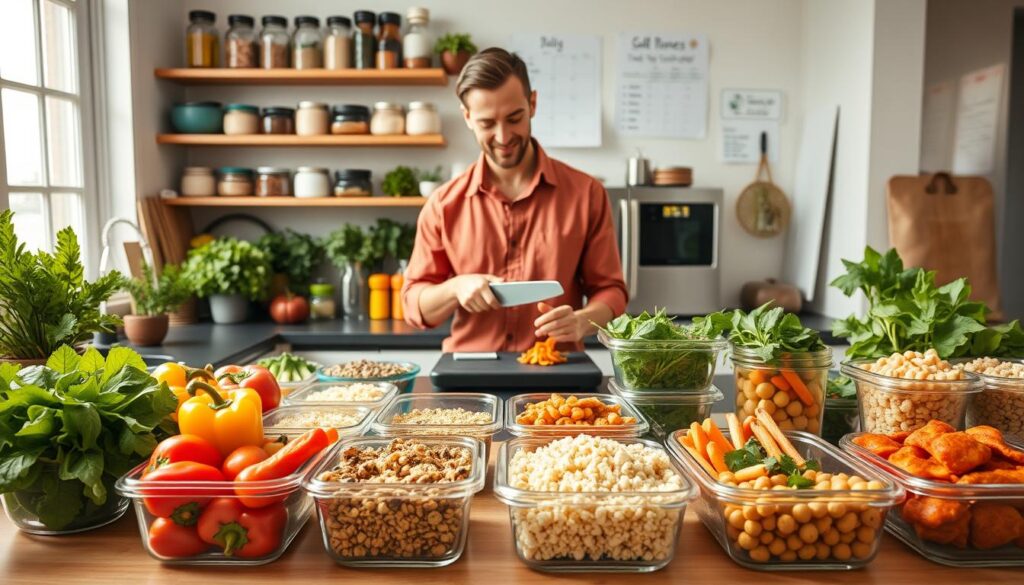
When my schedule gets hectic, I use meal prep strategies to have a healthy lunch ready. I spend a bit of my weekend preparing meals. This way, I avoid the stress of deciding what to eat at the last minute.
Batch Cooking Staples for the Week
I start by cooking versatile ingredients for many balanced lunch ideas. I make a big batch of quinoa or brown rice and roast veggies. I also cook lean proteins like grilled chicken or baked tofu.
- Grains: Quinoa, farro, or brown rice.
- Proteins: Grilled chicken, chickpeas, or hard-boiled eggs.
- Vegetables: Roasted broccoli, bell peppers, or sweet potatoes.
Proper Storage Techniques for Freshness
To keep my food fresh for days, I use high-quality, airtight glass containers. I store dressings and sauces separately to prevent soggy greens. For more tips, check out these meal prep tips.
Assembling Components for Quick Assembly
The last step is to organize my kitchen for quick morning assembly. I keep pre-cooked items in clear containers in the fridge. This makes it easy to grab what I need for a quick, nutritious meal.
Mastering these meal prep strategies has made my kitchen efficient. I no longer rely on processed foods. Instead, I have a variety of balanced lunch ideas ready to go. This simple habit has greatly improved my work week.
Building a Lunch Around Macronutrient Balance
Creating a lunch with the right nutrients changes how I feel all day. Getting the right macronutrient balance is key for staying focused and active. By picking the right foods, I make sure my body gets what it needs to perform well.
Selecting High-Quality Protein Sources
Protein is the base of a good meal. I choose lean meats like grilled chicken, wild-caught salmon, or legumes. These give me the fiber and protein I need to stay full and energized.
Consistency is key when picking protein. Whether it’s tofu, turkey, or chickpeas, make sure you get enough. This helps avoid the mid-afternoon hunger that leads to bad snacking.
Incorporating Complex Carbohydrates
Complex carbs give me the glucose I need for brain power. I choose whole grains like quinoa, brown rice, or farro. These are full of fiber and protein, which helps keep my energy steady.
Adding colorful veggies boosts my lunch’s nutrition. Leafy greens and roasted root veggies give me important vitamins. This mix keeps my macronutrient balance right for staying productive.
Adding Healthy Fats for Brain Function
Healthy fats are vital for my brain and vitamin absorption. I use oils like olive, canola, or sunflower in small amounts. A little oil on a salad or some avocado can really help my brain.
These fats are a vital support system for my health. By adding them to my meals, I make sure my lunch is both nutritious and satisfying. Planning my meals helps me stay sharp, even when I’m busy.
Incorporating Seasonal and Fresh Ingredients
The secret to a lively midday meal is the harvest’s rhythm. Using seasonal lunch ingredients boosts your diet’s variety. Studies show eating five different fruits and veggies daily lowers heart disease and stroke risks.
Shopping at Local Farmers Markets
Visiting local farmers markets is a great idea. They offer produce picked at its peak, full of significantly higher vitamin levels than shipped items. Buying local supports your community and keeps your food fresh.
Utilizing Seasonal Produce for Better Flavor
Cooking with seasonal produce turns a simple lunch into a culinary journey. Produce tastes better when picked at the right time. For fresh ideas, check out healthy summer recipes that celebrate natural flavors.
Rotating Ingredients to Prevent Menu Fatigue
Keeping a healthy diet exciting can be tough. I solve this by changing my seasonal lunch ingredients all year. This keeps my meals interesting and ensures I get a wide range of vitamins and minerals. Variety is the key to making lunch a joy, not a chore.
Strategies for Eating Lunch on the Go
Keeping a healthy diet is easy, even when my day is full. Away from home, I use certain methods to stay healthy. Finding good portable lunch options is key for me during busy weeks.
Selecting Healthy Options at Fast-Casual Restaurants
At fast-casual places, I look for fresh ingredients. I choose bowls with lean proteins and lots of greens. Customization is my best friend here, as I can ask for dressings on the side.
I avoid fried sides and sugary drinks. Instead, I drink sparkling water or unsweetened tea. This way, I get a meal that keeps me going all day.
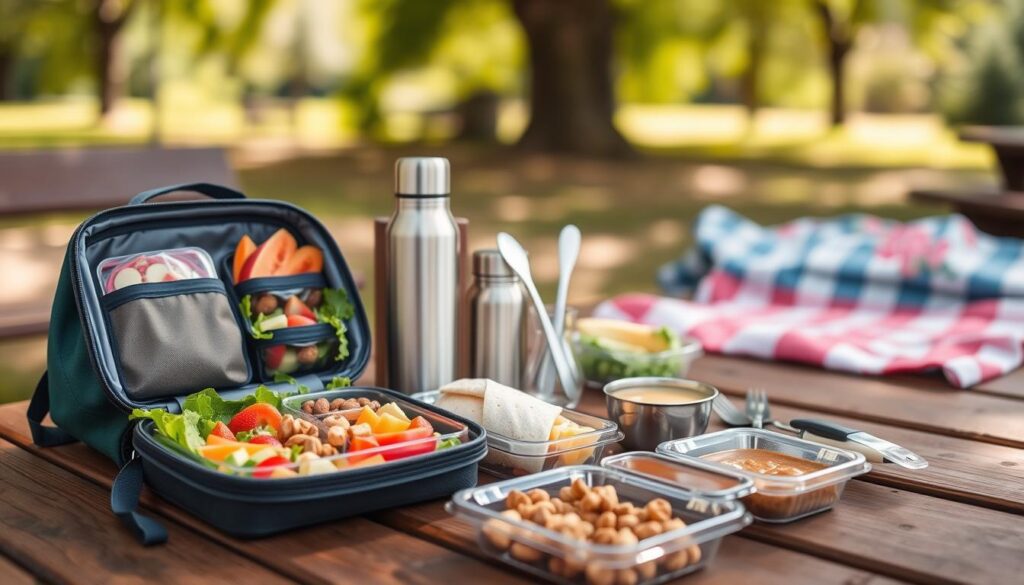
Packing Portable Lunches That Do Not Require Reheating
When I bring my lunch, I choose portable lunch options that don’t need to be heated. I make big salads with chickpeas or quinoa. These stay good without a microwave.
I’m careful with what I pack. I rinse canned fish to lower salt. I prefer fresh foods like hard-boiled eggs or grilled chicken.
Smart Snacking to Supplement Smaller Lunches
For small lunches, I snack smart. I carry raw nuts, seeds, or fresh fruit for an easy energy boost. These are great portable lunch options that don’t need prep.
These snacks help me avoid junk food. They keep my energy up all afternoon. Consistency is key to feeling good, no matter how busy I am.
Managing Portion Control and Satiety
Achieving a healthy midday meal is often less about what you eat and more about how much you consume. I have learned that maintaining a consistent energy level requires balancing nutrient intake with my actual physical needs. By focusing on portion control tips, I can avoid the sluggish feeling that often follows a heavy lunch.
Using Visual Cues for Portion Sizes
I often use simple visual references to ensure my plate remains balanced without needing a food scale. For instance, the red figure on the Healthy Eating Plate serves as a visual reminder that staying active is vital for weight control. I try to fill half my plate with vegetables, one-quarter with lean protein, and one-quarter with complex carbohydrates.
Using your hand as a guide is another effective way to manage portions on the go. A palm-sized portion of protein and a fist-sized portion of vegetables are easy to estimate anywhere. These simple adjustments help me maintain my goals without feeling restricted.
The Importance of Mindful Eating
Developing mindful eating habits has completely changed my relationship with food. Instead of rushing through my lunch at my desk, I make a conscious effort to step away from my computer. This allows me to focus entirely on the texture, flavor, and satisfaction of my meal.
When I eat slowly, my brain has enough time to register that I am full. This practice prevents me from overeating and helps me appreciate the quality of the ingredients I have chosen. It is a powerful tool for anyone looking to improve their digestion and overall well-being.
Listening to Hunger and Fullness Cues
I have found that the most sustainable approach is to listen to my body. I check in with myself before I start eating to gauge my actual hunger level. During the meal, I pause frequently to see if I am truly hungry or if I am simply eating out of habit.
Learning to stop when I am satisfied, not stuffed, is a skill that takes practice. By honoring these internal signals, I can enjoy my lunch while keeping my energy levels stable throughout the afternoon.
| Method | Best For | Ease of Use |
|---|---|---|
| Hand Estimations | Eating out or travel | High |
| Plate Method | Home meal prep | High |
| Food Scale | Strict tracking | Low |
Overcoming Common Lunch-Time Pitfalls
Keeping up with healthy lunch habits needs a plan for surprises. Life doesn’t always go as we hope, and I often face challenges that can mess up my diet. By thinking ahead, I can keep my goals in sight without feeling left out or stressed.
Dealing with Social Pressure and Office Treats
Workplaces can be tricky when it comes to food. Birthdays or meetings often bring unhealthy snacks. I’ve learned that mindful participation is key; I can enjoy a small treat now and then without giving up my diet.
It helps to focus on the fun of these events, not just the food. Talking more and eating less makes it easier to avoid too much food. Drinking water also keeps me full and less tempted by sweet snacks.
Handling Unexpected Schedule Changes
Unexpected meetings or a lot of work can make me tired if I skip lunch. To avoid this, I keep healthy snacks at my desk. Having a plan means I don’t have to rely on bad vending machine food when things change.
- Keep raw nuts or seeds for quick protein.
- Store shelf-stable tuna packets for a fast meal.
- Always carry a piece of whole fruit.
Recovering from Less-Than-Ideal Lunch Choices
I don’t let one bad meal ruin my health goals. If I make a less-than-ideal choice, I just make the next meal better. Worrying about it only adds stress, which can lead to more bad choices.
Instead of feeling guilty, I see it as a chance to improve my lunch time pitfalls strategy. It’s consistency over time that matters, not being perfect every day. Keeping a positive attitude helps me stay on track and build lasting habits.
| Common Pitfall | Immediate Action | Long-term Strategy |
|---|---|---|
| Office Treats | Choose a small portion | Eat a high-protein breakfast |
| Busy Schedule | Grab a healthy snack | Keep emergency food supplies |
| Poor Food Choice | Drink extra water | Plan the next meal carefully |
Conclusion
Changing your daily lunch routine is easier than you think. It’s all about taking small steps. These steps make the journey feel achievable and fulfilling.
Looking into budget meal prep ideas for college can be eye-opening. You’ll see how basic ingredients can become your go-to meals. This shows that healthy eating doesn’t have to be expensive or time-consuming.
Being consistent is key to your success. You don’t need to be perfect every day to feel better. Even just a few prepared meals a week can make a big difference in your health.
Begin by picking one strategy that fits your life right now. See how your body reacts to better food choices. Then, you can tweak your approach as you get more confident. Your future self will thank you for these habits you start today.
FAQ
How can I avoid the dreaded afternoon energy slump after eating lunch?
To avoid the afternoon slump, I focus on eating foods that are rich in nutrients. I follow the Healthy Eating Plate guidelines from Harvard T.H. Chan School of Public Health. This means I eat foods high in fiber and protein.
This combo keeps me full and gives me the vitamins I need for a sharp mind all day.
How do I determine the right amount of food to eat for lunch without gaining weight?
First, I figure out how many calories I need for my activity level. I choose whole foods like whole grains and fresh produce from Whole Foods Market. This keeps my blood sugar steady.
To enjoy my meals, I create a personal flavor profile. This makes healthy eating a pleasure, not a chore.
What is the most efficient way to handle meal prepping for a busy work week?
Efficient meal prep starts with batch cooking basics like quinoa or grilled chicken early in the week. I use containers from Pyrex or Rubbermaid to keep food fresh. This makes it easy to assemble a healthy meal in the morning.
Why is it important to include healthy fats and proteins in my midday meal?
Including high-quality proteins helps repair my body and keeps my macronutrients balanced. Healthy fats, like those in California Avocados or Wonderful Pistachios, support my brain and help my body absorb vitamins. This keeps me full until dinner.
How can I make my daily lunch routine feel less like a chore?
I make lunch exciting by using seasonal ingredients. Shopping at local farmers markets gives me the freshest produce. This variety keeps my meals interesting and packed with nutrients.
What are my best options for eating a healthy lunch when I am on the go?
When I’m out, I look for whole foods at places like Panera Bread or Sweetgreen. If packing, I choose meals that stay good without heating up. Smart snacking helps when my schedule is tight.
How can I manage my portions to avoid overeating at lunch?
I use visual cues to keep my portions right. This helps me control my weight. Mindful eating slows me down and helps me listen to my hunger and fullness signals. This way, I eat better and feel better.
How do I stay on track with my healthy habits during office parties or social events?
At social events, I plan ahead. If tempted or things change, I choose the best option I can. If I slip up, I stay positive and focus on getting back on track with my next meal.