Budget Meal Prep Ideas for College Students That Actually Save You Money
Let’s be honest — college food budgets are brutal.
Between textbooks, rent, and the occasional social life, your wallet is already working overtime. And somehow, that $14 delivery order at midnight feels totally justified… until you check your bank account the next morning.
Been there. Done that. Regretted it deeply.
Here’s the good news: with a few smart budget meal prep ideas for college students, you can eat well, spend less, and actually have energy to get through your classes. No culinary degree required.
This guide is written for real college students — including the ones with a dorm mini-fridge, a shared microwave, and zero idea where to start.
Why Meal Prep Is a Game-Changer for College Students
Before we get into the “how,” let’s talk about the “why.”
The average college student spends $400–$600 per month on food when relying on campus dining and takeout. Meal prepping can cut that number dramatically — often down to $100–$150 per month — without sacrificing taste or nutrition.
Beyond the money savings, meal prep also means:
- Less decision fatigue — No more “what should I eat?” stress at 7 PM
- Better grades — Consistent nutrition = better focus and energy
- Zero food guilt — You control what goes into every meal
- More free time — Cook once, eat all week
Sound good? Let’s build your system from scratch.
Step 1: Set Up Your Dorm Kitchen (You Don’t Need Much)
You don’t need a full kitchen to meal prep like a pro. Here’s a minimal toolkit that works in even the tiniest dorm room:
Must-Have Tools
| Tool | Why You Need It |
|---|---|
| Airtight food containers (4–6) | Store prepped meals safely all week |
| Compact electric kettle | Oatmeal, instant noodles, ramen upgrades |
| Mini blender | Smoothies, sauces, protein shakes |
| Silicone steamer basket | Microwave veggies in minutes |
| Can opener | Your new best friend |
Pro tip: Look for BPA-free, microwave-safe containers with clear lids — you’ll thank yourself when you’re grabbing lunch between classes. Brands like Rubbermaid, Glasslock, or even affordable Amazon finds work great.
Step 2: Plan Your Week Before You Shop
This is the step most beginners skip — and it’s the one that makes everything else work.
Before you write a single grocery list, do this:
- Open your fridge, freezer, and pantry
- List everything you already have (especially items close to expiring)
- Build your meal plan around those ingredients first
This “pantry-first” approach is one of the simplest ways to cut your grocery bill immediately.
Sample Weekly Meal Plan (Budget-Friendly)
| Day | Breakfast | Lunch | Dinner |
|---|---|---|---|
| Monday | Oatmeal + banana | Bean and rice bowl | Stir-fry with eggs |
| Tuesday | Scrambled eggs | Tuna salad wrap | Lentil soup |
| Wednesday | Yogurt + frozen berries | Leftover lentil soup | Pasta with veggies |
| Thursday | Oatmeal | Chicken and quinoa bowl | Bean tacos |
| Friday | Smoothie | Leftover pasta | Fried rice with egg |
| Weekend | Flexible | Use up leftovers | Batch cook for next week |
Rule of thumb: Plan 5–6 meals per week, not 21. Leave room for leftovers and flexibility — it reduces waste and stress.
Step 3: Shop Smart — Not Just Cheap
Saving money at the grocery store is a skill. Here’s how to build it fast:
Shop at Discount Grocery Stores
Stores like Aldi, Lidl, and Walmart consistently beat name-brand supermarkets on price. Their private-label products are often made by the same manufacturers — just without the fancy packaging markup.
Read the Unit Price (Not Just the Sticker Price)
The unit price is the small number on the shelf label (like “$0.12 per oz”). This is the real comparison number. A bigger bag is not always cheaper per serving — check before you assume.
Buy These Items in Bulk
- Dry rice and pasta
- Canned beans and lentils
- Rolled oats
- Frozen vegetables
- Spices (from the bulk or international aisle — dramatically cheaper)
Avoid These Common Traps
- Shopping hungry (you will buy things you don’t need)
- Grabbing items near the checkout counter
- Buying pre-cut or pre-seasoned versions of basic vegetables
Step 4: Master the Sunday Batch Cook Session
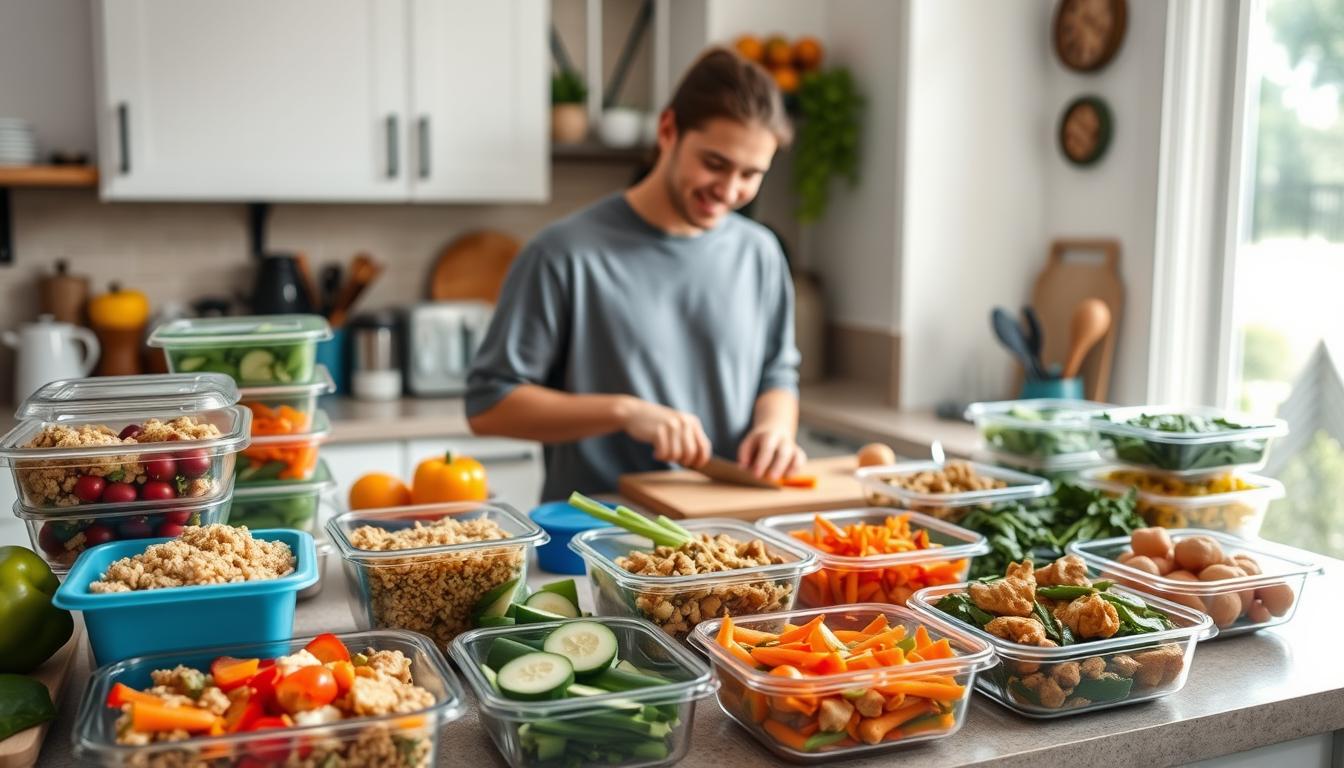
This is where the magic happens. One 2–3 hour session on Sunday can set you up for the entire week.
The Beginner Batch Cooking Workflow
1. Start with grains (hands-off cooking) Put a big pot of brown rice, quinoa, or pasta on the stove. While it cooks, move on to everything else.
2. Roast your vegetables Chop whatever veggies you have (broccoli, sweet potato, zucchini, carrots) and roast them all together at 400°F for 25–30 minutes. Season with olive oil, salt, garlic powder, and paprika.
3. Cook your proteins Prepare 2 proteins at once — for example, boiled eggs + a pot of lentils. Or canned chickpeas sautéed with spices + shredded chicken (if your budget allows).
4. Portion into containers Divide everything into individual meals. Label each container with the day or meal type. Stack them in your fridge.
Done. The rest of your week? Open container, microwave, eat.
The Best Budget-Friendly Proteins for College Students
Protein keeps you full and focused — but it doesn’t need to come from expensive meat. Here are the best affordable protein sources for students:
🌱 Plant-Based Proteins (Cheapest Per Serving)
Dried lentils — ~$0.20 per serving. Cook in 20 minutes. Add to soups, tacos, rice bowls, or eat plain with spices. Incredibly versatile.
Canned black beans or chickpeas — ~$0.50 per serving. Zero cook time needed. Toss in a bowl with rice and salsa and you have a meal.
Peanut butter — ~$0.25 per serving. High in protein, lasts forever, and works in everything from toast to smoothies to sauces.
🥚 Animal Proteins on a Budget
Eggs — ~$0.35 per egg. The king of budget protein. Scrambled, boiled, fried, added to fried rice — endlessly useful.
Canned tuna — ~$0.80 per can. No cooking required. Mix with mustard, hot sauce, or mayo. Great on crackers, in wraps, or over salad.
Rotisserie chicken — When on sale, one chicken = 4–5 meals worth of protein. Shred it and use it all week.
Building a Budget Spice Rack That Transforms Your Food
The #1 complaint about meal prep? “It gets so boring.”
The fix isn’t fancy ingredients — it’s a basic spice collection. These 8 spices can make the same chicken and rice taste completely different every day:
- Garlic powder — goes on everything
- Smoked paprika — adds depth and color
- Cumin — essential for Mexican and Indian-inspired dishes
- Italian seasoning — pasta, roasted veggies, eggs
- Chili flakes — add heat to anything
- Onion powder — savory base note
- Cinnamon — oatmeal, sweet potato, smoothies
- Soy sauce — technically a condiment, but transforms any grain bowl or stir-fry
Buy these from the international or bulk aisle — they can be 3–5x cheaper than the spice rack brands.
How to Store Food Safely in a Shared Kitchen
Food safety is especially important when you’re cooking in bulk and sharing kitchen space with other people.
Refrigerator Shelf Life Guide
| Food | Fridge Life | Freezer Life |
|---|---|---|
| Cooked chicken | 3–4 days | 3–4 months |
| Cooked grains (rice, quinoa) | 4–5 days | 1–2 months |
| Lentil/bean soups | 3–4 days | 2–3 months |
| Hard-boiled eggs | 1 week | Not recommended |
| Roasted vegetables | 3–5 days | 2–3 months |
Shared Kitchen Rules to Follow
- Always use labeled, sealed containers — write your name and the date
- Store raw ingredients on lower shelves; ready-to-eat meals go on upper shelves
- Use a dedicated cutting board for your own prep and wash it immediately
- Never leave food uncovered in a shared fridge
5 Quick Leftover Remix Ideas (So You Don’t Get Bored)
Leftovers don’t have to be sad. Here’s how to make them feel like new meals:
- Roasted veggies → Stir-fry: Toss with soy sauce, ginger, and garlic in a pan for 5 minutes. Serve over rice.
- Cooked chicken → Grain bowl: Shred over quinoa, add cucumber, lemon, and hummus.
- Lentil soup → Taco filling: Season with cumin and chili powder, stuff into a tortilla with salsa.
- Cooked quinoa → Breakfast porridge: Reheat with milk (or almond milk), cinnamon, and honey.
- Baked sweet potato → Savory mash: Mash with black beans, salt, and lime. Serve as a side or a dip.
Nutrition Tips When You’re on a Tight Budget
You don’t need to choose between eating cheap and eating healthy. Here’s how to do both:
Prioritize Frozen Produce
Frozen fruits and vegetables are picked at peak ripeness and flash-frozen, preserving nearly all their vitamins and minerals. They’re often cheaper than fresh, last for months, and eliminate the guilt of fresh produce going bad.
Keep these stocked:
- Frozen spinach (add to anything without changing the flavor)
- Frozen mixed berries (smoothies, oatmeal)
- Frozen broccoli or stir-fry mix (10 minutes in the microwave)
- Frozen edamame (high-protein snack, no cooking needed)
Swap Processed Snacks for These Budget-Friendly Options
| Processed Snack | Budget-Friendly Swap |
|---|---|
| Chips | Air-popped popcorn |
| Candy bars | Banana + peanut butter |
| Energy drinks | Coffee + oatmeal |
| Granola bars | Trail mix (bulk aisle) |
| Sugary yogurt | Plain Greek yogurt + honey |
Meal Prep for Exam Weeks (When Life Gets Chaotic)

Let’s be real — exam week will test your commitment to literally everything, including your meal prep habit.
Here’s how to survive it without reverting to DoorDash:
- Keep a list of “5-minute meals” — eggs + toast, tuna + crackers, peanut butter wrap, yogurt bowl
- Don’t aim for perfect; aim for done — a simple prepped meal beats a complicated plan you abandon
- Batch cook more the week before exams, not less
- Stock up on frozen meals you’ve made and frozen ahead — soups and grain bowls freeze beautifully
The goal during exam week isn’t a Pinterest-worthy meal. It’s fuel. Even peanut butter on a rice cake beats skipping a meal.
Your First Week Meal Prep Shopping List (~$30–$40)
Here’s a beginner grocery list to get you started:
Proteins
- 1 dozen eggs
- 2 cans tuna
- 1 bag dried lentils or 2 cans of black beans
- Peanut butter (large jar)
Grains
- 1 bag brown rice or white rice
- 1 box rolled oats
- 1 bag pasta
Produce / Frozen
- 1 bag frozen mixed vegetables
- 1 bag frozen spinach
- Bananas (cheapest fruit per calorie)
- 1–2 sweet potatoes
Pantry
- Olive oil or vegetable oil
- Soy sauce
- Garlic powder + paprika (or a basic spice set)
- Canned diced tomatoes
- 1 jar salsa
Total estimated cost: $30–$40 (and this will cover 5–7 days of full meals)
Final Thoughts: Start Small, Stay Consistent
You don’t have to overhaul your entire eating routine overnight.
Start with one batch cook session this Sunday. Make a big pot of rice, boil some eggs, and prep a simple protein. That’s it. That’s your first meal prep.
From there, build the habit week by week. Your wallet, your grades, and your energy levels will all thank you.
Budget meal prep for college students isn’t about being a chef — it’s about being intentional with the money and time you have.
And if this guide helped you, share it with a broke classmate who could use it. (They probably owe you one anyway.)
Frequently Asked Questions
How much can I realistically save with meal prep as a college student? Most students save $150–$300 per month by switching from regular takeout to home meal prep. Even prepping 3–4 days a week makes a noticeable difference.
What if I don’t have access to a full kitchen? A microwave, electric kettle, and mini blender can handle most beginner meal prep. Focus on no-cook meals (tuna, canned beans, overnight oats) and microwave-friendly foods.
How long does meal prepped food stay fresh? Most cooked meals last 3–5 days in the fridge. Anything you won’t eat within 5 days should be portioned and frozen immediately after cooking.
Is meal prepping worth it if I only cook for one person? Absolutely. In fact, it’s easier for one — smaller portions, less waste, and you only have to please one palate. Buy in bulk, cook in bulk, and freeze the rest.
What’s the single easiest meal prep recipe for a beginner? Rice + canned beans + salsa + frozen veggies. Cook rice, heat everything else, combine. Done in 20 minutes, $1.50 per serving, and it tastes better than it sounds.
Found this helpful? Pin it, share it, or bookmark it for next Sunday’s prep session. 🍳