Ever found yourself staring into the fridge after a long day, feeling drained? I used to struggle with this until I found healthy meal ideas with ground beef. They made my life easier.
Ground beef is a game-changer. It packs 20–25 grams of protein per serving. Plus, it’s full of iron, zinc, and B vitamins. With a few go-to ground beef recipes, I keep my body fueled without stress.
Choosing a high-protein dinner keeps me full all night. Simple meal prep makes ground beef a key part of my diet. It turns weeknight dinners into something I look forward to, not dread.
Key Takeaways
- Ground beef offers 20–25 grams of protein per serving.
- Essential nutrients like iron and zinc support daily energy levels.
- Strategic planning prevents decision fatigue during busy evenings.
- Simple preparation methods save time and reduce kitchen stress.
- High-protein options keep you full and satisfied longer.
Selecting the Best Quality Ground Beef for Your Health
When I go to the grocery store, finding the best meat is my top priority. I always buy at least a pound of ground beef or turkey. This way, I can make quick and tasty meals.
“The quality of your ingredients is the silent partner in every successful dish you create.”
Understanding Lean-to-Fat Ratios
Shopping for meat can be tough, but knowing the labels helps. I look for the lean-to-fat ratio to get good flavor and health benefits. A 90/10 or 93/7 ratio is great for those who want leaner meat without losing too much moisture.
If you’re watching your budget, remember that a bit more fat can add flavor to your ground beef recipes. Just drain the extra fat after browning to keep your meal healthy. Finding the right balance is key to cooking well.
The Benefits of Grass-Fed Versus Conventional Beef
Many people ask about the difference between conventional and grass-fed beef. Conventional beef is cheaper and easy to find, but grass-fed has more omega-3s. This is because grass-fed cattle eat natural pastures.
Choosing grass-fed beef depends on your health and environmental goals. Even on a tight budget, lean conventional beef is a great protein source. You can make healthy, budget-friendly beef meals with either type.
Proper Storage Techniques to Maintain Freshness
Keeping meat fresh is important for safety and taste. Here are some tips to keep your meat in top shape:
- Keep the meat in its original packaging until you’re ready to cook.
- Store it in the coldest part of your fridge, usually the bottom shelf.
- If you won’t use it in two days, freeze it right away in airtight bags.
By following these steps, your ingredients will always be ready for your next meal. These habits save time and reduce food waste at home.
Essential Kitchen Tools for Efficient Beef Preparation
Cooking ground beef well needs more than fresh ingredients; it needs the right tools. When I make a high-protein dinner, I use specific tools for quick and effective cooking. Quality kitchen essentials save me time and ensure great results every time.
Choosing the Right Skillets and Pans
A great beef dish starts with a good sear. I use heavy-bottomed stainless steel or cast-iron skillets. These pans keep heat well, which is key for a flavorful crust on the meat.
Don’t overcrowd your pan, as it makes the beef steam instead of brown. The right pan is key for rich flavors in your cooking.
Utilizing Food Processors for Vegetable Integration
I use a food processor to finely chop veggies like carrots, onions, or mushrooms. This way, I add extra nutrients to my beef dishes without changing the texture. By pulsing the veggies until they’re the same size as the ground beef, they mix well into the dish.
This method is great for adding fiber to meals. It makes sure even those who don’t like veggies get a meal full of nutrients without knowing it.
The Importance of Reliable Meat Thermometers
Safety and quality are key when cooking a high-protein dinner. I never guess if my meat is done; I use a digital thermometer. This tool prevents overcooking and keeps the beef juicy.
Using a thermometer ensures your food is safe and tastes great. It’s a small investment that makes a big difference in your cooking.
| Tool | Primary Benefit | Best Material |
|---|---|---|
| Skillet | Even Heat Distribution | Cast Iron |
| Food Processor | Nutrient Integration | Stainless Steel Blade |
| Meat Thermometer | Food Safety | Digital Probe |
Mastering Healthy Meal Ideas with Ground Beef Through Batch Cooking
Batch cooking has changed how I manage my kitchen during busy weeks. By setting aside time to prepare ingredients ahead, I always have healthy meals ready. This way, healthy meal ideas with ground beef are always available. It makes weeknight dinners easy and nutritious.
Developing a Weekly Meal Prep Schedule
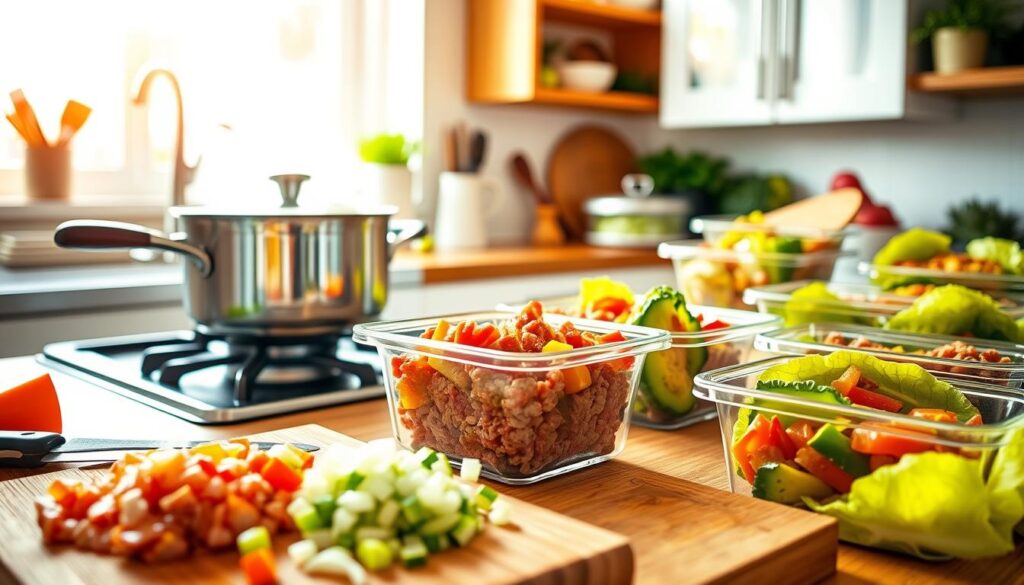
I plan my meals every Sunday. I look at my week to see when I need quick meals. Then, I spend two hours on batch cooking my protein base. This way, I avoid unhealthy snacks when I’m tired.
I brown a lot of beef at once. I season it with herbs that fit many cuisines. This way, I always have a healthy meal ready.
Portioning Techniques for Balanced Nutrition
After cooking, I portion the beef for balanced meals. I use glass containers for single servings. This helps me avoid overeating and ensures I have a healthy meal ready.
- Use portion-controlled containers to keep macros consistent.
- Label each container with the date to ensure optimal freshness.
- Combine beef with pre-cooked grains or roasted vegetables for a complete meal.
Safe Reheating Methods to Preserve Texture
Reheating ground beef right is key to keeping it moist and flavorful. I use a skillet with a bit of water or broth to prevent drying. If I must microwave, I cover it to keep it tender.
| Method | Best For | Texture Result |
|---|---|---|
| Stovetop | Skillets and Sauces | Excellent moisture retention |
| Microwave | Quick lunches | Good if covered properly |
| Oven | Casseroles | Crispy edges, tender center |
Creating Nutrient-Dense Ground Beef Skillets
Turning ground beef into a nutrient-dense meal starts with the right skillet method. Skillet meals are great for mixing high-quality protein, colorful veggies, and healthy fats into one dish. This way, you can make a loaded ground beef and potatoes skillet that’s good for your body.
Incorporating Seasonal Vegetables for Fiber
Adding seasonal veggies boosts your meal’s nutrition and volume. Fiber is key for digestion, and colorful produce gives you a variety of vitamins. I always choose veggies that match the season for the best taste.
“The secret to a great meal is not just the protein, but the harmony of fresh ingredients working together in one pan.”
Using Fresh Herbs and Spices Instead of Salt
Many people overuse salt, which can be bad for sodium intake. I prefer using fresh herbs and spices to enhance the beef’s flavor. Rosemary, thyme, or smoked paprika add a rich taste without salt.
- Fresh parsley adds a bright, clean finish to heavy dishes.
- Cumin and chili powder provide a warm, savory depth.
- Fresh garlic and onions remain the foundation of any great skillet.
Balancing Macros with Healthy Fats and Complex Carbs
To keep your energy up, balance your macronutrients well. I pair beef with healthy fats like avocado oil or olives and complex carbohydrates like sweet potatoes or quinoa. This mix prevents blood sugar spikes and keeps you full for hours. By focusing on these nutrient-dense foods, you make a simple dinner into a balanced meal that supports your health.
Building High-Protein Ground Beef Bowls
Making healthy beef bowls is my top pick for mixing nutrition with taste. These meals are super flexible, letting me change up ingredients based on what I have. When I’m craving a high-protein dinner, this is my go-to.
Selecting the Right Base Grains
The base of a great bowl is key. I choose quinoa or brown rice for their texture and fiber. They soak up the beef’s juices well, making each bite balanced.
For extra nutrition, I sometimes use cauliflower rice or ancient grains. The right base keeps my meal filling and gives me energy all evening.
Adding Fresh Toppings for Texture and Flavor
To make my healthy beef bowls stand out, I add fresh toppings. Crunchy bits like radishes, carrots, or pumpkin seeds add a nice contrast. They make the meat taste even better.
Fresh herbs like cilantro or parsley add a bright touch. I also add avocado or pickled onions for creaminess and tang. These simple touches make my meal vibrant and colorful.
Creating Homemade Dressings and Sauces
I make my own dressings and sauces to avoid store-bought ones. This way, I can pick the ingredients and avoid bad stuff. A mix of tahini, lemon, and garlic makes a creamy sauce that’s perfect with high-protein dinner.
Or, I mix soy sauce, ginger, and sesame oil for an Asian twist. These homemade sauces are essential for bringing the bowl together. With a few basic ingredients, I can make a tasty sauce in minutes.
Transforming Ground Beef into Healthy Lettuce Wraps
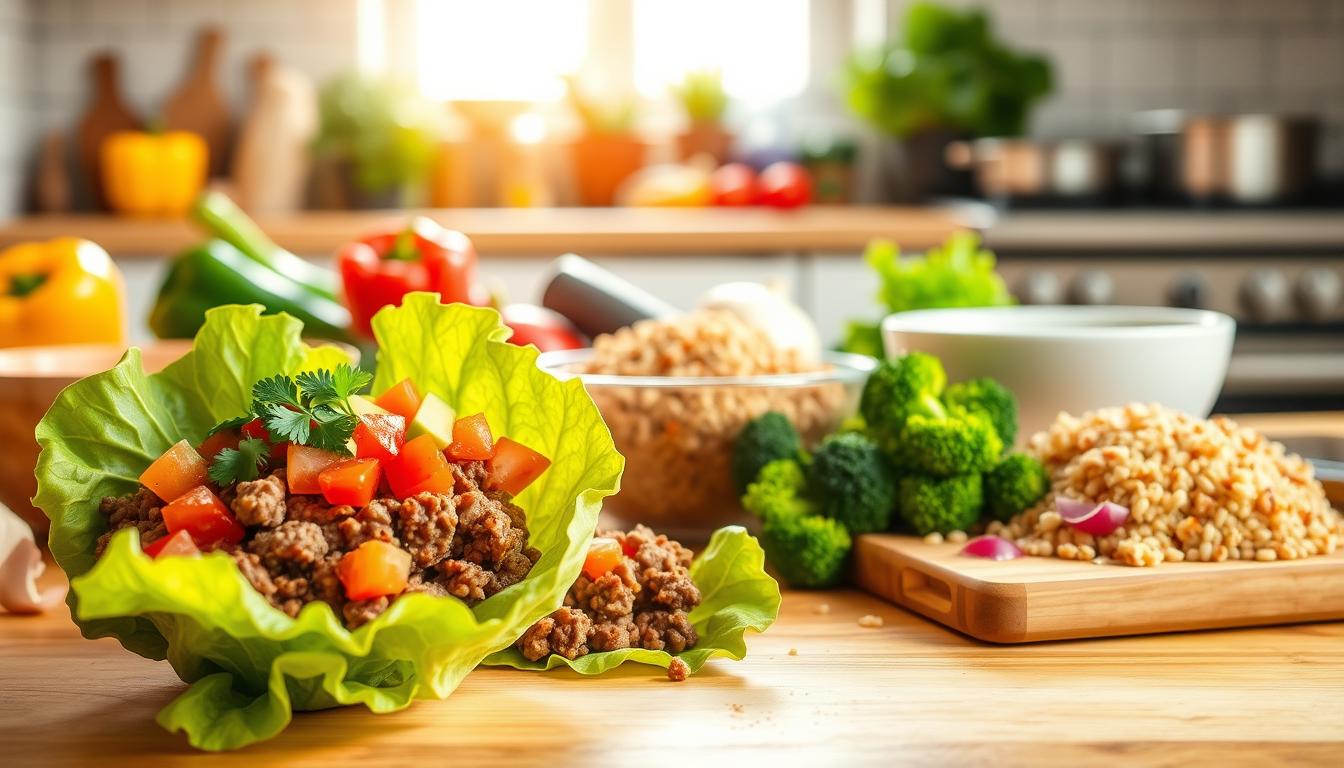
Turning ground beef into lettuce wraps is a simple way to make dinner healthier. These wraps are a refreshing change from usual carbs like flour tortillas or burger buns. This small change makes meals feel light but also very filling.
Choosing the Best Lettuce Varieties
Choosing the right greens is key for a good wrap. I like using butter lettuce or romaine hearts for their crunch and shape. Butter lettuce is soft and easy to fold, while romaine is sturdy for heavy fillings.
| Lettuce Type | Texture | Best Use |
|---|---|---|
| Butter Lettuce | Soft and tender | Delicate, bite-sized wraps |
| Romaine Hearts | Crisp and sturdy | Hearty, heavy fillings |
| Iceberg | Very crunchy | Cold, refreshing appetizers |
Developing Savory Asian-Inspired Fillings
I enjoy making savory Asian-inspired fillings for my wraps. Adding fresh ginger, minced garlic, and low-sodium soy sauce gives them bold flavors. These ingredients make the ground beef into a nutrient-dense dish, just like takeout.
Adding Crunch with Nuts and Seeds
To complete my lettuce wraps, I add nuts and seeds for texture. Toasted sesame seeds or crushed peanuts give a nice crunch. This adds healthy fats and plant-based protein, making dinner balanced and tasty.
Developing Healthy Ground Beef Soups and Stews
Soups and stews are perfect for quick, comforting meals on weeknight dinners. They let me mix veggies and proteins in one bowl. Using quality ingredients, I turn simple items into a fancy meal at home.
Building Flavor Profiles with Bone Broth
The key to a great soup is its liquid base. I choose bone broth over regular stock for its rich taste. It also adds collagen and minerals for better health.
Using top-notch beef bone broth makes the soup’s flavor pop. I simmer onions and garlic in the broth for extra depth. This trick makes my weeknight dinners taste like they’ve been cooking all day.
Adding Legumes for Extra Protein and Fiber
I add legumes like lentils or black beans to make my soups more filling. They increase protein and fiber. This keeps me full and happy long after eating.
Legumes also add a nice texture contrast to the ground beef. I rinse canned beans to control sodium. This keeps my weeknight dinners healthy and balanced.
Simmering Techniques for Maximum Nutrient Retention
It’s important to cook soups at a gentle simmer to keep ingredients fresh. This method prevents the meat from getting tough and keeps veggies colorful and nutritious.
I add greens like spinach or kale just before finishing. This keeps them fresh and full of vitamins. By doing this, my weeknight dinners are both healthy and tasty.
| Ingredient Type | Primary Benefit | Preparation Tip |
|---|---|---|
| Bone Broth | Collagen & Minerals | Simmer with aromatics |
| Legumes | Fiber & Protein | Rinse well before use |
| Leafy Greens | Vitamins & Texture | Add at the very end |
Incorporating Ground Beef into Mediterranean-Style Dishes
Adding ground beef to Mediterranean dishes makes dinner exciting. The Mediterranean diet focuses on whole foods, healthy fats, and lean proteins. This makes your beef recipes special and full of nutrients.
Using Mediterranean Spices for Authentic Flavor
I use a mix of spices for real taste. Cumin, coriander, and oregano give a rich flavor. These spices also offer antioxidant benefits that fit the Mediterranean diet.
Pairing Beef with Olives and Feta Cheese
Adding salty, tangy elements is a favorite trick. Beef, olives, and feta cheese make a great mix. Try it in a Mediterranean-style ground beef skillet for a taste of the Mediterranean.
Serving with Fresh Cucumber and Tomato Salads
For a light side, serve your beef with a fresh salad. Cucumber, tomatoes, and olive oil make a refreshing side. It keeps your Mediterranean diet-inspired meal balanced and easy to eat.
Adapting Classic Comfort Foods for a Healthier Lifestyle
Changing your kitchen habits can make heavy classics healthier. You don’t have to give up your favorite comfort food to stay healthy. Small, intentional changes can make your meals better for you.
Swapping Traditional Pasta for Vegetable Noodles
Replacing refined pasta with veggie alternatives is easy. Try using spiralized zucchini or roasted spaghetti squash. These add fiber and vitamins to your meals. This healthy meal approach keeps your meals satisfying while cutting calories.
Reducing Saturated Fats in Casseroles
Casseroles are a favorite, but they often have too much fat. Use leaner beef and swap heavy dairy for Greek yogurt or cauliflower puree. These changes cut down on saturated fats without losing flavor.
Enhancing Nutrient Density in Meatloaf Recipes
Meatloaf is a beloved comfort food. But, it can be made healthier. Add chopped mushrooms, spinach, or carrots to the beef. Use oats or almond flour instead of breadcrumbs for more nutrients in your ground beef recipes.
| Traditional Ingredient | Healthy Swap | Nutritional Benefit |
|---|---|---|
| White Pasta | Zucchini Noodles | Lower Calories |
| Heavy Cream | Greek Yogurt | Higher Protein |
| Breadcrumbs | Rolled Oats | Increased Fiber |
| High-Fat Beef | Lean Ground Beef | Reduced Saturated Fat |
Managing Daily Meal Planning and Grocery Budgeting
It’s tough to eat healthy and stay within a budget. But with some planning, it’s doable. I keep my kitchen organized to make healthy meal ideas with ground beef without breaking the bank. Sticking to a routine helps me keep this lifestyle going for a long time.
Shopping Strategies for Cost-Effective Beef
Buying meat in bulk when it’s on sale is a great way to save. I look for budget-friendly beef at warehouse clubs or during sales. This way, I can portion the meat at home and cut down on weekly costs.
It’s also important to check unit prices, not just the total cost. This habit helps me get the most value for my money. Planning my shopping trips around sales helps me fill my freezer with quality protein without spending too much.
Reducing Food Waste with Versatile Ingredients
Good meal prep means using every bit of meat. I cook big batches of ingredients that can be used in different meals. This way, I avoid wasting food and save time on busy nights.
Leftover beef becomes tacos, salads, or soups. Adding versatile veggies like onions, peppers, and spinach makes my meals stretch further. This keeps my meals interesting and my grocery bill low.
Tracking Nutritional Goals Throughout the Week
Good grocery budgeting is just part of staying healthy. I track my nutrition to meet my health goals. Keeping a simple log helps me stay on track and avoid unhealthy choices.
Reviewing my week helps me adjust my shopping list for the next week. This way, I can enjoy tasty meals while keeping my finances and health in check. Being organized is key to success in the kitchen.
Conclusion
Starting a sustainable relationship with food is easy. Just add ground beef to your daily meals. It’s a great way to get enough protein and try new flavors.
Choosing high-quality ingredients from places like ButcherBox or local farmers really matters. It makes your food taste better. Using the right tools and planning your meals can save you time in the kitchen.
These tips help you make healthy meals even when you’re busy. Cooking becomes fun, not a hassle. You’ll feel more confident and creative in the kitchen.
Being consistent is key to success in health and wellness. Try one new recipe this week. See how it boosts your energy. Your dedication to better nutrition will pay off in the long run.
FAQ
How do I choose the best lean-to-fat ratio for my fitness goals?
For a high-protein dinner, I choose a 90/10 or 93/7 lean-to-fat ratio. This gives me lots of protein without too much saturated fat. For juicier dishes like Mediterranean-style burgers, I might pick 85/15. But for most meal prep, the leaner options help keep my calories consistent.
Why should I spend more on grass-fed beef compared to conventional options?
I prefer grass-fed beef from brands like ButcherBox because it has more Omega-3 fatty acids and Conjugated Linoleic Acid (CLA). It tastes earthier and richer, making simple ground beef recipes better. Though pricier, its health benefits and taste make it worth it for a healthy lifestyle.
What is the most effective way to store ground beef to prevent spoilage?
Keep meat in the coldest part of the fridge, on the bottom shelf to avoid cross-contamination. If not using within two days, freeze it in vacuum-sealed bags or Stasher silicone bags. Good storage techniques help reduce food waste and keep your weekly meal prep safe.
Which kitchen tools are essential for getting a perfect sear on ground beef?
My top tool is a Lodge cast iron skillet for its heat retention. It allows for a deep, flavorful Maillard reaction. I use a Thermapen digital meat thermometer to check doneness at 160°F. A Cuisinart food processor helps finely chop veggies like mushrooms and carrots, adding extra fiber.
How can I batch cook ground beef without the meat becoming dry when reheated?
I slightly undercook the beef for later use in the refrigerator. Quick sautéing with Kettle & Fire bone broth restores moisture. Using airtight glass meal prep containers also preserves the texture and flavor of my high-protein dishes.
What are some healthy alternatives to salt for seasoning my beef skillets?
I use fresh herbs like rosemary, thyme, and cilantro for flavor without extra sodium. For umami-rich taste, I add Bragg Liquid Aminos or balsamic vinegar. These seasonal ingredients enhance the beef’s natural taste while keeping the meal heart-healthy and in line with Mediterranean diet principles.
Which grains work best as a base for high-protein beef bowls?
I often choose between quinoa, farro, and black rice to keep my complex carbs interesting. For a low-carb or keto-friendly option, I use cauliflower rice. The right base grains are key for balancing macros and providing energy all day.
How do I choose the right lettuce for beef wraps so they don’t fall apart?
For Asian-inspired fillings, I pick Bibb or Boston lettuce for its flexibility and strength. For more crunch, Romaine hearts are great. The right lettuce lets you add lots of toppings like water chestnuts, green onions, and sesame seeds without the wrap tearing.
What are the benefits of using bone broth in ground beef soups and stews?
Using bone broth adds collagen and amino acids to my stews. It deepens the flavor profile and supports gut health. Simmering the beef in broth keeps it tender, even with legumes like lentils or kidney beans for extra protein.
How can I make my favorite comfort foods like meatloaf and pasta healthier?
I suggest swapping traditional pasta for zucchini noodles (zoodles) or spaghetti squash to lower the glycemic load. In meatloaf recipes, I use rolled oats or almond flour instead of breadcrumbs. Adding finely grated zucchini boosts nutrient density without losing the comfort food feel.
What is the best way to manage a grocery budget while buying quality beef?
Buying bulk organic ground beef at Costco or Whole Foods is cost-effective. Portioning and freezing immediately helps take advantage of sales. Using meal planning apps tracks my nutritional goals and ensures every ingredient has a place in my weekly schedule, reducing food waste.