
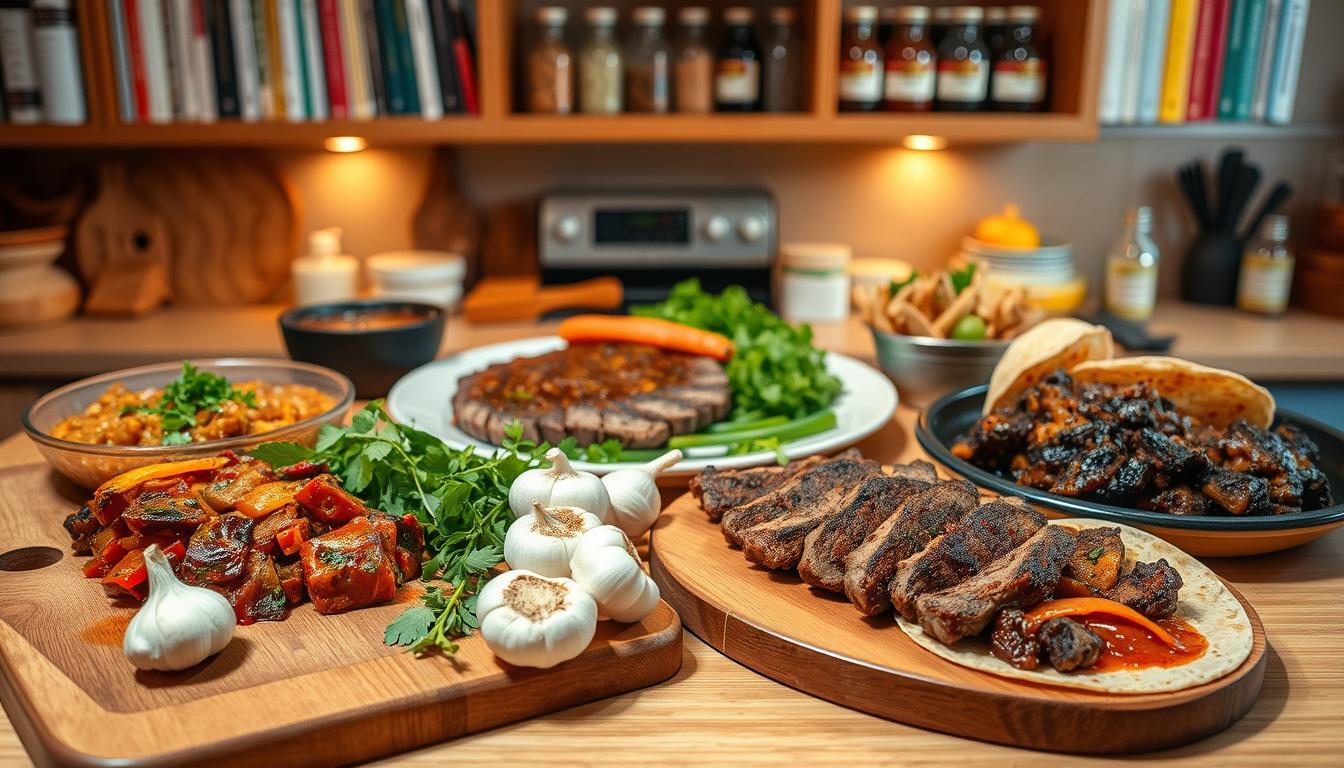
I remember the frantic feeling of staring into my pantry at 5:00 PM, wondering how to feed my family something wholesome. Cooking should be a joy, not a source of stress. Over the years, I discovered a secret weapon for busy weeknights: versatile protein staples.
Ground meat is a true hero in my kitchen. It is incredibly economical, packed with protein, and stays fresh in the freezer for months. Whether you are a novice or a seasoned home cook, these beef dinner ideas will help you build confidence at the stove.
My collection of ground beef recipes offers simple solutions for every schedule. You will find that mastering these meals transforms your evening routine into a relaxing experience. Let us explore how to turn basic ingredients into a culinary masterpiece tonight.
Key Takeaways
- Ground meat is an affordable and high-protein choice for families.
- Proper freezer storage ensures your ingredients are ready when needed.
- Building confidence in the kitchen starts with simple, reliable methods.
- Versatile proteins allow for endless creativity during busy weeknights.
- Planning ahead makes preparing evening meals much more manageable.
Understanding Beef Cuts for Your Home Kitchen
When I started cooking beef at home, I learned that picking the right cut is key. The butcher counter can seem scary, but this beef cuts guide will help you feel confident. Knowing how different muscles behave ensures your meals are perfect every time.
Identifying Tender Cuts for Quick Cooking
Tender cuts come from areas that don’t get much work, like the loin and rib. These muscles are soft and cook quickly. Use high-heat methods like grilling or pan-searing for the best results.
Popular tender cuts include ribeye, filet mignon, and New York strip steaks. They stay tender even when cooked to medium-rare. These are great for a quick, high-quality meal after a long day.
Selecting Tougher Cuts for Braising and Stewing
Tougher cuts, like chuck or brisket, come from the shoulder and chest. These muscles are dense with collagen. They’re not good for quick searing but become tender with slow cooking.
Braising or stewing breaks down the tough fibers over hours. This turns the meat into a tender delight. For a hearty pot roast, choose these cuts.
The Importance of Marbling and Fat Content
Marbling is the white fat in lean muscle. It melts during cooking, basting the meat. High-quality marbling means better flavor, juiciness, and tenderness.
When cooking beef at home, look at the fat distribution. A well-marbled piece will always taste better than a lean one. Whether it’s ground beef or a steak, knowing this will improve your cooking.
| Cut Type | Best Cooking Method | Key Characteristic |
|---|---|---|
| Ribeye | Grilling/Searing | High Marbling |
| Chuck Roast | Braising/Stewing | Rich Connective Tissue |
| Sirloin | Pan-Frying | Lean but Flavorful |
| Brisket | Slow Smoking | Dense and Tough |
Essential Tools and Techniques for Preparing Beef
Learning to cook beef at home is more than just a recipe. You need the right tools and techniques. Even the best cuts can go wrong without the proper equipment or basic steps. Focus on these basics for consistent, top-notch results in your kitchen.
Must-Have Kitchen Equipment for Beef Preparation
Choosing the right cookware is key when cooking beef at home. A heavy-bottomed cast iron skillet or stainless steel pan is best for a perfect sear. Also, a reliable digital meat thermometer is essential to avoid overcooking or undercooking.
Knowing the primal cuts helps pick the right tool. For example, a heavy pan is great for steaks, while a Dutch oven is better for slow-braising tougher cuts. Having the right beef cooking tools boosts your confidence in any recipe.
Proper Knife Skills for Trimming and Slicing
Good beef preparation tips start with your knife skills. A sharp chef’s knife is vital for trimming fat or silver skin. Always cut against the muscle fibers when serving.
Slicing against the grain makes the meat tender. Cutting parallel to the grain makes it tough. Take time to observe the meat before cutting.
The Science of Resting Meat for Maximum Juiciness
The resting period is often overlooked in beef cooking. High heat causes juices to move to the meat’s center. Slicing too soon spills these juices.
Letting the beef rest for five to ten minutes redistributes juices. This step keeps every bite juicy and flavorful. Patience during this stage is key to professional results.
| Tool Name | Primary Function | Benefit |
|---|---|---|
| Cast Iron Skillet | High-heat searing | Creates a deep, flavorful crust |
| Digital Thermometer | Internal temperature check | Prevents overcooking or undercooking |
| Chef’s Knife | Trimming and slicing | Ensures clean cuts against the grain |
| Tongs | Turning and handling | Maintains meat integrity without piercing |
Selecting the Best Recipes That Use Beef
My approach to weeknight beef meals is all about flavor, time, and technique. Picking the right dish is key to a great kitchen experience. It helps avoid stress after a long day.
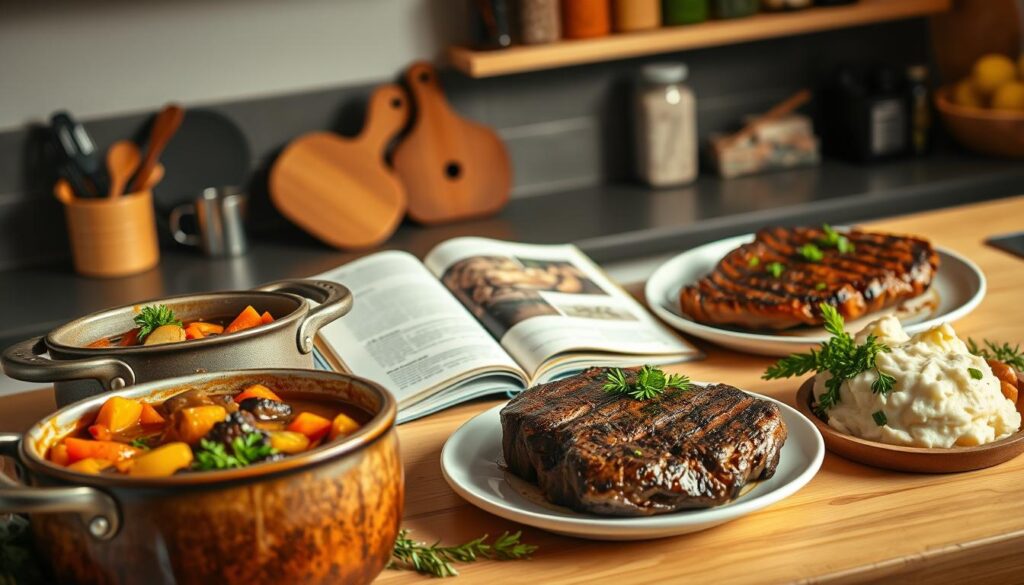
Evaluating Recipes Based on Time Constraints
When I search for easy beef dinners, I check the prep time first. It’s important to know the difference between active cooking time and total time. This ensures the meal fits your schedule.
Here are some tips to make your process smoother:
- Prep time: Can you chop veggies or trim meat ahead of time?
- Cook time: Does the recipe need constant attention or can it simmer on its own?
- Complexity: Are there many steps that might slow down your beef dinner ideas?
Matching Beef Cuts to Specific Cooking Methods
Knowing how different cuts react to heat is key to the best beef recipes. A tough cut won’t get tender in a quick pan-sear. A delicate steak will dry out if braised for too long.
Here’s a simple guide to your proteins:
- Quick-cooking cuts: Use sirloin or ribeye for high-heat searing.
- Slow-cooking cuts: Choose chuck or brisket for long, low-temperature braising.
- Versatile cuts: Ground beef is great for quick skillet meals, like this delicious ground beef and potatoes.
Adapting Classic Recipes to Your Personal Taste
You shouldn’t feel stuck by a written recipe. I often tell home cooks to see recipes that use beef as a starting point, not a strict guide.
Here are simple ways to make your meals your own:
- Swap out herbs or spices to match your family’s taste.
- Add seasonal veggies to make hearty dishes fresher.
- Adjust salt and acidity levels to balance the meat’s richness.
Cooking is an art that thrives on personal expression and the willingness to experiment with flavors.
Step-by-Step Guide to Pan-Searing Steaks
When I think about essential beef preparation tips, pan-searing is key. It’s a skill that makes a big difference in your cooking. It helps you get a crust on the steak that keeps the juices in.
By following a few simple steps, you can make a simple dinner into a fancy meal.
Preparing the Meat for a Perfect Crust
To get a great sear, start by drying the meat. Use paper towels to pat it dry. This step is important because moisture can stop the crust from forming.
After drying, season the steak with kosher salt and black pepper. For more tips, check out this guide to a perfect pan-seared steak. Seasoning well is a key part of making the steak taste great.
Choosing the Right Oil and Pan Temperature
Choosing the right oil is important. You need an oil with a high smoke point to avoid burning. Avocado oil or grapeseed oil are good choices. Don’t use butter yet, as it burns easily.
Heat your skillet until it’s shimmering hot. If you put the meat in a cold pan, it won’t sear right. You want to hear a loud sizzle when the meat hits the pan.
Basting with Butter and Aromatics
At the end, add butter, garlic, and herbs to the pan. This step, called basting, adds a rich flavor. Tilt the pan and pour the butter over the steak.
This step keeps the steak moist and flavorful. Learning this method boosts your cooking confidence. It’s like mastering easy chicken thigh recipes for beginners. Once you get the hang of it, you’ll never cook steak any other way.
Mastering Slow-Cooked Beef Pot Roasts
Slow-cooked pot roasts are my go-to for a comforting meal. This method is a top beef cooking technique for making hearty dinners at home. It turns tough meat into tender, restaurant-quality dishes.
Searing the Roast for Deep Flavor
Before slow-cooking, I always sear the meat. This step is key because it starts the Maillard reaction. It creates a complex, savory crust on the beef. Without this, the dish might lack the rich flavor of a classic pot roast.
Building a Rich Braising Liquid
After searing, I work on a flavorful braising liquid. I mix high-quality beef stock with dry red wine for acidity and richness. Onions, carrots, celery, and herbs add a savory foundation that infuses the beef with flavor.
Managing Cooking Time for Fork-Tender Results
Patience is key when cooking a large roast. Cooking it slowly at low heat breaks down connective tissues. By being patient and not rushing, you get a tender roast every time.
Preparing Ground Beef for Weeknight Favorites
Ground beef is a top pick for busy weeknights. It’s a versatile base for many easy beef dinners that please everyone. You don’t need to spend hours cooking.
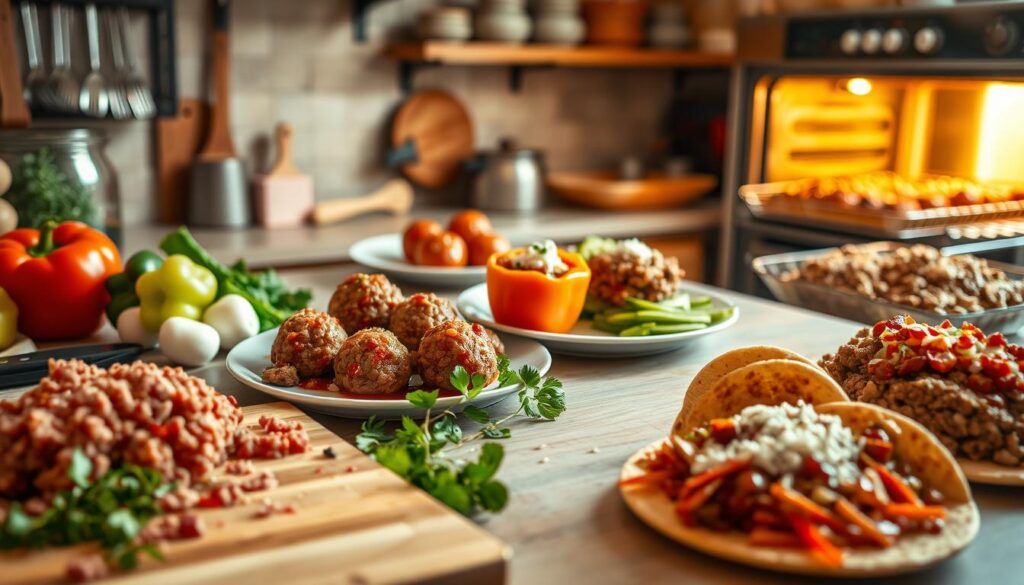
Selecting the Right Lean-to-Fat Ratio
It’s key to pick the right meat-to-fat ratio. I suggest an 80/20 blend for most ground beef recipes. This ratio adds moisture and flavor.
For a lighter choice, try a 90/10 lean blend. But remember, leaner meat can get dry. You might need to add more liquid or sauce.
Techniques for Browning Without Steaming
Don’t overcrowd the pan. This makes the meat steam instead of brown. To get a nice crust, cook in small batches at high heat.
Patience is key here. Let the meat sit for a few minutes before breaking it up. This step adds a rich, savory flavor to your weeknight beef meals.
Incorporating Seasonings for Maximum Impact
Ground beef is like a blank canvas for flavors. Start by sautéing onions, garlic, or bell peppers before adding the meat.
After browning the beef, add spices like smoked paprika, cumin, or dried oregano. Seasoning in the pan ensures every bite is full of flavor. This turns simple meals into unforgettable weeknight beef meals.
Tips for Achieving Perfect Doneness Every Time
Getting consistent results with beef dishes is easier with a reliable beef doneness guide. Touch or color checks often fail, leading to disappointment. By focusing on technical precision, you can ensure every meal is cooked exactly to your preference.
Using a Meat Thermometer Accurately
A high-quality digital meat thermometer is key in my kitchen. To get an accurate reading, insert the probe into the thickest part of the meat. Avoid touching the bone or large pockets of fat, as these areas provide false temperature readings that can ruin your dinner.
Always wait for the numbers to stabilize before pulling the meat from the heat. This simple habit prevents the common mistake of guessing based on time alone. Consistency is the key to mastering your favorite recipes.
Understanding Internal Temperature Guidelines
Different cuts require different levels of heat to reach the ideal texture. Refer to this table to ensure your beef is safe and delicious every time you cook.
| Doneness Level | Internal Temperature | Texture Description |
|---|---|---|
| Rare | 120°F – 125°F | Cool red center |
| Medium-Rare | 130°F – 135°F | Warm red center |
| Medium | 140°F – 145°F | Warm pink center |
| Well-Done | 160°F+ | Little to no pink |
Adjusting for Carryover Cooking
Ignoring the science of carryover cooking is a common mistake. When you remove beef from the heat, the internal temperature continues to rise. I suggest pulling your meat off the heat about 5 degrees before it reaches your target temperature.
This crucial step allows the juices to redistribute throughout the fibers while the meat rests. If you fail to account for this rise, you will likely end up with overcooked, dry beef. Using this beef doneness guide will help you serve perfectly succulent meals to your family and friends.
Pairing Sides to Complement Your Beef Dinner
Creating a balanced plate can turn a simple meal into a memorable experience. Beef side dishes should add contrast to the meat’s intensity. Choosing the right sides can make your main course shine.
Selecting Vegetables That Balance Rich Flavors
For a hearty meat dish, pick veggies that are crisp or bitter. Roasted Brussels sprouts, charred asparagus, or sautéed green beans are great. They offer a natural earthiness that balances the beef’s fat. Texture is key to avoid a heavy meal.
Steaming or blanching veggies keeps them fresh and sweet. This way, their natural flavors can shine without overpowering the meat.
Choosing Starches to Soak Up Savory Juices
The right starch can make your dinner complete. Creamy mashed potatoes, crusty sourdough bread, or fluffy jasmine rice are perfect. They soak up the meat’s juices and drippings.
Grains like farro or quinoa add a nutty flavor that’s great with slow-cooked beef. They let the meat’s complex flavors shine.
Balancing the Meal with Fresh Salads and Acids
Fresh salads are key in healthy beef recipes. A zesty vinaigrette cleanses your palate between bites. It keeps the meal balanced and engaging.
Adding peppery arugula or shaved fennel to your salad adds depth. These ingredients provide a sharp, refreshing finish that balances the meal.
| Beef Preparation | Recommended Starch | Vegetable Pairing |
|---|---|---|
| Pan-Seared Steak | Roasted Fingerling Potatoes | Garlic Sautéed Spinach |
| Slow-Cooked Roast | Creamy Mashed Potatoes | Glazed Carrots |
| Ground Beef Dishes | Steamed Brown Rice | Fresh Garden Salad |
Conclusion
You now know how to make great meals from simple ingredients. Learning about cuts and heat control lets you control your kitchen. This is a big step.
Try one of my best beef recipes to make mealtime more exciting. These recipes show you can have tasty, healthy meals for your family.
These recipes are perfect for cooking for yourself or guests. They offer a variety of options. You can easily add healthy beef recipes to your weekly meals.
I hope you enjoy these recipes as much as I do. Starting your journey to becoming a confident home cook is exciting. You’ll learn reliable techniques and delicious combinations.
FAQ
Why do I consider ground beef a staple for busy families?
A: Ground beef is a kitchen workhorse for me. It’s economical and full of protein. It’s easy to plan meals with because it freezes well. This means you can always have a quick beef dinner ready.
How can my beef cuts guide help me choose the right meat at the butcher shop?
My guide makes picking meat easier. It sorts meat by cooking method. Tender cuts are best for quick, high-heat cooking. Tougher cuts need moist-heat cooking like braising to be tender.
Knowing about marbling and fat content helps predict flavor and texture.
What specific kitchen equipment do I recommend for the best results?
For better beef preparation, get a heavy-bottomed pan. A Lodge cast iron skillet or Le Creuset Dutch oven works well. Also, a meat thermometer like the Thermapen is key for perfect internal temperature.
Why is resting my meat a non-negotiable step in my recipes?
Resting meat is key. It lets muscle fibers relax and reabsorb juices. Cutting into a steak too soon loses those juices.
Resting for 5 to 10 minutes and then slicing against the grain makes every bite juicy and tender.
How do I achieve a perfect browning on ground beef without it steaming?
To get a deep, caramelized flavor, don’t overcrowd the pan. Choose the right lean-to-fat ratio for your dish. Let the meat sit in a hot pan to brown well.
This gives a better base for seasonings and aromatics than steamed meat.
What is the best way to use a beef doneness guide to avoid overcooking?
Use my beef doneness guide with a digital thermometer. It’s important to adjust for carryover cooking. Remove the meat 5°F before your target temperature to let it finish cooking while resting.
How can I incorporate healthy beef recipes into my weekly meal plan?
A: Healthy beef recipes are about balance. Pair rich proteins with acidic components and fresh salads. Choose vegetables for crunch and starches to soak up juices. This makes for a nutritious beef dinner.