
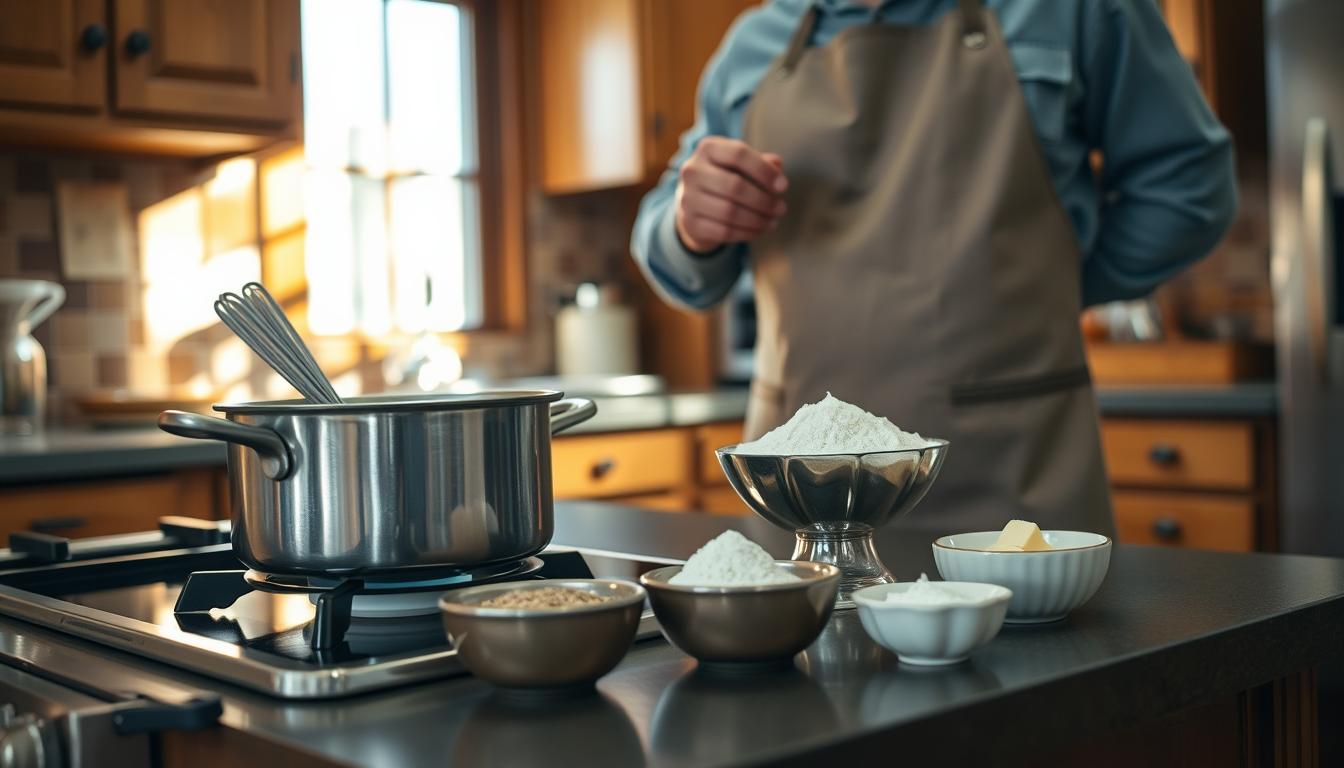
Many home cooks think making a perfect sauce takes hours of roasting meat. But, I’m here to show you can get a rich, savory flavor with simple pantry items. You don’t need a roasting pan to make a top-notch sauce for your holiday meals.
My easy homemade gravy recipe is for both newbies and experienced chefs. Learning this trick lets you make your sauce ahead of time. This way, you can relax and enjoy your holiday with your loved ones, without the stress.
Key Takeaways
- Achieve deep, savory flavors using basic kitchen ingredients.
- Eliminate the need for meat juices or roasting pans.
- Save valuable time by preparing your sauce ahead of the big event.
- Master a reliable method suitable for any skill level.
- Reduce holiday kitchen stress with this simple, foolproof process.
Understanding the Science of Gravy
Did you know you can make a rich, velvety sauce without meat drippings? Many recipes use pan juices, but the real secret is in binding fats and liquids. By learning these principles, you can make a gravy without drippings that’s just as good as the classic version.
The Role of Emulsification
A smooth sauce is an emulsion. This means mixing tiny fat droplets into a liquid base like stock or broth. When you whisk them together right, they blend into a smooth, thick sauce that sticks to the back of a spoon.
The starch in flour helps keep the fat and liquid together. This is key to making your sauce silky and smooth. Getting this balance right is what makes a sauce truly professional.
Why Drippings Are Not Always Necessary
Many think meat drippings are essential for flavor. But, high-quality butter and concentrated stock can also add depth. Making gravy without drippings lets you control the salt and flavor of your dish.
Using gelatinous bone broth gives your sauce body. Adding aromatics or umami-rich ingredients ensures it’s always flavorful. Here’s how you can swap out traditional ingredients for quality.
| Component | Traditional Source | Scratch-Made Alternative |
|---|---|---|
| Fat | Meat Drippings | High-Quality Butter |
| Liquid | Pan Deglazing | Concentrated Bone Broth |
| Flavor | Caramelized Bits | Umami Boosters (Soy/Miso) |
| Texture | Natural Collagen | Properly Cooked Roux |
By focusing on these key elements, you can make a delicious gravy without drippings for any meal. Knowing the science helps you fix your sauce before it’s even cooked. This way, you’ll always get perfect results.
Essential Ingredients for Flavorful Gravy
Creating a savory gravy starts with the right ingredients. Choosing high-quality components ensures a balanced and rich flavor. Each part adds to the gravy’s mouthfeel and taste.
Selecting High-Quality Fats
The fat you pick is key for your roux. I suggest using unsalted butter for control over salt. This lets you season to taste without hidden salt.
The Importance of Flour Types
All-purpose flour is best for thickening. It mixes well with fat, making a smooth sauce. It’s the most reliable choice for a classic savory gravy.
Seasoning Basics
Good gravy seasoning makes all the difference. Adding dried thyme, rosemary, or black pepper can really boost your gravy ingredients. Always taste as you go to get the right balance.
| Ingredient Type | Common Choice | Primary Function | Best Use Case |
|---|---|---|---|
| Fat | Unsalted Butter | Flavor & Emulsion | Classic Rich Gravy |
| Thickener | All-Purpose Flour | Texture & Body | Standard Roux |
| Seasoning | Dried Herbs | Aromatic Depth | Flavor Enhancement |
| Liquid | Chicken Stock | Base Flavor | Everyday Cooking |
Choosing the Right Stock or Broth
When you don’t have pan drippings, your stock choice is key. The liquid base sets the flavor of your dish. So, picking a high-quality stock is vital. Whether you want a light or dark sauce, your stock choice affects the dish’s success.
Beef vs. Chicken vs. Vegetable Stock
The flavor changes with the protein base. A chicken broth gravy is light and pairs well with poultry or mashed potatoes. On the other hand, a beef stock gravy is deep and savory, great with red meats.
Vegetable stock is versatile. It’s clean and earthy, letting herbs and spices stand out. I choose stock based on the main protein for balanced flavors.
The Benefits of Using Low-Sodium Bases
Always use low-sodium or no-salt-added stocks. This lets you control the seasoning. Store-bought stocks often have too much salt, making it hard to adjust the flavor.
Starting with low-sodium stock, you can add salt slowly. This avoids an overly salty sauce. It results in a more refined dish.
Enhancing Store-Bought Stock with Umami Boosters
Store-bought stock can be thin. To make a umami gravy, add secret ingredients. A splash of soy sauce or Worcestershire sauce adds depth and savory flavor.
Try tomato paste or balsamic vinegar to enhance the flavor. These add complexity, making your sauce restaurant-quality. Here’s how different stocks perform:
| Stock Type | Flavor Profile | Best Pairing | Color Intensity |
|---|---|---|---|
| Chicken | Light & Savory | Poultry & Vegetables | Pale Gold |
| Beef | Rich & Robust | Steak & Roasts | Deep Brown |
| Vegetable | Earthy & Mild | Plant-based Meals | Light Amber |
Mastering the Roux
The secret to a velvety, rich sauce lies in how you make your roux for gravy. This simple mix of fat and flour thickens your sauce. It gives it a smooth texture and body. Learning this technique lets you control your dish’s quality.
The Ratio of Fat to Flour
For the perfect consistency, use a one-to-one ratio by weight. Use the same amount of fat, like butter or oil, as flour. This balance prevents the mixture from being too greasy or too thick.
Cooking the Roux to the Right Color
The cooking time of your roux for gravy affects its color and flavor. As flour cooks in fat, it changes, enriching your gravy’s taste.
Light Roux for Delicate Sauces
A light roux cooks for one to two minutes, smelling nutty. It’s perfect for light, clean-tasting sauces.
Dark Roux for Deep Flavor
For a richer taste, cook the roux until it’s golden or light brown. This toasting adds a complex, savory flavor to hearty stocks.
Avoiding Clumps During the Process
The biggest challenge in making a roux for gravy is avoiding lumps. Add liquid slowly while whisking hard for a smooth mix. If lumps form, whisk more or strain the sauce through a fine-mesh sieve for a silky finish.
| Roux Color | Cooking Time | Flavor Profile | Best Use |
|---|---|---|---|
| White | 1-2 Minutes | Neutral | Creamy Sauces |
| Blonde | 3-5 Minutes | Mildly Nutty | Chicken Gravy |
| Brown | 6-10 Minutes | Deep/Toasted | Beef Gravy |
How to Make Gravy from Scratch Without Drippings
Learning to make an easy homemade gravy recipe can make any dish better. Many think you need pan drippings for depth. But, you can make a rich sauce with just pantry items.
Step One: Preparing Your Base
Start with a roux. Melt butter in a pan over medium heat until it foams. Then, whisk in an equal amount of flour to make a smooth paste.
Cook this mix for at least two minutes. This step removes the raw flour taste, giving your gravy a toasted flavor.
Step Two: Whisking in the Liquid
When the roux is ready, slowly add room-temperature stock. Add it in small splashes while whisking to avoid lumps. This makes the sauce silky.
Step Three: Simmering for Texture
Once all the liquid is in, bring it to a gentle simmer. Let it cook for five to seven minutes, stirring now and then. The sauce will thicken as it cooks.
Step Four: Final Seasoning Adjustments
Before serving, taste the gravy and adjust the seasoning. Add salt, pepper, or a bit of soy sauce or herbs for extra flavor.
| Ingredient | Purpose | Recommended Amount |
|---|---|---|
| Butter | Fat base | 2 Tablespoons |
| All-Purpose Flour | Thickening agent | 2 Tablespoons |
| Stock or Broth | Flavor liquid | 2 Cups |
| Seasoning | Flavor balance | To taste |
By following these steps, you’ll learn to make gravy without drippings. This skill will make your meals even more delicious.
Enhancing Your Gravy with Aromatics and Herbs
The secret to a top-notch sauce is in the herbs and spices you add. A basic roux gives texture, but it’s the aromatics that make the flavor pop. By choosing the right ingredients, you can make a sauce that’s truly special.

Using Fresh Herbs Like Thyme and Rosemary
Fresh herbs bring a bright, clean taste that dried ones can’t match. I add thyme and rosemary early to let their oils infuse the sauce. Make sure to mince them finely so they mix well.
“The secret to great cooking is often found in the simplest ingredients, handled with care and patience.”
Incorporating Garlic and Onion Powder
Garlic and onion sautéed in fat create a rich base. If you’re in a hurry, garlic and onion powder are great substitutes. Add these powders at the end to avoid a raw taste.
Here’s how different aromatics change your gravy:
| Aromatic | Flavor Impact | Best Use Case |
|---|---|---|
| Fresh Thyme | Earthy and floral | Poultry or vegetable dishes |
| Garlic Powder | Savory and pungent | General purpose thickening |
| Onion Powder | Sweet and mellow | Rich, brown-style gravies |
| Rosemary | Piney and bold | Beef or hearty roasts |
Adding Depth with Soy Sauce or Worcestershire
To add a meaty flavor, I use umami boosters. A little soy sauce adds a salty depth. Worcestershire sauce brings a tangy twist that completes the flavor.
Start with a teaspoon of these liquids. They pack a strong punch. Taste as you go to keep the flavor just right. This trick makes your gravy rich and full.
Troubleshooting Common Gravy Mistakes
Fixing gravy issues can save your meal. Even experienced cooks face kitchen challenges. Most problems are simple to fix with basic techniques.
Fixing Lumpy Gravy
Don’t panic if your sauce clumps. You can fix lumpy gravy by straining it through a fine-mesh sieve. This removes any flour bits that didn’t mix well.
Or, use an immersion blender to smooth it out. A good whisking can also work for small lumps. Consistency is key for a professional look.
Correcting Over-Salted Gravy
It’s easy to add too much salt. If your gravy is too salty, don’t add more stock. This will only make it saltier. Instead, add a bit of water or unsalted broth to dilute it.
Adding a pinch of sugar or a splash of heavy cream can also help. These can soften the saltiness. Always taste as you adjust.
Thinning Out Gravy That Is Too Thick
A sauce can thicken too much if it simmers too long. To fix, whisk in warm water or stock slowly. Keep stirring until it’s right.
Thickening Gravy That Is Too Thin
To thicken gravy that’s too thin, don’t add flour directly. This will only make lumps. Instead, mix cornstarch with cold water to make a slurry. Slowly whisk this into your gravy until it’s thick enough.
| Common Issue | Primary Solution | Secondary Tip |
|---|---|---|
| Lumpy Texture | Use a fine-mesh sieve | Use an immersion blender |
| Too Salty | Add water | Add a splash of cream |
| Too Thick | Whisk in warm stock | Add liquid slowly |
| Too Thin | Add cornstarch slurry | Simmer to reduce |
Achieving the Perfect Consistency
Getting the perfect gravy consistency is key for any home cook. Recipes give you a starting point, but your eyes and a spoon are more reliable. These tools help you know when your sauce is ready.
The Nappe Test Explained
The nappe test is a classic way to check if a sauce is the right thickness. To do this, dip a clean metal spoon into the simmering liquid and lift it out.
Turn the spoon over and run your finger through the sauce on the back. If the sauce keeps its shape and doesn’t run back into the line, it’s perfect.
Balancing Fat and Starch Ratios
If your sauce is too thin, you might need to adjust the ratios. Adding too much liquid without enough roux is a common mistake. When thickening, make sure your fat and flour are balanced before adding more stock.
I suggest a ratio of one tablespoon of fat to one tablespoon of flour for every cup of liquid. This balance helps achieve a smooth, velvety finish.
| Issue | Cause | Solution |
|---|---|---|
| Too Runny | Low starch ratio | Add more roux |
| Too Thick | Excessive flour | Whisk in more stock |
| Grainy Texture | Improper whisking | Strain the sauce |
Storing and Reheating Your Homemade Gravy
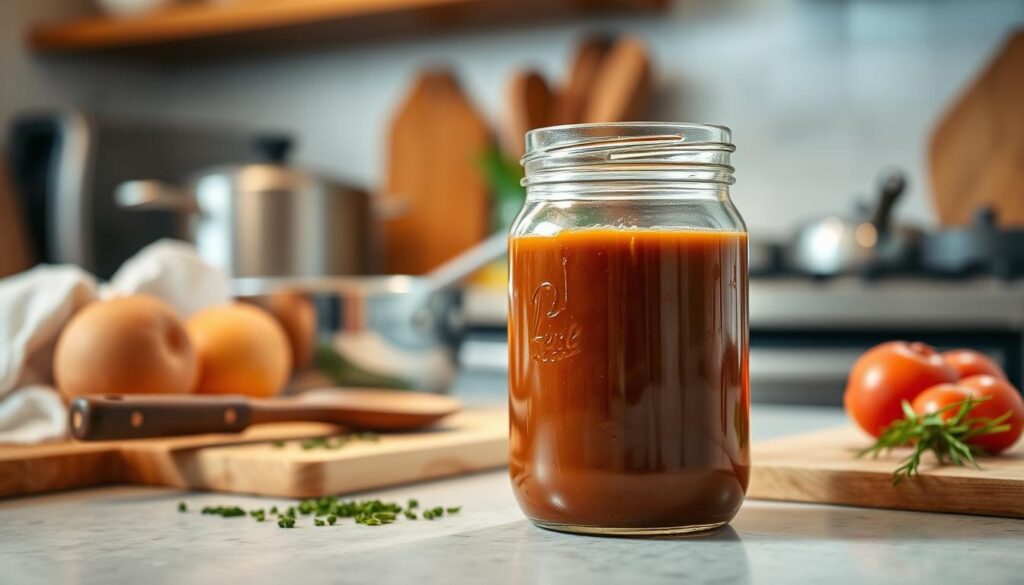
Many home cooks wonder if they can make gravy ahead of time without losing flavor. The good news is that you can prepare your sauce days or weeks before your event. With the right steps, your hard work stays safe and delicious for all guests.
Proper Refrigeration Techniques
When you decide to store homemade gravy in the fridge, act fast. Let the sauce cool a bit at room temperature, but not for more than two hours. Put it in an airtight container to avoid bad smells.
Sealed gravy stays fresh for up to three days. Always check for spoilage before using it again. If it smells bad or looks wrong, make a new batch.
Freezing Gravy for Future Use
Freezing is great for making gravy ahead of time for holidays. Cool the sauce and put it in freezer-safe bags or containers. Leave some room for expansion. You can freeze it for up to three months without losing much quality.
When you’re ready, thaw it in the fridge the night before. This slow thaw keeps the ingredients good. Patience is key when preparing meals in advance.
Best Methods for Reheating Without Breaking the Emulsion
The biggest challenge with reheating gravy is keeping the fat together. Use a small saucepan over low heat instead of the microwave. This gentle heat lets you watch the texture closely.
If the sauce looks thin or separated, whisk it vigorously while it heats. Adding a bit of fresh stock or water can also help. This trick keeps your sauce smooth and velvety every time.
| Storage Method | Recommended Time | Best Container |
|---|---|---|
| Refrigerator | Up to 3 Days | Airtight Glass Jar |
| Freezer | Up to 3 Months | Freezer-Safe Bag |
| Reheating | Low Heat | Small Saucepan |
Creative Variations for Different Dishes
Making sauce from scratch is fun because you can change it for any meal. Learning the basics lets you try many gravy variations. These can go with holiday roasts or simple dinners.
Creating a Creamy Mushroom Gravy
A creamy mushroom gravy is great for vegetarians. Start by sautéing mushrooms in butter until they’re dark. Then add flour and stock.
The mushrooms add a rich flavor, like meat. Finish with heavy cream or sour cream for a smooth texture. It’s perfect with mashed potatoes or roasted veggies.
Developing a Peppery Country-Style Gravy
A peppery country-style gravy is a must for comfort food lovers. It has lots of black pepper for a spicy kick. It’s great with fried foods or buttery biscuits.
Use a light roux and whole milk for a pale sauce. It’s incredibly satisfying and classic in Southern cooking.
Making a Rich Red Wine Reduction Gravy
A red wine reduction gravy is perfect for beef or lamb. Start by deglazing the pan with red wine. Use Cabernet Sauvignon or Merlot.
Let the wine simmer until it halves. This makes the sauce rich and complex. It’s a restaurant-quality sauce that enhances your main dish.
- Mushroom: Best for vegetarian dishes and earthy sides.
- Peppery: Ideal for breakfast biscuits and fried chicken.
- Red Wine: Perfect for steak, lamb, and hearty roasts.
Conclusion
You now know how to make rich, velvety gravy without meat drippings. By choosing top-notch ingredients and learning about the roux, you can make any meal better.
Keep practicing to get better at making gravy. Try different stocks from brands like Swanson or Kitchen Basics to find your favorite taste. You can also tweak your seasonings to make each batch just right for you.
Don’t be shy to share your homemade gravy at your next dinner party. It adds a special touch that store-bought packets can’t. Your guests will be impressed by your cooking skills.
Keep this guide close for when you need a tasty sauce for mashed potatoes or roasted veggies. You have everything you need to make amazing gravy at home. Enjoy cooking from scratch and relish every bite of your creations.
FAQ
Can I really achieve a professional-quality sauce without using meat drippings?
Yes, you can. Using Kerrygold unsalted butter and Swanson Chicken Broth gives a rich flavor. The trick is to mix it well to get a smooth texture.
What is the secret to a smooth, lump-free gravy?
The secret is a roux and constant stirring. Use a 1:1 ratio of fat to flour and whisk slowly. If clumps form, pass it through a fine mesh sieve or blend it briefly.
How can I add a deep, savory “umami” flavor without pan juices?
Use “umami boosters” like Kikkoman soy sauce or Lee & Perrins Worcestershire sauce. They add a deep, savory taste to your gravy.
Why should I choose unsalted butter over salted varieties?
Unsalted butter lets you control the salt in your dish. Many stocks, like College Inn, are already salty. This way, you can season just right with kosher salt and pepper.
How do I know when my gravy has reached the perfect thickness?
Use the nappe test. If the gravy coats the spoon and you can draw a line through it, it’s perfect. Adjust the heat to get the right consistency.
Can I prepare this gravy ahead of time for the holidays?
Yes, preparing it ahead of time is great for the holidays. You can make it up to three days in advance or freeze it for up to three months. Reheat it slowly to keep it smooth.
What are the best herbs to use for a classic holiday profile?
McCormick dried thyme and rosemary are great for a classic taste. Sautéing garlic and onions in butter adds a rich flavor to your gravy.
How do I fix a gravy that has become too salty?
If it’s too salty, don’t add more stock. Instead, whisk in distilled water or heavy cream. The cream adds richness and balances the salt.
Is it possible to make a red wine reduction using this method?
Yes, it is. Cook a light brown roux, then deglaze with red wine. This adds a sophisticated flavor to your sauce.
Can I make this recipe gluten-free?
Yes, you can. Use Bob’s Red Mill 1-to-1 Baking Flour instead of all-purpose flour. Or, add a cornstarch slurry for a glossy, thick sauce without gluten.