
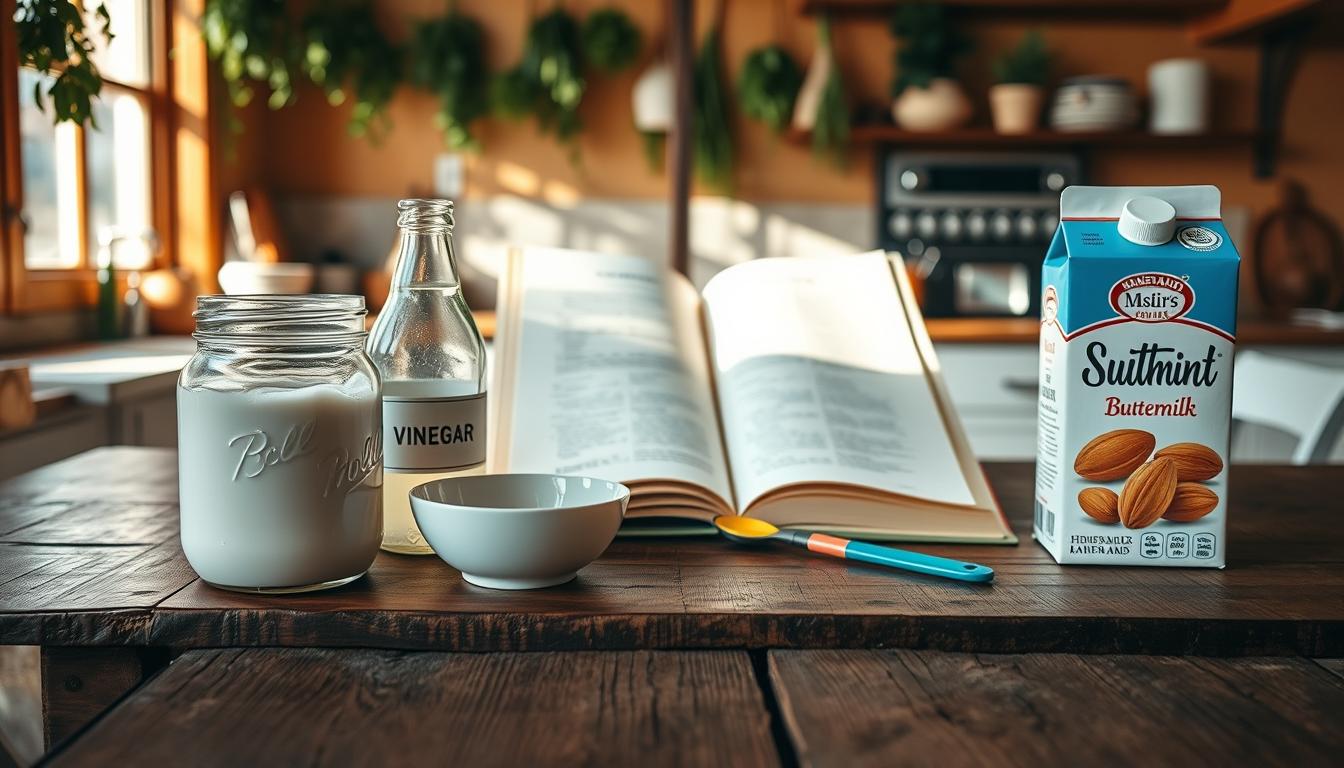
I often find myself deep into a baking project, only to realize my fridge is empty of key ingredients. It’s frustrating when you’re ready to mix batter but lack that essential tangy liquid. Knowing what can I substitute for buttermilk in a recipe saves time and prevents a trip to the store.
Effective alternatives use simple pantry staples to mimic buttermilk’s acidity and leavening power. Whether you’re making fluffy pancakes or a savory marinade, these quick fixes ensure your results are consistent. I’ll guide you through various dairy and non-dairy options to bake with confidence.
Key Takeaways
- Acidic agents like lemon juice or vinegar mixed with milk create an instant curdled effect.
- Plain yogurt or sour cream serves as an excellent thick, tangy replacement.
- Non-dairy options like soy or almond milk work well when combined with a splash of acid.
- Proper ratios are essential to maintain the correct chemical reaction for leavening.
- These simple swaps perform perfectly in both sweet baked goods and savory dishes.
Understanding the Role of Buttermilk in Baking
First, we need to understand buttermilk’s special qualities. It was once the leftover liquid from churning cream into butter. Bakers used it to make doughs moist and tender.
Now, most buttermilk sold in stores is cultured. This makes it thicker and tangier. Finding a buttermilk substitute for baking means looking for something with this unique flavor.
The tanginess does more than add taste. It also helps with baking. It works with baking soda to create bubbles. These bubbles make baked goods light and fluffy.
Knowing how buttermilk works with other ingredients helps when we’re out of it. It lets us pick the right substitute. This way, our baked goods stay delicious, just like the originals.
What Can I Substitute for Buttermilk in a Recipe Using Dairy
I often use simple dairy items to get that tangy buttermilk taste in my baking. These kitchen ingredient swaps are easy to find in your fridge. You don’t need to go to the store to get that perfect crumb in your baked goods.
Creating a Milk and Vinegar Mixture
Making a milk and vinegar mix is a common trick. Mix one tablespoon of white vinegar or lemon juice with one cup of whole milk. It is important to let it sit for 10 to 15 minutes.
After sitting, the milk will start to curdle. This is what you want before adding it to your batter. It’s a go-to kitchen ingredient swap for many home bakers.
Utilizing Plain Yogurt as a Direct Swap
Plain yogurt is great for buttermilk because it’s tangy. It’s thicker than buttermilk, so you’ll need to thin it. Mix in a bit of milk or water until it’s pourable.
This swap is perfect for richer flavors. Yogurt’s acidity works well with baking soda, making cakes and muffins rise. Make sure to use plain, unsweetened yogurt to keep your dish’s flavor right.
Using Sour Cream for Richness
Sour cream is great for a rich, moist result. It’s thick and creamy, keeping your baked goods moist. Thin it with a bit of milk to match buttermilk’s consistency.
This method adds a deep flavor, great with chocolate or spices. The key advantage is its high fat content, making the crumb tender and luxurious. Just whisk it until smooth, and you’re ready to bake.
Non-Dairy Alternatives for Vegan Baking
Finding a good dairy-free buttermilk alternative is simpler than you might think. It’s all about understanding plant-based acids. Without dairy, you need something to make your baked goods rise. These vegan baking tips will help you get the right texture without animal products.
Almond Milk and Acid Combinations
Almond milk works great because it tastes neutral. I mix one cup of unsweetened almond milk with one tablespoon of apple cider vinegar. This makes a quick, curdled mix that works well with baking soda for lift.
Soy Milk and Lemon Juice Techniques
Soy milk is best for a thicker, more real feel. It has more protein, so it curdles better with acid. Just add a tablespoon of fresh lemon juice to your soy milk and wait five minutes to see the magic happen.
Coconut Milk for Dairy-Free Tang
Canned coconut milk adds richness to your recipes. It’s thicker, but thinning it with water helps it act like buttermilk. Using these vegan baking tips keeps your cakes moist and adds a nice tang.
The Science of Acid and Leavening
Baking is like a science experiment in your kitchen. When I explore baking science basics, I see that each ingredient has a special role. The right mix of ingredients is key to getting a cake or pancake to rise perfectly.
How Acid Reacts with Baking Soda
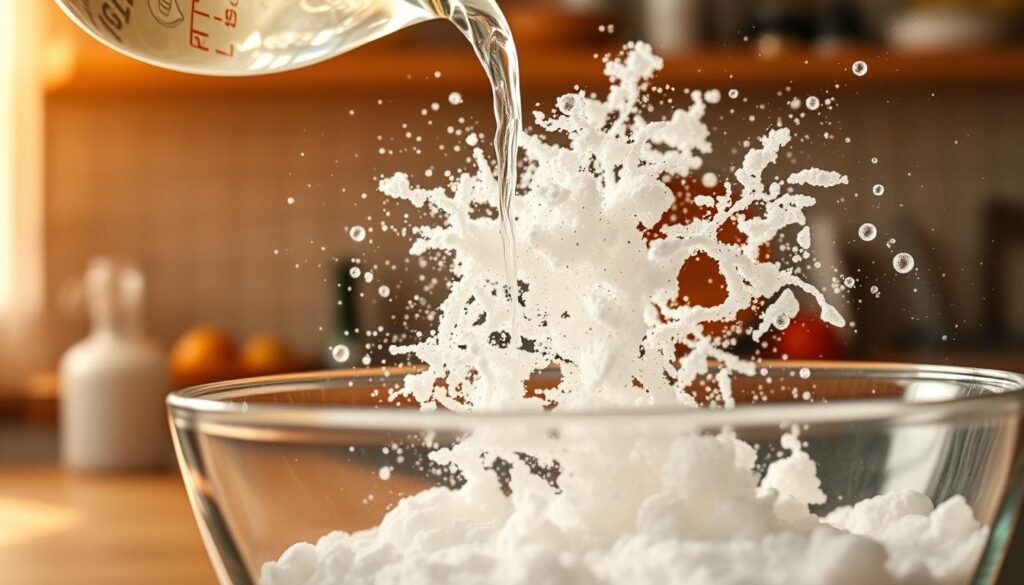
Buttermilk adds acidity to many recipes. This acidity is what makes baking soda react. When acid and baking soda meet, they create bubbles.
These bubbles get trapped in the batter. As it heats up, the mixture expands. This essential lift makes baked goods light and fluffy. Without it, they’d be dense and unappealing.
Why Substitutes Might Affect Texture
Looking for a buttermilk substitute for baking means focusing on acidity. If the substitute isn’t acidic enough, the acid and baking soda reaction won’t work right. This can make the final product dense or flat.
Choosing the right buttermilk substitute for baking keeps the pH balance right. This ensures the texture of my baked goods stays consistent. Knowing this helps me fix my recipes with confidence.
Step-by-Step Guide to Making Your Own Buttermilk Substitute
Making buttermilk substitute at home is quicker than buying it. Powdered buttermilk is great, but you can also make a fresh version. It only takes a few minutes.
Measuring Your Ingredients Accurately
It’s important to measure your milk and acid correctly. This ensures the right acidity for your recipe. Use a measuring cup and a precise spoon for lemon juice or vinegar. Precision is the secret to the perfect mix.
Allowing the Mixture to Curdle Properly
After mixing your milk and acid, let it sit for at least ten minutes. This step is key for homemade buttermilk curdling. It lets the proteins denature and the liquid thicken. Rushing this can lead to missing the tang and texture buttermilk adds.
Testing the Consistency Before Adding to Batter
After ten minutes, check the mixture’s texture. You should see soft curds. This means the acid has reacted with the milk. When you see curds, your mixture is ready to add to your batter for the best results.
Best Substitutes for Pancakes and Waffles
I’ve spent years trying different ingredients to make fluffy pancakes at home. The best buttermilk substitute for pancakes is often in your fridge. Pancakes and waffles need acid and leavening agents to be light and airy.
Achieving Fluffy Results with Yogurt
Using Greek yogurt is a great fluffy pancake secret. Mix Greek yogurt with regular milk in a 1:2 ratio. This creates a thick, tangy base like cultured buttermilk. It adds the right acidity to make your pancakes rise well.
Adjusting for Thinner Batters
If your substitute makes a thinner batter, don’t worry. Add a tablespoon of flour at a time until it’s right. If it’s too thick, a little extra milk will help.
Getting the right balance is key. It makes your pancakes puff up when flipped, not spread flat. Use this guide to find the perfect ratio for your next batch.
| Substitute Method | Ratio | Best Use Case |
|---|---|---|
| Greek Yogurt & Milk | 1:2 | Extra fluffy pancakes |
| Milk & Lemon Juice | 1 cup : 1 tbsp | Light, airy waffles |
| Sour Cream & Water | 1:1 | Rich, tender cakes |
Ideal Swaps for Baking Cakes and Muffins
Cakes and muffins are easier to substitute ingredients in than other baked goods. They often have complex flavors from sugar, spices, and fats. So, the exact tang of buttermilk is not as important. You can get great results by picking the right substitute for buttermilk in cake recipes.
Maintaining Moisture in Dense Cakes
For dense batters, keeping the cake moist is key. The fat in your liquid is what matters most. Choose full-fat dairy to get that buttermilk richness.
For a milk-and-vinegar mix, add melted butter or oil. This extra fat keeps the crumb soft. Proper hydration is the secret to a soft, delicious muffin or cake.
Balancing Flavor Profiles with Sour Cream
Sour cream is my top pick for adding moisture and flavor to dense cakes. It’s thicker than milk, which helps with batter structure. Its acidity also works well with baking soda for a light texture.
Using sour cream as a substitute for buttermilk in cake balances sweetness and richness. The tangy flavor complements the sugar and butter. I always suggest thinning sour cream with milk if needed for a pourable mix.
Substitutes for Savory Recipes and Marinades
When I cook, I often find that buttermilk in savory recipes is a secret weapon. It makes proteins tender and adds a complex flavor. This is hard to get with plain milk alone.
Whether I’m marinating meat or making a dressing, finding the right balance is key. It makes the dish delicious.
Using Buttermilk Swaps for Fried Chicken
For dinner, using a buttermilk replacement for fried chicken is a game-changer. The classic Southern method uses buttermilk to make meat tender and juicy. If I’m out of buttermilk, I mix milk with vinegar or lemon juice.
I let this mixture sit for about ten minutes until it curdles. This step makes the acidity work well to tenderize the chicken. Even without real buttermilk, the chicken stays crispy and moist.
Adding Tang to Salad Dressings
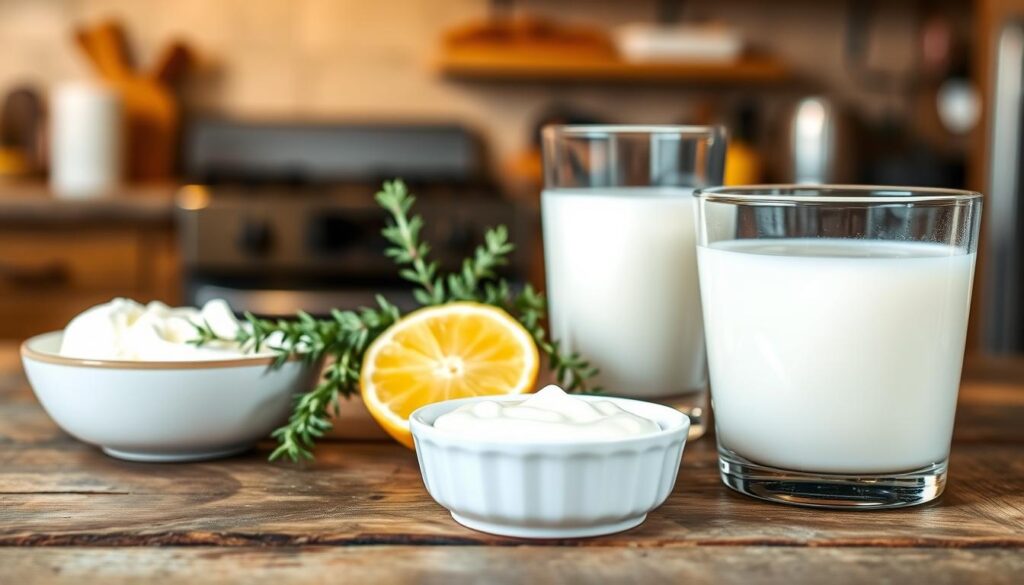
I also use these swaps to add tang to salad dressings. Mixing thinned Greek yogurt or sour cream gives a buttermilk-like zest. These alternatives add thickness and acidity to coat greens well.
If it’s too thick, I add water or lemon juice. Using buttermilk in savory recipes this way keeps my kitchen running smoothly. It’s a simple way to get great results without needing a special ingredient.
Common Mistakes When Substituting Buttermilk
Getting the perfect rise in baked goods needs precision, even when making how to make buttermilk substitute at home. Even experienced bakers can make common baking mistakes. These mistakes can ruin the texture and taste of their baked goods. By focusing on your process, you can get consistent results every time.
Ignoring the Importance of Resting Time
Rushing the preparation of your dairy mix is a common mistake. Not letting the milk and acid sit for at least ten minutes means the chemical reaction won’t work right.
This waiting time is key for the acid to mix with the milk. It makes the milk curdle, which is needed for light and fluffy baked goods. Patience is truly a key ingredient in successful baking.
Using the Wrong Type of Acid
Choosing the right acid is as important as waiting the right amount of time. Using lemon juice or white vinegar is standard, but the wrong ratio or low-quality acid can mess up the batter.
I always suggest using a kitchen scale for measuring. If liquid substitutes are too hit-or-miss, try buttermilk powder benefits. It’s a reliable, concentrated flavor and acidity without needing to curdle.
| Common Error | Impact on Texture | Recommended Fix |
|---|---|---|
| Skipping Rest Time | Dense, flat results | Wait 10 full minutes |
| Imprecise Measuring | Unbalanced rise | Use a digital scale |
| Wrong Acid Type | Off-putting flavor | Use white vinegar or lemon |
| Ignoring Temperature | Poor curdling | Use room temp milk |
Tips for Adjusting Baking Times and Temperatures
Baking with buttermilk substitutes needs extra care. These substitutes change the acidity in your batter. This can make your baked goods react differently to heat. Staying alert during baking is key to success.
Monitoring Oven Spring with Substitutes
Oven spring is when baked goods quickly rise in the oven. This rise depends on how well your leavening agents work with the batter’s acidity. Using substitutes can make the rise faster or slower.
Watch your oven closely during the first half of baking. If the rise is too fast, you might need to adjust. Consistent monitoring helps avoid problems with your bread or cake’s structure.
Visual Cues for Doneness
Don’t just rely on a timer when trying new ingredients. I prefer to use visual signs to check if my treats are done. The color of the crust often shows if the inside is set right.
The spring-back test is another way to check. Gently press the center of your cake or muffin. If it springs back, it’s ready. Adjusting oven temperature for baking can also help with different substitutes.
If your oven is too hot, lower the temperature to avoid over-browning. A bit higher temperature might be needed for thinner batters. Mastering these small tweaks will improve your baking results.
Troubleshooting Your Baked Goods
Even the most skilled bakers can run into problems with a buttermilk substitute for baking. If your baked goods are flatter or denser than you hoped, don’t worry. It’s all part of learning when you try new things in the kitchen.
Fixing Flat or Dense Results
A dense texture often means the acid-base reaction wasn’t strong enough. The acidity is crucial for a light, airy texture. When troubleshooting baking results, first check if your acidic part is strong enough.
If your baked goods keep coming out flat, try these quick fixes:
- Add a bit more lemon juice or vinegar to the mix.
- Let the mixture sit for at least ten minutes before adding it to the batter.
- Make sure your dairy or non-dairy base is at room temperature for better mixing.
Adjusting Leavening Agents if the Substitute Fails
At times, the problem is with the leavening agent, not the liquid swap. If your baking soda is old, it won’t react well with the acid. This can cause your baked goods to lack volume. Test your baking soda by adding a pinch to vinegar to see if it bubbles well.
If the reaction is weak, you might need to replace your leavening agent. When troubleshooting baking results, always use precise measurements. If you’re having trouble with a buttermilk substitute for baking, try adding a bit more baking soda to see if it helps.
Conclusion
Discovering a reliable substitute for buttermilk in recipes is easy. It saves time and cuts down on food waste. No need to rush to the store for this tangy ingredient anymore.
For a quick fix, mix milk and vinegar. Or, use yogurt for a creamy alternative. These swaps work well in both sweet and savory dishes. They help keep your baked goods just right.
This guide should make you more confident in baking, even without buttermilk. Knowing your options lets you try different ingredients. It’s a great way to explore new flavors.
With a bit of knowledge and the right method, finding a buttermilk substitute is easy. Try these tips next time you bake. Then, share your success with loved ones.
FAQ
What is the most reliable dairy-based substitute for buttermilk in a standard recipe?
In my kitchen, I mix one cup of whole milk with one tablespoon of Sunkist lemon juice or Heinz white vinegar. I let it sit for about ten minutes. This lets the acidity develop, mimicking buttermilk’s chemical properties.
Can I use yogurt or sour cream as a direct replacement?
Yes, I often use Chobani Greek yogurt or Daisy sour cream. I thin them out with a bit of milk or water. This gives the right moisture and tang for recipes like muffins or quick breads.
How do I create a vegan-friendly buttermilk substitute?
For vegan baking, I use unsweetened Silk soy milk or Blue Diamond almond milk. Adding a teaspoon of acid and letting it rest works well. Soy milk curdles well, creating the needed acid-base balance.
Why is the acidity in buttermilk so important for baking?
The acid is key for leavening. Mixing it with baking soda creates carbon dioxide gas. This gas makes pancakes fluffy and cakes tender; without enough acid, they’re dense.
Can I use buttermilk substitutes in savory dishes like fried chicken?
Absolutely. For fried chicken, I mix milk and vinegar or thinned yogurt. The acid tenderizes the meat, keeping it juicy and adding zest.
Why did my baked goods turn out flat even though I used a substitute?
It often happens if the mixture lacks acidity or if it didn’t rest long enough. Without at least ten minutes, the proteins don’t react with the leavening agents properly.
Should I adjust my oven temperature when using a buttermilk alternative?
Keep an eye on the oven spring and visual cues. Some substitutes can affect browning and rising rates. I use the spring-back test or check the crust color for perfect results.
Does the type of acid I choose affect the final flavor?
Yes, it can. I prefer Heinz white vinegar for a neutral taste. But for lemon poppyseed muffins, I use Sunkist lemon juice for extra citrus flavor.
Is it possible to use coconut milk as a dairy-free alternative?
Full-fat canned Thai Kitchen coconut milk works well for a rich flavor and tang. It adds a slight coconut taste, great for tropical cakes or savory curries.
What should I do if my pancake batter seems too thin after adding the substitute?
If it’s too runny, add a tablespoon of Gold Medal all-purpose flour. This ensures the pancakes puff up well on the griddle.