
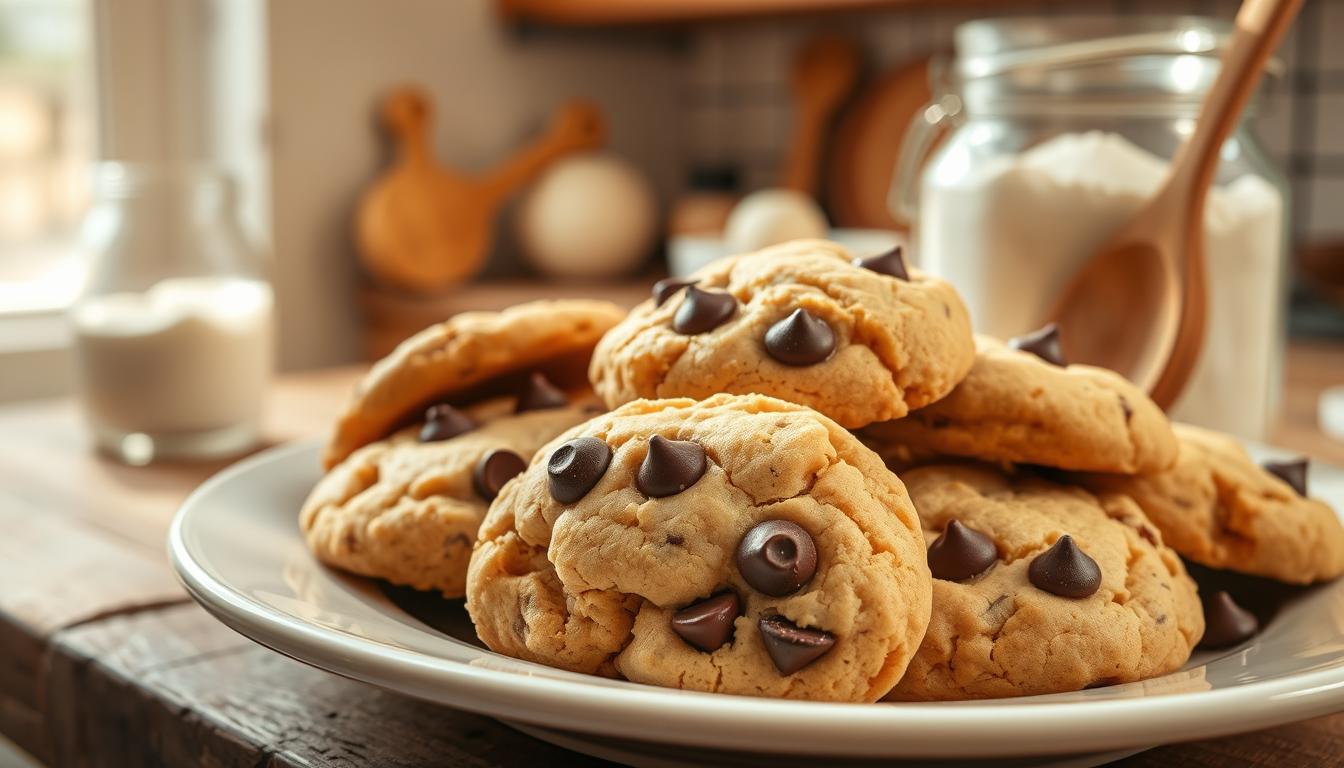
There’s nothing like the joy of pulling fresh treats from the oven. But, my excitement often turns to disappointment when they become dry and hard the next day. If you’ve ever wondered how do you keep cookies soft after baking, you’re not alone.
I’ve spent years trying to prevent cookies from hardening. My aim is to help you enjoy soft chewy cookies for days, not just minutes. With a few simple cookie storage tips, you can keep your cookies delicious and moist.
This guide is your go-to for keeping cookies just right. Let’s dive into the key techniques to elevate your dessert game.
Key Takeaways
- Store treats in an airtight container to lock in moisture.
- Add a slice of white bread to the container to keep snacks chewy.
- Avoid over-baking your dough to maintain a soft center.
- Let your treats cool completely before sealing them away.
- Use parchment paper between layers to prevent sticking.
The Science of Soft Cookies
Ever wondered why some cookies stay soft while others get hard? It’s all about baking science. Seeing my kitchen as a lab helps me control the cookie texture better. By knowing how ingredients work together, I can guess how the dough will turn out before baking.
Understanding Moisture and Sugar
Sugars and starches make cookies hard as moisture evaporates. Sugar pulls in and holds water, keeping cookies soft for longer. This is key for soft treats that last.
Using more brown sugar adds moisture and acidity. This mix breaks down starches, making cookies chewier. Without it, cookies dry out fast.
The Role of Fats in Texture
Fats are vital for dough structure. They coat flour proteins, stopping gluten strands from forming. This makes cookies tender. How you mix fats affects the cookie’s softness.
The table below shows how different ingredients affect your cookies:
| Ingredient | Primary Function | Impact on Texture |
|---|---|---|
| Brown Sugar | Moisture retention | Chewy and soft |
| Butter | Shortening agent | Tender and rich |
| Egg Yolks | Emulsification | Dense and moist |
| White Sugar | Crisp edges | Crunchy and light |
By understanding baking science, you can tweak recipes to your liking. Whether you want soft, cake-like cookies or chewy centers, knowing these basics is key.
How do you keep cookies soft after baking
Getting the perfect cookie texture starts before you even turn on the oven. Many people ask, “How do you keep cookies soft after baking?” The answer often involves small changes in your baking routine. Consistency is key in the kitchen.
My Personal Approach to Texture Control
To make soft chewy cookies, I focus on the right mix of ingredients and how I handle the dough. I make sure my butter is at the right temperature before mixing. This keeps the fats from separating too soon, keeping the cookies moist.
I also measure my dry ingredients carefully. Using a kitchen scale is more accurate than cups, which can pack in too much flour. Too much flour can ruin a soft, delicious cookie.
Why Timing is Everything
Timing is the most important factor to avoid dry cookies. Even a minute too long in the oven can make a big difference. I take my trays out when the edges are set but the centers are slightly soft.
The baking sheet’s heat will finish cooking the cookies without drying them out. This way, the center stays soft, and the edges have just enough crunch. Here’s how timing affects your cookies:
| Baking Time | Texture Result | Moisture Level |
|---|---|---|
| Under-baked | Very soft and gooey | High |
| Perfectly timed | Soft and chewy | Balanced |
| Over-baked | Crispy and dry | Low |
Essential Ingredients for Moisture Retention
The secret to moist cookies is in the quality of your ingredients. Choosing high-quality ingredients helps your cookies stay moist. Even small changes in your pantry can greatly affect your cookies’ texture.
Choosing the Right Flour
The flour you pick affects your cookie’s texture. All-purpose flour is common, but I prefer cake flour for a softer crumb. Cake flour has less protein, which means less gluten.
This helps your cookies stay soft, not chewy or tough. If you don’t have cake flour, mix two tablespoons of all-purpose flour with cornstarch for a similar delicate texture.
Brown Sugar Versus White Sugar
Sugar does more than sweeten; it helps control moisture. Brown sugar, with its molasses, attracts and holds water.
Using more brown sugar than white sugar keeps your cookies soft. This simple change helps your cookie ingredients stay moist. Brown sugar adds a rich flavor and helps your cookies rise better.
- It adds a rich, caramel-like depth of flavor.
- The acidity in molasses reacts with baking soda for a better rise.
- It creates a denser, chewier bite that stays soft for days.
The Importance of Egg Yolks
Egg yolks are key for a tender cookie. They add richness and moisture. Egg whites provide structure, but yolks make the dough soft.
Adding an extra yolk boosts the fat content. Also, using traditional butter is important. It has more water than store brands, helping your cookies stay soft.
Mastering the Baking Process
Getting good at baking is key to soft and chewy treats. Precision is essential to prevent cookies from hardening after cooling. Understanding how heat affects your dough helps you get that perfect texture every time.
Setting the Correct Oven Temperature
Your oven is critical, but it can trick you. Many ovens are hotter or cooler than they seem, leading to overbaking cookies unknowingly. An oven thermometer is a cheap but valuable tool to check your oven’s real temperature.
Keeping your oven temperature consistent is vital for moisture. If it’s too hot, edges burn before the center cooks. If it’s too cool, cookies spread too much and dry out. Always preheat fully to create a stable baking environment.
Identifying the Perfect Doneness
Knowing when to take your cookies out of the oven takes practice. Don’t just rely on a timer, as every oven and recipe is different. Look for specific signs that the dough is ready.
Visual Cues for Soft Centers
There are a few key signs to ensure your cookies stay soft. When the edges are light golden brown, it’s a good sign. Here’s what I check:
- The edges appear firm and slightly browned.
- The center of the cookie looks just set but slightly soft.
- The surface of the dough has lost its raw, shiny appearance.
The Carry-Over Cooking Effect
One big mistake is leaving cookies in the oven too long. You must consider the carry-over cooking effect. This effect continues to firm up your cookies even after they’re out of the oven.
Waiting until cookies look done in the oven can lead to overbaking. Remove them when the centers are slightly soft. This way, you prevent cookies from hardening into a hard texture. Trust the process and let the residual heat finish the job.
Proper Cooling Techniques
Learning how to cool cookies right is key to keeping them soft and tasty. Many bakers hurry this step, but it’s really important. The way you handle your cookies after baking greatly affects their texture.
Removing Cookies from the Baking Sheet
Timing is everything when taking your tray out of the oven. Let your cookies sit on the hot baking sheet for two to five minutes before moving them. This lets the centers set a bit, so they don’t fall apart when you lift them.
If you move them too fast, they might break or lose their shape. But if you leave them too long, the bottoms can get overcooked. Finding that sweet spot is key for a soft, chewy center.
Using Wire Racks Effectively
When the cookies are firm enough, move them to a wire rack. This method is best for cooling cookies because it lets air circulate under them. Without this air, moisture can get trapped, making the bottom soggy.
Always let your cookies cool completely before stacking them. If you stack them while they’re warm, they’ll stick together. This makes a mess. Being patient here ensures your cookies turn out just right.
| Cooling Method | Texture Result | Best For |
|---|---|---|
| Baking Sheet Only | Soft but potentially soggy | Very delicate cookies |
| Wire Rack | Evenly soft and stable | Standard drop cookies |
| Direct Countertop | Harder bottoms | Crispy cookies |
The Bread Slice Method
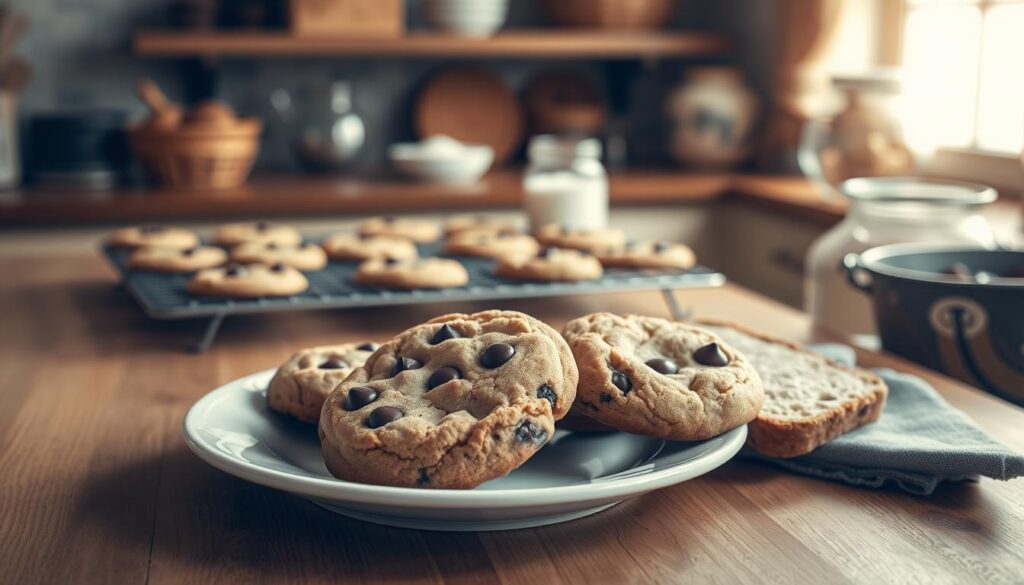
Keeping cookies soft is easy with a simple trick: a slice of bread. This method works wonders for those who love moist cookies days after baking. By putting bread in an airtight container with your cookies, you keep them from drying out.
How It Works
The bread slice method uses moisture migration. Cookies soak up the humidity from the bread. As the bread dries, the cookies stay soft and chewy.
“The secret to a perfect cookie is not just in the oven, but in how you treat it once it cools down.”
Choosing the Right Type of Bread
Use plain white bread for this trick. It won’t add any unwanted flavors to your cookies. Stay away from sourdough or rye, as their strong smells can ruin your cookies.
Without bread, try the apple slice trick. Place a thin apple wedge in the container. But, be aware that apples might give your cookies a fruity scent.
| Method | Effectiveness | Flavor Impact |
|---|---|---|
| White Bread | High | None |
| Apple Slice | Medium | Fruity |
| Brown Sugar | Low | Sweet |
When to Replace the Bread
Check your container every 24 to 48 hours. If the bread feels hard, it’s time to replace it. Consistency is key for moist cookies.
Just throw away the old bread and add a new slice. This keeps your cookies delicious all week long.
Using Airtight Storage Containers
The right container is as key as the recipe itself. You put effort into baking, so you want your results to last. Simple cookie storage tips can greatly improve your kitchen.
Selecting the Best Containers
For the best freshness, use a top-notch airtight container. I like metal tin boxes because they block light and keep humidity out. Unlike loose-fitting jars, a tight seal keeps your cookies fresh.
Avoiding Plastic Wrap Pitfalls
Many turn to plastic wrap, but it’s not always the best. It often doesn’t seal well, letting air in and drying out cookies. Plus, if cookies are warm, plastic can make them soggy.
The Importance of Room Temperature Storage
Don’t store cookies in the fridge. Cold can make them hard and dry fast. Instead, keep them in a cool, dry spot at room temperature for the best moisture.
| Storage Method | Moisture Retention | Best For |
|---|---|---|
| Metal Tin | Excellent | Crispy and soft cookies |
| Plastic Container | Good | Short-term storage |
| Plastic Wrap | Poor | Immediate consumption |
| Refrigerator | Very Poor | Not recommended |
Freezing Strategies for Long-Term Softness
The freezer is a great tool for keeping cookies soft for months. Baking a big batch can feel overwhelming. But freezing lets you enjoy them whenever you want.
Preparing Cookies for the Freezer
Make sure cookies are cool before freezing. Any heat can cause moisture, ruining the delicate cookie texture. Wrap each cookie in plastic wrap and then in a freezer bag.
Freezing raw dough can also work wonders. A quick 10-minute freeze before baking helps. It keeps the edges from spreading too much, making the cookies better.
Thawing Methods to Maintain Texture
Thawing cookies slowly is key. Leave them at room temperature in their packaging. This keeps them soft and chewy.
Don’t use the microwave unless you’re in a hurry. It can make cookies gummy or uneven. Letting them thaw naturally keeps them fresh-tasting.
Reviving Stale or Hard Cookies
My kitchen holds many secrets, and one of my favorites is how to revive stale cookies. Even the tastiest cookies can dry out after a few days. But, you can make them soft again with a few easy steps.

The Microwave Trick
For a quick soft treat, I use a microwave cookie hack. Wrap your cookie in a damp paper towel and heat for 20 to 30 seconds. The towel’s moisture creates steam, making the cookie soft instantly.
Don’t overheat the cookie, as it can become chewy or tough. Check it after 15 seconds to get it just right. This trick is perfect for a fast snack without oven prep.
Using the Oven for a Quick Refresh
For a bigger batch, the oven is better for a deeper refresh. Heat your oven to 300°F and bake the cookies for three to five minutes. This method spreads the cookie’s moisture evenly.
This makes the cookies warm and soft, almost like new. Let them cool for a minute before eating. These methods keep your cookies fresh, ensuring no batch is wasted.
Common Mistakes That Lead to Dry Cookies
Getting the perfect cookie texture starts with avoiding common mistakes. Small changes in your baking routine can make a big difference. Knowing these pitfalls helps keep your cookies soft and tasty for longer.
Over-Measuring Flour
One big mistake is not measuring dry ingredients right. Scooping flour with a measuring cup can pack it down, adding too much to your dough. This makes your cookies dense and dry, lacking the moisture they need to stay soft.
To avoid this, use a kitchen scale for accurate measurements. If you don’t have a scale, try the spoon and level method. It helps prevent adding too much flour.
Baking for Too Long
It’s easy to accidentally bake cookies for too long. Overbaking cookies makes them hard and crunchy. They keep cooking on the hot baking sheet after you take them out. Pull them out when the edges are set but the centers are slightly underdone.
Improper Storage Habits
How you store cookies after they cool is key. Exposing them to air dries them out quickly. To prevent cookies from hardening, store them in an airtight container as soon as they cool down.
Don’t leave them on the counter or in a loose bag. These habits cause moisture loss. Proper storage is essential to keep your cookies soft and delicious.
| Common Mistake | Primary Impact | Recommended Fix |
|---|---|---|
| Packing Flour | Dense, dry texture | Use a kitchen scale |
| Extended Baking | Hard, brittle edges | Remove while centers are soft |
| Air Exposure | Stale, crumbly cookies | Use airtight containers |
Conclusion
Getting the perfect texture in your kitchen is a great skill. It makes every batch of treats special. Now, you know how to keep your cookies soft and chewy.
Try these tips at home. Use a slice of bread or a good airtight container. Your cookies will stay fresh for days.
Baking gets better with each try. You can make older batches just as good as new. Every bite will be as tasty as the first.
Make soft chewy cookies for your loved ones. Your hard work will show in every bite you share.
FAQ
How do sugars and fats influence the soft texture of my cookies?
Sugars and fats are key to soft cookies. Brown sugar keeps them moist. Using good butter helps the dough stay soft.
Why is it better to use cake flour and egg yolks for moisture retention?
Cake flour makes cookies tender. Egg yolks add fat and keep them moist. These changes make cookies stay soft longer.
How can I identify the perfect doneness to avoid overbaking my cookies?
Look for a slight shine loss on the dough. This means it’s time to take them out. Remember, they firm up after leaving the oven.
What is the best way to use wire racks during the cooling process?
Cool cookies on wire racks after a few minutes. This stops them from getting soggy. It keeps them perfect before storing.
How does the bread slice method help maintain cookie softness for days?
Place a bread slice in a container with cookies. They absorb moisture from the bread. Apple slices work too for keeping them moist.
Which storage containers are most effective for preserving a delicate crumb?
Use airtight containers like Rubbermaid or Tupperware. Store cookies at room temperature to keep them soft.
What are my options for reviving cookies that have already gone stale?
For a single cookie, try the microwave. For many, use the oven. These methods revive cookies quickly.
How can I prevent the common mistake of over-measuring flour?
Avoid packing flour into cups. Use a kitchen scale or the “spoon and level” method. This prevents dry cookies.
What is the best strategy for freezing cookies for long-term preservation?
Freeze cookies to keep them soft. Use an airtight container to prevent freezer burn. My thawing methods keep them soft and fresh.