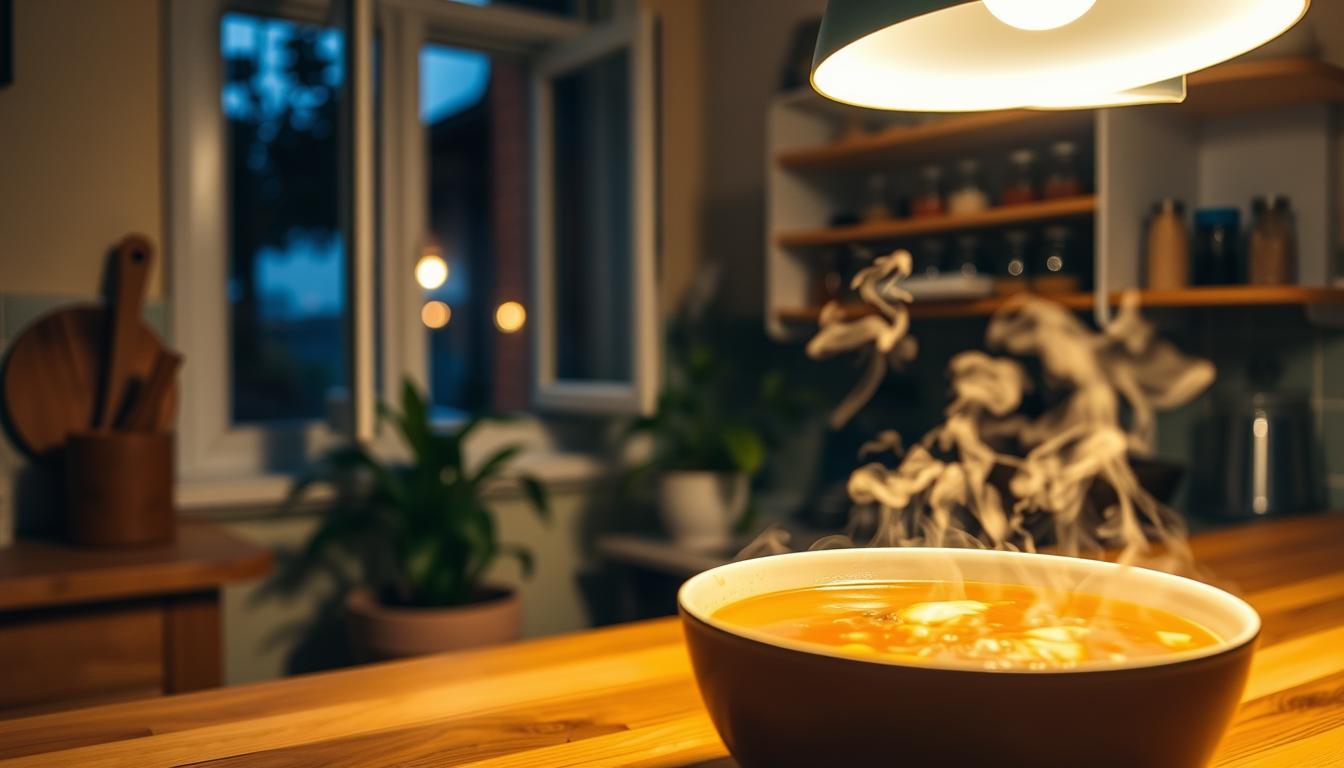
We’ve all been there. You finish a tasty dinner, feel tired, and think cleaning up can wait. But, you might wonder, is it safe to leave soup out overnight? My honest answer is that your health is more important than saving money.
Some folks say they’ve left soup out for years without getting sick. But, the science shows it’s not worth the risk. Bacteria grow fast in temperatures between 40°F and 140°F. Leaving your soup on the counter is a perfect spot for harmful bacteria to spread quickly.
Your kitchen should be a safe place, not a risk for food poisoning. Even if your soup looks and smells good, harmful toxins might be there. Don’t risk your health for a few bowls of leftovers.
Key Takeaways
- Bacteria grow rapidly in room temperature environments.
- The danger zone for food storage is between 40°F and 140°F.
- Reheating does not always destroy dangerous bacterial toxins.
- Prioritize food safety over saving a small amount of money.
- Always refrigerate leftovers within two hours of cooking.
The Science of Food Safety and the Danger Zone
Leaving a pot of soup on the stove creates a perfect spot for tiny threats. It’s key for every home cook to know about cooling food safely. By following food safety guidelines, you can stop your meals from making people sick.
Understanding Bacterial Growth in Liquid Foods
Bacteria grow best in certain temperatures, known as the danger zone for food. This zone is between 40°F and 140°F. In this range, bacteria can double in just twenty minutes. Allowing bacterial growth in soup turns it into a warm, nutrient-rich home for harmful bacteria.
“The rapid multiplication of bacteria in the danger zone is the primary cause of foodborne illness in home kitchens.”
To keep your kitchen safe, move food through the danger zone fast. A big mistake is letting a pot cool slowly on the counter. This keeps the soup’s center in the danger zone for too long.
Why Soup is a Prime Target for Pathogens
Soup is easy for bacteria to contaminate because of its high moisture and nutrients. Its liquid nature means heat spreads slowly. This often leads to bacterial growth in soup if not cooled right.
Several things make broth-based meals a big risk for pathogens:
- High Water Activity: Bacteria need moisture to grow and multiply fast.
- Nutrient Density: The proteins and veggies in your soup feed bacterial colonies.
- Slow Cooling Rates: Big amounts of liquid keep food warm, in the danger zone for food, for a long time.
Following strict food safety guidelines is the only way to avoid these dangers. Cooling your soup quickly stops bacteria from growing. This keeps your family safe.
Is it safe to leave soup out overnight
Many people wonder if it’s okay to leave soup out all night. They think that because it was hot when it cooled, it’s safe for hours. But this is a big mistake that can make you very sick.
Food left at room temperature is a perfect place for bacteria to grow fast. To keep your food safe, you must follow food safety guidelines closely.
The Two-Hour Rule Explained
The two-hour rule is a key part of kitchen safety. It says that perishable foods should not stay at room temperature for more than two hours.
When your soup cools below 140°F, it gets into the danger zone for food. Bacteria can grow very quickly in this range. By morning, your soup could have been in this zone for six to eight hours, making it unsafe.
Debunking Common Myths About Cooling Soup
Some people think that just reboiling soup makes it safe after it’s been out all night. But boiling can kill some bacteria, but not all. It doesn’t get rid of toxins that some bacteria make.
Another myth is that you can tell if soup is bad by how it smells. But many harmful bacteria don’t have a smell or taste.
You can’t always tell if food is contaminated by how it smells or looks. Scientific testing shows that food can be full of bacteria before it smells bad or looks different. Always choose safety over saving leftovers.
Identifying the Risks of Consuming Spoiled Soup
It’s important to know the dangers of not storing soup right. Leaving a pot on the stove can bring hidden threats into your home. Learning about these risks helps keep your family safe.
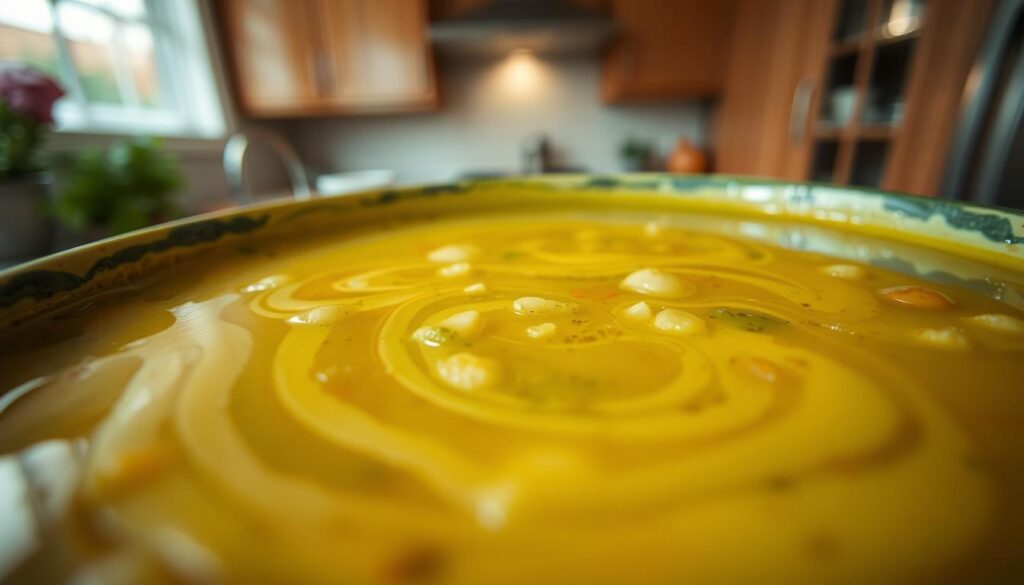
Common Foodborne Pathogens Found in Soup
Bacterial growth in soup speeds up when it’s in the danger zone. Bacteria like Salmonella, E. coli, and Staphylococcus aureus grow fast in warm, rich soup. They can do this without changing the soup’s smell or look.
Botulism in soup is a serious risk. It’s caused by Clostridium botulinum toxins. These toxins are hard to kill with heat. So, reheating soup that’s been left out too long won’t always fix it.
Recognizing Symptoms of Food Poisoning
If you eat spoiled food, you might feel sick soon. Knowing foodborne illness symptoms helps you get help fast. Watch for signs like:
- Severe abdominal cramps and pain
- Persistent nausea or vomiting
- Watery or bloody diarrhea
- Fever and chills
- Dehydration or extreme fatigue
Please remember these symptoms can be mild or very serious. If you have a high fever or signs of dehydration, get medical help right away. It’s always safer to be careful with your health and food.
Step-by-Step Guide to Cooling Soup Safely
Lowering the temperature quickly is key to safe leftovers. Leaving a hot pot on the counter for hours can be dangerous. It’s important to learn how to cool soup quickly for food safety.
Preparing Your Soup for Rapid Cooling
First, remove the pot from the heat right away. Take off the lid to let steam out. Never keep the lid on, as it traps heat and moisture.
“Food safety is not just about cooking; it is about the entire lifecycle of the meal, including cooling.”
Using Ice Baths to Lower Temperature Quickly
For faster cooling, use an ice bath. Fill a sink or basin with cold water and ice. Put your pot in the ice water, making sure the water doesn’t overflow.
Stir the soup often to cool it evenly. This method quickly gets your soup out of the danger zone. Once it’s room temperature, you can refrigerate it safely.
Portioning Large Batches into Smaller Containers
Don’t try to cool a huge pot of soup at once. Instead, divide it into smaller, airtight containers. This way, each portion cools faster because of its larger surface area.
Dividing the soup helps each part cool down before bacteria can grow. This simple trick keeps your food safe and tasty.
Proper Storage Techniques for Longevity
After your soup cools, how you store it is key to its freshness. Proper soup storage keeps flavors good and bacteria away. A little effort in organizing leftovers makes meals stay delicious.
Choosing the Right Containers for Refrigeration
Choosing the right soup storage containers is critical. I always pick glass or BPA-free plastic with a tight seal. These stop other fridge smells from getting into your soup.
Don’t use thin plastic bags or loose containers. Airtight seals are key to keep moisture and air out. Glass containers should be tempered to handle temperature changes safely.
Optimizing Your Refrigerator Temperature
Your fridge settings are important for food safety. Keep it at or below 40°F (4°C) for the best refrigerator temperature for soup. A small thermometer inside helps check the temperature all day.
Don’t put soup near the fridge door, as it gets too hot and cold. Store it on a middle or lower shelf for better air quality. This keeps your soup in the safe zone longer.
How Long Does Soup Last in the Fridge
Even with great storage, leftovers have a limit. Soup usually lasts three to four days in the fridge. I label containers with the date to keep track.
If you have too much soup, freeze it right away. Always trust your senses; if it looks or smells bad, throw it out. These tips help you enjoy your meals safely and with confidence.
Freezing Soup for Long-Term Preservation
I find that freezing soup for storage is the best way to keep my homemade meals fresh for months. When I make a big batch, my freezer keeps everything tasting great. This way, I can enjoy my favorite dishes long after I first make them.
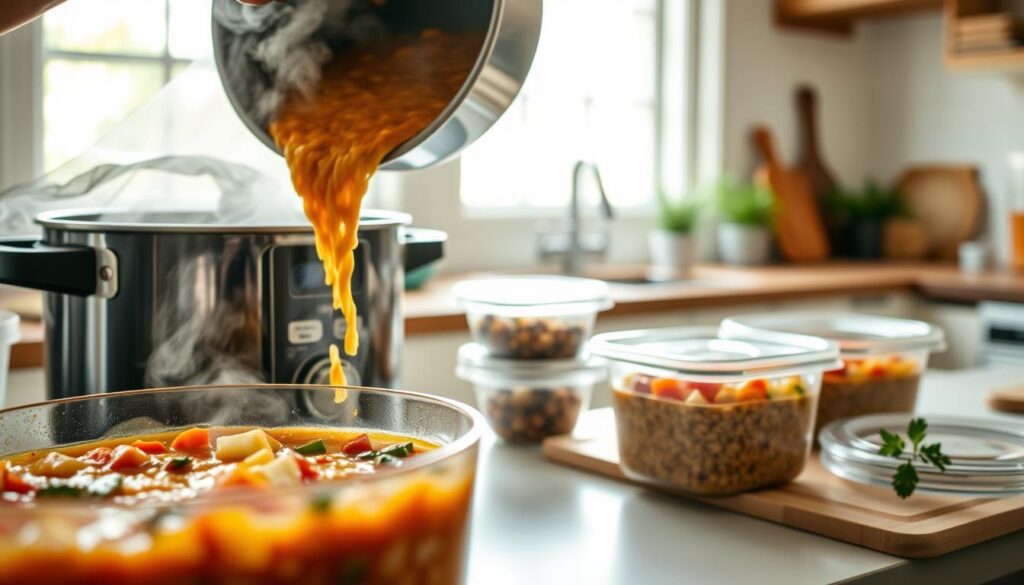
Best Practices for Freezing Liquid Meals
To get the best results, I make sure my soup is chilled before freezing. Putting hot containers in the freezer can raise its temperature. This can harm other foods. I use freezer-safe bags or rigid containers for my portions.
- Cool the soup in an ice bath first.
- Use portion-sized containers for easy serving.
- Label every container with the date of preparation.
Preventing Freezer Burn and Quality Loss
Freezer burn occurs when air reaches the food’s surface, causing dehydration and texture changes. To avoid this, I leave about an inch of headspace at the top of my containers. This is because liquids expand when they freeze. I also seal the lids tightly or remove air from freezer bags before closing.
When using glass jars, I choose tempered glass designed for freezing. Regular glass can crack under the pressure of expanding liquid. Using high-quality, airtight materials helps keep your ingredients safe during freezing soup for storage.
Thawing Frozen Soup Safely
When I’m ready to eat my frozen meals, safety is my top concern. I never thaw my soup on the kitchen counter, as bacteria can grow quickly. Instead, I move the container from the freezer to the refrigerator the night before.
If I’m in a hurry, I thaw the soup in cold water, changing the water every thirty minutes. This keeps the soup at a safe temperature until it’s ready to heat up. Once thawed, I reheat it until it boils to ensure it’s safe to eat.
| Storage Method | Shelf Life | Best For |
|---|---|---|
| Refrigerator | 3-4 Days | Immediate consumption |
| Freezer | 3-6 Months | Long-term meal prep |
| Pantry | Not Recommended | None |
Signs That Your Soup Has Gone Bad
Knowing when to throw away food is key to food safety. Even with the best cooling methods, sometimes things go wrong. It’s important to know the signs of spoiled soup to keep your kitchen safe.
Visual Indicators of Spoilage
First, check the soup’s appearance. If you see fuzzy mold on the surface, toss the soup right away. Don’t try to remove it because spores could be everywhere.
Look for color or texture changes too. If the soup is cloudy or has a slimy film, it’s bad. Also, if ingredients separate and don’t mix back together, it’s a sign of spoilage.
Using Your Sense of Smell to Detect Bacteria
Your nose is a great tool, but it’s not always right. Some bad bacteria don’t smell bad. But, if you smell something sour or off, don’t risk it.
“When in doubt, throw it out. Food safety is not worth the risk of a foodborne illness, no matter how delicious the meal was.”
When to Trust Your Gut and Discard the Batch
Trust your instincts about leftovers. If you’re unsure, it’s better to be safe than sorry. Getting rid of a batch is better than risking food poisoning.
Here’s a quick guide to check your stored meals:
| Indicator | Safe Condition | Signs of Spoilage |
|---|---|---|
| Surface | Clear and clean | Mold or fuzzy growth |
| Texture | Consistent viscosity | Slimy or stringy film |
| Aroma | Fresh and savory | Sour or pungent odor |
| Color | Original hue | Dull or discolored |
By watching for these signs of spoiled soup, you keep your family safe. Remember, your health is most important. It’s okay to throw away food that’s gone bad.
Reheating Soup Without Compromising Safety
Reheating soup right is key to avoiding harmful bacteria. Many think heat kills all germs, but it’s not that simple. To reheat soup safely, you need more than just hot liquid.
Reaching the Proper Internal Temperature
To make sure your soup is safe, it must boil. A food thermometer is essential. You need to hit an internal temperature of at least 165°F (74°C). This kills most foodborne pathogens.
Don’t just look for steam. Consistency is key in food safety. Stir thick stews or chunky soups often. This ensures no cold spots where bacteria can hide.
Avoiding Repeated Reheating Cycles
One big mistake is reheating the same soup over and over. Only reheat what you plan to eat right away. Cooling and reheating food can make bacteria grow.
Heat kills active bacteria, but it doesn’t always destroy toxins. This is a big risk for botulism in soup. Once toxins are there, boiling won’t make it safe.
Stovetop Versus Microwave Reheating Methods
The method you choose affects safety and taste. I like the stovetop for even heat. But, the microwave is quick if you do it right.
| Method | Heat Distribution | Safety Tip |
|---|---|---|
| Stovetop | Even and consistent | Stir often to prevent scorching |
| Microwave | Can be uneven | Use a lid and stir halfway through |
| Slow Cooker | Very slow | Avoid using for reheating |
Using a microwave? Make sure it’s safe and cover it. This helps heat evenly. Stir halfway to avoid cold spots and ensure reheating soup safely.
Common Mistakes People Make with Leftover Soup
Even experienced cooks can make mistakes that risk their leftovers. By following basic food safety guidelines, you can avoid these errors. This way, you can keep your meals fresh for longer.
Leaving the Lid On While Cooling
One common mistake is leaving a tight lid on hot soup. This traps steam and heat, keeping the soup in the danger zone for food too long.
When the lid is on, the soup’s temperature stays high. This allows bacteria to grow quickly. I always suggest removing the lid or using a splatter screen to let heat escape.
Storing Soup in the Original Large Pot
Many people put the whole stockpot in the fridge to save time. But, this is a big mistake. Large amounts of liquid take hours to cool down in the center.
It’s important to learn how to cool soup quickly for safety. I recommend moving your soup to smaller, shallow soup storage containers. This helps the soup cool down faster than staying in a deep pot.
Ignoring the Temperature of the Refrigerator
Your fridge settings are key to keeping food safe. If your refrigerator temperature for soup is too high, you invite spoilage.
I always check my fridge settings to make sure it’s at or below 40°F. Keeping your fridge at the right temperature is a critical step to prevent harmful bacteria growth.
Conclusion
I hope this guide helps you understand why you shouldn’t leave broth on the counter. Many people wonder if it’s okay to leave soup out overnight. But, the answer is a clear no.
Bacteria grow fast in room temperature liquids. This makes your favorite soup a health risk. Saving money on groceries is great, but food poisoning costs more.
I always cool leftovers quickly and store them in Pyrex or Rubbermaid. These steps keep my kitchen clean and my food safe. It’s simple but effective.
Even if it’s cold outside, don’t leave soup out overnight. Indoor temperatures stay the same all year. If you’re unsure, it’s best to throw it away to stay safe.
Let’s spread the word about food safety. Proper handling of leftovers keeps meals tasty and healthy. Your efforts help prevent illness at home.
FAQ
Is it safe for me to eat soup that I left on the counter overnight?
No, it’s not safe. Bacteria grow well in the Danger Zone (40°F to 140°F). Leaving soup out for hours can make it dangerous. Even if it looks and smells okay, the risk of getting sick is too high.
Does reboiling my soup kill all the bacteria and make it safe to eat?
No, this is a myth. High heat can kill some bacteria, but not all. Toxins from some bacteria can cause serious food poisoning, even after boiling. The USDA says to throw away food that’s been in the danger zone for more than two hours.
Why is soup more prone to bacterial growth than other foods?
Soup’s high moisture content attracts bacteria. Liquid environments let bacteria move and grow fast. A big pot of soup stays warm in the middle for hours, creating a perfect place for bacteria to grow.
Can I put a hot pot of soup directly into my refrigerator?
No, don’t do that. It can make your fridge too warm, risking other foods. Instead, cool the soup down with an ice bath or in shallow containers before refrigerating.
How long can I safely store my leftover soup in the fridge?
Keep leftovers in the fridge for three to four days. Make sure your fridge is at 40°F (4°C) or below. If you won’t eat it in time, freeze it in airtight bags.
What are the best methods for reheating soup safely?
Reheat soup to 165°F. Use the stovetop or microwave, but stir the soup halfway through to avoid cold spots. Don’t reheat it too many times to avoid spoilage.
What symptoms of food poisoning should I watch out for?
Look for nausea, vomiting, stomach cramps, and diarrhea. Severe cases can include blurred vision or trouble breathing. Always throw out food if you’re unsure.
Can I use my sense of smell to determine if the soup is stil good?
No, don’t rely on smell alone. Many dangerous bacteria don’t smell bad. Even if it doesn’t smell off, it might not be safe. Trust your kitchen timer and the two-hour rule instead.