
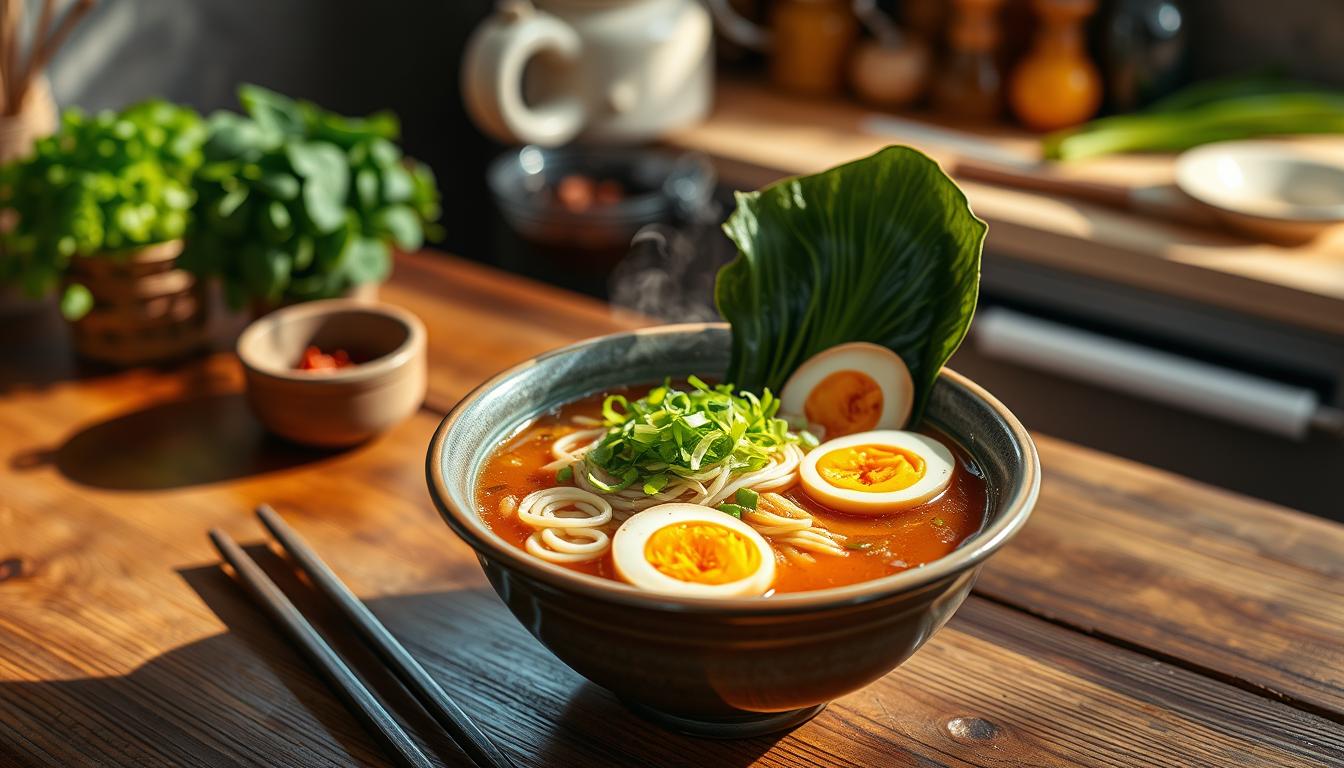
Instant noodles are a staple in many pantries, but they often lack nutrients. I often wonder what can I add to ramen to make it better for my health. Making a simple packet into a fulfilling meal is surprisingly easy.
My quest for gourmet ramen at home began with basic ingredients. Adding fresh veggies, lean proteins, and spices can elevate instant noodles into a nutritious dish. This turns a quick snack into a nourishing meal.
You don’t need to be a pro chef to enhance your ramen. A few tweaks can make your broth and toppings fit your taste. Let’s see how to make your next meal truly memorable.
Key Takeaways
- Instant noodles are a great base for healthy meals.
- Fresh greens like spinach or bok choy add fiber and vitamins.
- Lean proteins like soft-boiled eggs or tofu keep you full.
- Aromatics like ginger, garlic, and scallions enhance flavor.
- Customizing your bowl lets you control sodium and quality.
Understanding the Nutritional Value of Instant Ramen
Turning simple noodles into a healthy meal is easier than you think. Many see these noodles as a cheap snack. But, I see them as a base for healthy ramen upgrades. With a few smart instant ramen hacks, you can make a quick meal into something more.
Don’t overlook the seasoning packet, which is often salty and lacks nutrients. Korean ramen noodles, for example, are thicker and chewier. They offer a better texture than regular noodles. Adding fresh ingredients to these noodles makes your meal much better.
My ramen nutrition tips aim to balance the meal with proteins and fiber. You don’t have to lose flavor to make your ramen healthier. The table below shows how easy it is to turn a basic snack into a balanced meal.
| Feature | Standard Ramen | Upgraded Ramen |
|---|---|---|
| Protein Content | Minimal | High (Egg, Tofu, Meat) |
| Fiber Source | None | High (Vegetables) |
| Sodium Balance | Very High | Controlled (Natural Broth) |
| Texture Profile | Uniformly Soft | Varied and Crunchy |
Essential Protein Sources to Boost Your Bowl
To make your instant noodles better, start by adding different ramen protein sources. Protein makes a light snack into a filling meal that keeps you going all day. It also adds a satisfying texture that goes well with the noodles.
Incorporating Lean Animal Proteins
I often find quick animal-based ingredients in my fridge. Leftover steak sliced thin, pan-seared shrimp, or spam cubes are great. They add a rich flavor that makes the dish feel more filling.
Don’t forget Japanese staples like fish cakes, or kamaboko. They add a mild flavor and a unique texture. Using these ramen protein sources means you get a great meal without spending hours cooking.
Plant-Based Protein Alternatives
If you like meatless meals, there are many good plant-based options. Firm tofu is a great choice because it soaks up broth flavors well. Pan-frying the tofu cubes first gives them a delightful golden crust.
Black lentils are also a great choice. They add fiber and heartiness to your soup. They keep their shape well and offer a nice contrast to salty broths. Trying these plant-based ramen protein sources lets you make your bowl just how you like it.
| Protein Type | Preparation Method | Texture Profile |
|---|---|---|
| Shrimp | Poached or Seared | Firm and Juicy |
| Firm Tofu | Pan-Fried | Crispy and Soft |
| Leftover Steak | Thinly Sliced | Chewy and Savory |
| Black Lentils | Boiled | Tender and Earthy |
Fresh Vegetables for Texture and Nutrient Density
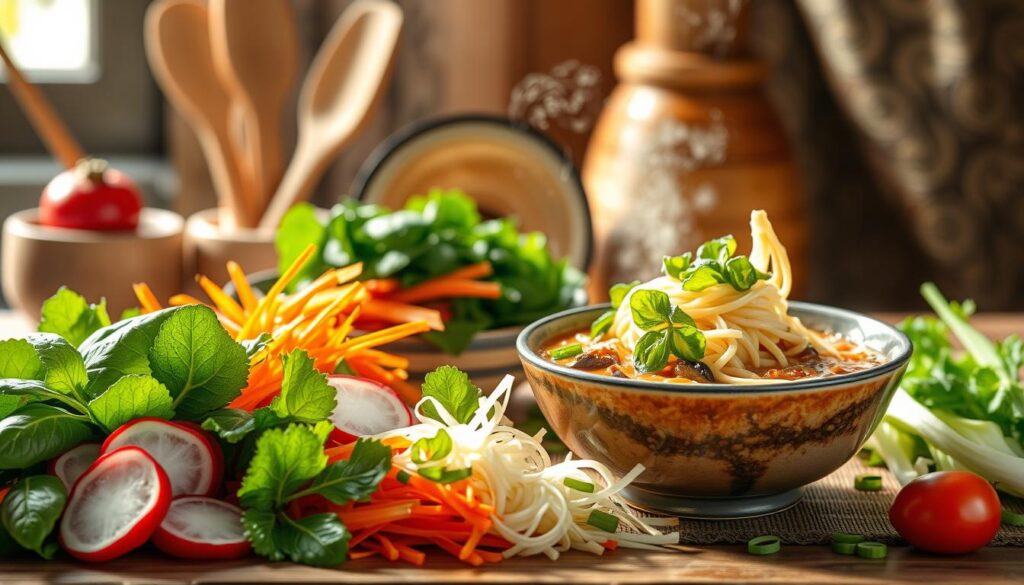
Adding fresh produce makes my ramen better in taste and health. The right ramen vegetable add-ins turn a simple meal into a nutritious feast. They add a nice crunch that contrasts with the soft noodles.
Leafy Greens and Cruciferous Additions
Leafy greens add volume without making the broth heavy. I often use baby bok choy or watercress. They soak up the flavors well and are full of vitamins.
Kimchi is great for those who like spice. It adds a crunchy, tangy flavor that balances the soup. Shredded cabbage or broccoli florets also work well when briefly blanched.
Root Vegetables and Mushrooms
Root vegetables bring a rich, earthy flavor. Thinly sliced pickled radish adds a sweet freshness. Mushrooms, like shiitake or enoki, add a deep umami taste.
“The secret to a great bowl of soup lies in the freshness of the ingredients you choose to layer on top.”
Here’s a list of my favorite vegetables for ramen, sorted by texture and prep method.
| Vegetable | Texture | Prep Method |
|---|---|---|
| Baby Bok Choy | Tender-crisp | Blanch or steam |
| Shiitake Mushrooms | Chewy/Meaty | Sauté or simmer |
| Pickled Radish | Crunchy | Raw/Garnish |
| Watercress | Soft | Wilt in broth |
Trying out these ramen topping ideas lets me make each bowl unique. Whether I’m in the mood for something spicy or earthy, these ramen vegetable add-ins make my meal perfect.
Flavor Enhancers and Aromatics for a Gourmet Experience
The secret to a gourmet bowl is choosing the right ramen flavor enhancers. These add layers of taste that make a meal special. By using aromatics, I can turn a simple dish into a restaurant-quality meal at home.
Using Fresh Herbs and Spices
Fresh ingredients make a big difference in a broth. I start with fried garlic or crispy shallots for crunch and aroma. A drizzle of toasted sesame oil adds a nutty flavor that balances the soup’s saltiness.
Fresh herbs like cilantro, Thai basil, or scallions are key. They add color and a fresh taste. These elements make your bowl vibrant and balanced.
The Role of Fermented Condiments
Fermented ingredients are essential for a rich umami taste. Miso paste or spicy gochujang can change your broth’s flavor. These ramen flavor enhancers bring a tangy, rich taste that packets can’t match.
Fermented condiments add depth and body to the broth. Whether it’s red miso’s earthiness or Korean chili paste’s heat, they’re essential. They let me adjust the broth’s flavor to my liking.
What Can I Add to Ramen to Make It Better Using Pantry Staples
Your kitchen cabinets might hold the secret to a top-notch bowl of ramen. You don’t need to go to a specialty store to find out. Simple ingredients can transform basic noodles into a flavorful dish in no time.
Utilizing Sauces and Oils
The key to a great bowl often lies in the liquids you have at home. A bit of soy sauce brings a rich, salty flavor that instant packets can’t match. For a nutty aroma, try drizzling a teaspoon of toasted sesame oil on top.
Need mirin but it’s not available? No problem. Mix rice wine vinegar with a pinch of sugar as a substitute. This combo gives the broth a perfect balance of acidity and sweetness.
Adding Dried Spices and Seasoning Blends
For a quick flavor boost, check your spice rack. Dried spices can add heat or depth to your ramen instantly. Here are some must-haves:
- Red pepper flakes for a sharp, lingering heat.
- Garlic powder to enhance the savory broth.
- Smoked paprika for a subtle, earthy flavor.
- Dried ginger for a bright, zesty finish.
Try these seasonings to find your favorite ramen upgrade. Start with small amounts and adjust to taste. Your pantry can turn any meal into a gourmet dish.
Mastering the Perfect Soft-Boiled Egg
The secret to a top-notch bowl often starts with a soft-boiled egg. This simple addition adds a rich, creamy texture. It balances the broth’s saltiness perfectly. When looking at ramen topping ideas, this is the key for home cooks.
Step-by-Step Boiling Techniques
To get the perfect texture, start by boiling water. Then, gently place cold eggs into the boiling water with a slotted spoon. Timing is everything for that perfect jammy yolk.
For a runny yolk, boil the eggs for six minutes. For a slightly firmer yolk, boil for seven minutes. After boiling, quickly move the eggs to an ice bath. This stops the cooking and keeps the whites tender.
Marinating Eggs for Extra Depth
After peeling, marinating the eggs can elevate your dish. This adds a deep, savory umami flavor. It’s a great ramen topping idea for adding depth to a quick meal.
Make a marinade with soy sauce, mirin, and water. Soak the peeled eggs in it in the fridge for at least four hours, or overnight. You’ll get a seasoned egg with a firm exterior and a creamy center.
Healthy Broth Modifications and Upgrades
I often find the seasoning packet too salty. So, I make ramen broth modifications to balance the flavor. By controlling the broth, you can turn a simple meal into something nutritious.
Diluting Sodium with Natural Stocks
One great healthy ramen upgrade is to cut the seasoning packet in half. Then, I add low-sodium vegetable or chicken stock. This reduces sodium and adds depth to the flavor.
Using homemade bone broth or organic stock adds essential minerals. The natural sweetness of vegetables or the richness of chicken stock makes the noodles taste fresher. It’s a small change that makes a big difference.
Creating Creamy Bases with Dairy or Nut Milks
If you like spicy noodles, the heat can be too much. Adding heavy cream or shredded mozzarella cheese cools it down and makes it creamy. This is great for those who want a richer taste.
For a plant-based option, unsweetened almond or cashew milk is perfect. It adds a subtle nuttiness that goes well with miso or soy. These milks let you customize your bowl to fit your diet.
| Modification Type | Primary Benefit | Best Used For |
|---|---|---|
| Chicken/Veggie Stock | Reduces Sodium | All Ramen Varieties |
| Heavy Cream | Adds Richness | Spicy Ramen |
| Nut Milks | Creamy Texture | Vegan/Miso Ramen |
| Mozzarella Cheese | Melty Consistency | Spicy or Cheesy Ramen |
Step-by-Step Guide to Building a Balanced Ramen Meal
Making the perfect bowl of ramen is like an art. It’s all about flavor, texture, and nutrition. With these ramen nutrition tips, you can turn simple noodles into a balanced ramen meal. This meal will fill you up and keep you healthy.
Preparing Your Base and Noodles
The base of a great bowl is the broth and noodles. Cook your noodles for thirty seconds less than the package says. This keeps them with a delightful chew when they meet the hot broth.
Your broth should mix four flavors: spicy, sweet, sour, and salty. Add chili oil for heat, mirin for sweetness, lime for acidity, and soy sauce for depth. This mix makes the broth rich and complex.
Layering Toppings for Visual and Nutritional Balance
After your base is ready, arrange your toppings carefully. Start with the protein, placing it off-center for a professional look. Add colorful veggies like bok choy or carrots for vitamins and crunch.
For a healthy dish, focus on variety. Layer ingredients by texture, with heavier items like eggs or meats on top. This way, every bite of your balanced ramen meal is a perfect mix of taste and nutrition.
Common Mistakes to Avoid When Upgrading Ramen
Making the perfect bowl of ramen is more than just adding ingredients. It’s about avoiding certain mistakes. Even with good intentions, it’s easy to make ramen cooking mistakes that can mess up the texture or taste. Paying attention to a few key details can make your meal delicious and satisfying.
Managing Sodium Intake Effectively
One common problem is the high salt in pre-packaged seasoning packets. These broths are often very salty, which can be too much for your taste and health. I suggest using homemade stocks or low-sodium vegetable broths to control the flavor better.
“Cooking is like painting or writing a song. Just as there are many colors or notes, there are so many flavors—it is up to you to combine them.”
If you must use the packet, try using only half of it to cut down on salt. You can add fresh aromatics like ginger, garlic, or a splash of rice vinegar to make up for it. These instant ramen hacks let you enjoy a savory dish without too much sodium.
Preventing Overcooked Ingredients
Timing is key to avoid mushy noodles or limp veggies. Many people add all their toppings at the start, leading to overcooked items. I recommend adding delicate greens or thinly sliced veggies only in the last minute.
For heartier veggies like carrots or broccoli, blanch them first before adding them to your bowl. This keeps your noodles firm and your veggies crunchy. Learning these instant ramen hacks helps you avoid common ramen cooking mistakes and makes your meal gourmet.
Conclusion
Turning a simple package of Maruchan or Nissin noodles into a culinary masterpiece is a rewarding journey. I find that experimenting with bold flavor profiles keeps my kitchen time exciting and productive.
You have the tools to make instant noodles into a gourmet meal at home. Small changes like adding fresh bok choy or a splash of Kikkoman soy sauce make a big difference in quality.
I encourage you to explore these techniques to build a bowl that reflects your personal taste. Your next lunch or dinner can become a nutritious experience that satisfies your cravings while providing real substance.
Grab your favorite ingredients and start building your custom bowl today. I look forward to seeing how you elevate instant noodles to suit your unique palate.
FAQ
What is the fastest way to start with healthy ramen upgrades at home?
Start by ditching the usual seasoning packets. Add fresh veggies like baby spinach, shredded carrots, or frozen peas. This boosts your bowl’s fiber and vitamins without much extra work.
Which ramen protein sources do you recommend for a more filling meal?
For a filling meal, try lean proteins like grilled chicken, shrimp, or tofu. Black lentils or edamame are great for a plant-based boost. They give you energy all afternoon.
What can I add to ramen to make it better if I only have pantry staples for ramen?
Use pantry staples to elevate your ramen. Kikkoman soy sauce, toasted sesame oil, and Huy Fong Sriracha create a rich flavor. They let you control the taste perfectly.
How do I achieve the perfect soft-boiled egg ramen every time?
Timing is key for soft-boiled eggs. Boil them for six and a half minutes, then chill them in ice water. This makes the yolk jammy. Marinate them in soy sauce and mirin for Ajitsuke Tamago, adding a savory touch.
How can I perform ramen broth modifications to reduce my salt intake?
To cut down on salt, use half the seasoning packet. Mix in low-sodium chicken stock or unsweetened almond milk. This makes the broth creamy and low in sodium.
What are some ramen flavor enhancers that provide a complex, “gourmet” feel?
Use fermented condiments like miso paste or gochujang for depth. Add minced garlic and ginger for a gourmet taste. These ingredients transform your ramen into a high-end dish.
What are the most common ramen cooking mistakes I should avoid?
Avoid overcooking noodles until they’re mushy. Cook them for thirty seconds less than the package says. Also, add delicate greens like watercress or bok choy just before serving to keep them crisp.
Can I use frozen vegetables for my ramen topping ideas?
Yes, frozen veggies like corn, broccoli, or snap peas are great. They’re packed with nutrients and add a nice texture to your ramen.