
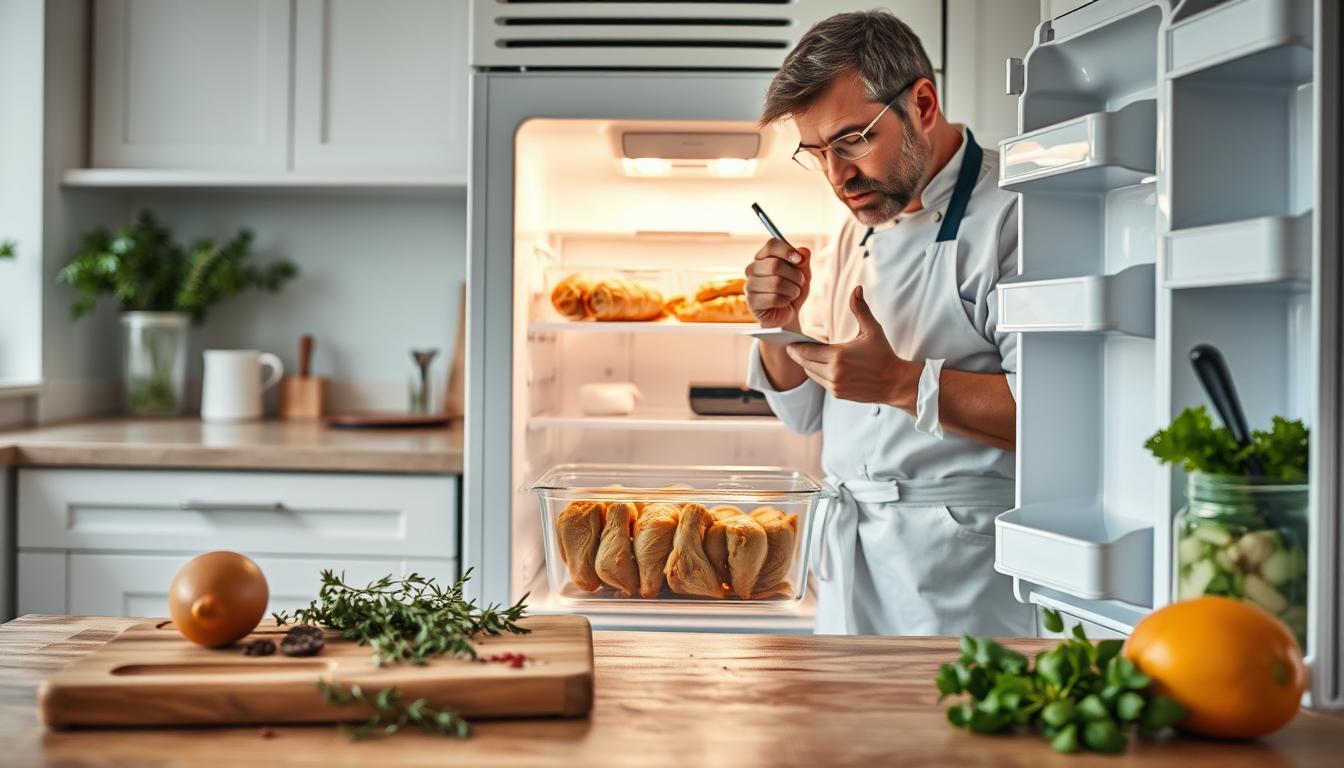
Managing leftovers is key for any home cook. I often wonder about food safety after big meals. Knowing how long does cooked chicken last in the fridge is critical to avoid foodborne illness and keep your family healthy.
By following expert storage tips, you can handle your poultry safely. My aim is to help you reduce waste while keeping your kitchen high safety standards. Let’s look at the times you need to keep your meals fresh and safe.
Key Takeaways
- Cooked poultry stays safe for three to four days when stored right.
- Always use airtight containers to stop bacteria growth.
- Keep your fridge at or below 40°F.
- Throw away anything left out for over two hours.
- If unsure, it’s safer to toss the food.
Understanding Food Safety Standards for Poultry
I think knowing the basics of food safety standards is key to avoiding foodborne illness at home. When I cook chicken, I stick to certain rules to keep my food safe. These chicken storage guidelines help protect my health and my family’s.
The Role of Temperature Control
Keeping leftovers safe starts with the right refrigerator temperature. I keep my fridge at 40°F or lower to slow down harmful bacteria. This cold environment is my first defense against spoiled food.
It’s wise to check your fridge settings often. If it gets too warm, your chicken’s quality drops fast. Consistency is the secret to good food safety.
Why Bacteria Thrive in the Danger Zone
Knowing the danger zone is vital for any cook. This range, between 40°F and 140°F, is perfect for bacteria to grow. If cooked chicken stays in this zone too long, it becomes a risk for harmful germs.
I always try to get my leftovers out of the danger zone quickly. By cooling food fast and keeping it cold, I lower the chance of contamination. These steps help keep my kitchen clean and safe for cooking.
How Long Does Cooked Chicken Last in the Fridge
Knowing how long cooked chicken lasts in the fridge is key to kitchen management. Many wonder, how long does cooked chicken last in the fridge before it’s unsafe? It’s vital for a clean kitchen.
The USDA Guidelines for Refrigerated Poultry
The USDA poultry guidelines are my go-to for food safety. They say cooked chicken is good for 3 to 4 days in the fridge. After that, the chance of bacteria growing increases, even if it looks and smells okay.
“The refrigerator should be kept at 40°F (4°C) or below to slow the growth of bacteria that cause foodborne illness.”
Factors That Influence Shelf Life
Several things affect how long chicken lasts at home. Keeping your fridge at 40°F or lower is key. If the temperature swings, your leftovers will spoil faster.
How you cook chicken also matters. Roasted chicken stays moist longer than fried chicken. Dry cooking methods can make chicken taste stale after just two days.
Storage Container Material
Using airtight containers is essential for keeping leftovers fresh. These containers stop the meat from drying out and absorbing fridge odors. I prefer glass or BPA-free plastic for the best results.
Step-by-Step Guide to Cooling Chicken Properly
Many people think the hard work is done when the chicken is cooked. But cooling it properly is just as important for safety. Leaving chicken out too long can let harmful bacteria grow. By following a few simple steps, you can keep your leftovers safe and tasty.
Why You Should Never Leave Chicken Out at Room Temperature
Leaving cooked chicken at room temperature is a big mistake. It quickly gets into the danger zone, between 40°F and 140°F. In this range, bacteria can double in just twenty minutes.
I cannot stress enough how fast this happens. Once chicken hits these temperatures, it’s a breeding ground for harmful bacteria like Salmonella or Staphylococcus. Keeping it out of this range is key to avoiding foodborne illness.
The Two-Hour Rule Explained
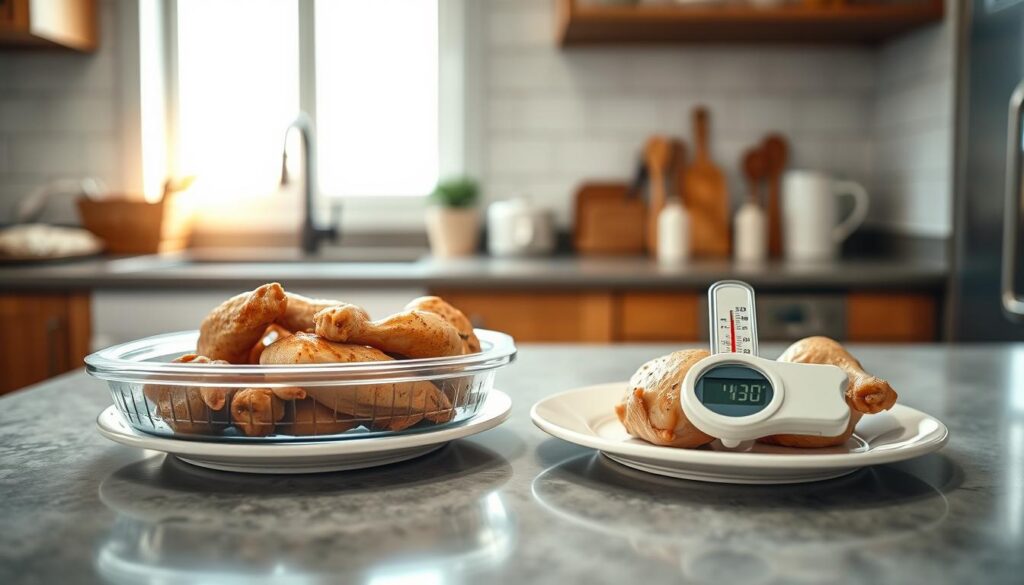
To keep your kitchen safe, follow the two-hour rule. This rule says perishable foods should not be left out for more than two hours. If it’s hotter than 90°F, cut this time to one hour.
I always use a timer on my phone after cooking. If you forget, it’s better to throw the chicken away than risk getting sick. Consistency is key when handling leftovers.
Techniques for Rapid Cooling
Cooling large amounts of chicken takes a long time, keeping it in the danger zone too long. To cool it faster, cut whole chickens or large breasts into smaller pieces. Smaller pieces lose heat quicker than big, dense ones.
Also, use shallow containers instead of deep bowls. This spreads the meat out, helping it cool down faster. Always remember to leave the lid a bit open to prevent moisture from forming inside.
Best Practices for Storing Cooked Chicken
Keeping cooked chicken safe is key to avoiding foodborne illnesses. By sticking to chicken storage guidelines, I keep leftovers fresh and flavorful. This way, I can enjoy them without worry.
Choosing the Right Airtight Containers
Choosing the right containers is the first step in food safety. I always pick high-quality airtight containers made of glass or BPA-free plastic.
These containers keep moisture in and odors out. A tight seal is vital to keep the chicken safe from air and other fridge smells.
Portioning for Easier Future Use
Portioning chicken into single servings makes weeknights easier. It lets me grab what I need without risking the whole batch.
Make sure your chicken hits an internal temperature 165F before storing. This way, you can avoid reheating the same meat too many times. It keeps the chicken tasting better.
- Divide into portions: Use small containers for individual meals.
- Avoid over-handling: Only take out what you plan to consume immediately.
- Cool quickly: Ensure the chicken is not steaming before you seal the lid.
Labeling and Dating Your Leftovers
It’s easy to forget what’s in your fridge. I label every container with the cooking date.
This simple habit helps me know which leftovers to eat first. It keeps my chicken fresh and prevents waste.
Identifying Signs of Spoilage in Leftover Chicken
Knowing the signs of spoiled chicken is key to avoiding illness. I always do a quick check before reheating. It’s a simple step that keeps me safe.
Visual Indicators of Bacterial Growth
I first look for any changes in the chicken’s color. If it’s dull or grayish, it’s likely spoiled. Also, watch for fuzzy spots or mold, which mean bacteria are present.
The Smell Test and Texture Changes
If it looks okay, I check the smell and feel. A sour or ammonia smell is a big warning sign. If the meat feels slimy or sticky, it’s time to throw it away.
“When in doubt, it is always safer to throw it out than risk foodborne illness.”
When to Trust Your Instincts Over the Calendar
Chicken might look and smell good even when it’s not safe. That’s why I say trust the calendar more than your senses. If it’s been in the fridge for more than three or four days, it’s best to get rid of it.
While your eyes and nose are helpful, they can’t catch all harmful bacteria. By sticking to storage times, you avoid missing signs of spoiled chicken. Being careful keeps your kitchen safe and healthy.
Reheating Techniques to Maintain Quality and Safety
Learning how to warm up your chicken is key for taste and safety. When you focus on reheating chicken safely, you keep the texture right. Also, make sure the meat is free from harmful bacteria. Always use a food thermometer to check if your meal is ready.
Reheating on the Stovetop
The stovetop is great for keeping moisture in small chicken portions. Add a bit of water, broth, or oil to the pan first. This creates a gentle steam that stops the meat from drying out.
- Keep the heat on low to medium settings.
- Stir the pieces frequently for even distribution.
- Cover the pan with a lid to trap the moisture.
Using the Oven for Even Heating
For warming up a lot of chicken, the oven is the best choice. Place the chicken in a baking dish and add some liquid. Covering the dish with foil keeps the juices in, making the meat tender.
Use a moderate oven temperature, like 325°F, to avoid overcooking. This slow heating lets the heat reach the center without making the edges tough.
Microwave Safety Tips for Poultry
The microwave is quick, but it can heat food unevenly. This can leave cold spots where bacteria might survive. To avoid this, arrange the chicken in a single layer with thicker parts outside. Use a microwave-safe cover to steam the meat and prevent splatters.
Avoiding Dryness and Uneven Temperatures
The most important step is to make sure the internal temperature 165F is reached everywhere. Never guess if the meat is hot enough. A digital thermometer is the only way to be sure your food is safe.
| Method | Best For | Key Benefit |
|---|---|---|
| Stovetop | Slices or strips | Retains moisture |
| Oven | Whole breasts or thighs | Even heating |
| Microwave | Quick snacks | Speed and convenience |
Always remember to eat your chicken right after reheating. If you’ve reheated more than you can eat, throw away the leftovers. This keeps your meals tasty and safe.
Freezing Cooked Chicken for Long-Term Storage
Learning to freeze cooked chicken is easy. If you can’t eat leftovers in four days, freezing is the answer. It saves money and keeps meals ready for when you’re busy.
Preparing Chicken for the Freezer
First, let the chicken cool down to room temperature. Never put warm chicken in the freezer. It can mess up other foods. Divide the meat into portions for single meals.
Preventing Freezer Burn
To keep the chicken tasty, protect it from air. Wrap each portion in plastic or foil, then bag it. For frequent freezing, a vacuum sealer is great for keeping air out.
Thawing Methods for Safe Consumption
Thawing safely is key. The best way is to thaw in the fridge the night before. If you’re in a rush, thaw in cold water, changing the water every thirty minutes.
Don’t thaw at room temperature. It’s a risk for bacteria. Follow these steps for safe, tasty meals up to three months.
Common Mistakes That Shorten Shelf Life
To keep your chicken shelf life long, avoid common mistakes. Many people unknowingly let leftovers go bad by bad habits. Changing your ways can keep your food safe and tasty longer.
Storing Chicken While It’s Hot
Putting warm chicken in the fridge is a big mistake. It makes the fridge warmer, creating a dangerous environment for bacteria. This shortens the chicken’s shelf life a lot.
Let your cooked chicken cool down before refrigerating it. If you’re in a rush, use a shallow dish to cool it faster. This keeps your fridge’s temperature stable.
Leaving Chicken in Original Takeout Containers
It’s tempting to just put takeout in the fridge. But, most containers aren’t airtight. This lets moisture and smells in. Transferring your leftovers to airtight containers is key for freshness.
- Prevents cross-contamination from other fridge items.
- Helps maintain the proper moisture level of the meat.
- Ensures a secure seal that keeps external bacteria out.
Overcrowding the Refrigerator Shelves
Your fridge needs air to stay cold. Overcrowding blocks air flow, creating warm spots. Proper spacing is essential for keeping everything at the right temperature.
A full fridge makes it harder for the cooling system. Keep shelves organized and leave space between containers. This helps your chicken stay fresh and your fridge run better.
Managing Cross-Contamination in Your Refrigerator
A well-organized fridge is key to preventing cross-contamination. Storing items randomly can spread harmful bacteria. Keeping your fridge clean and tidy is essential for kitchen safety.
Strategic Placement of Cooked vs Raw Foods
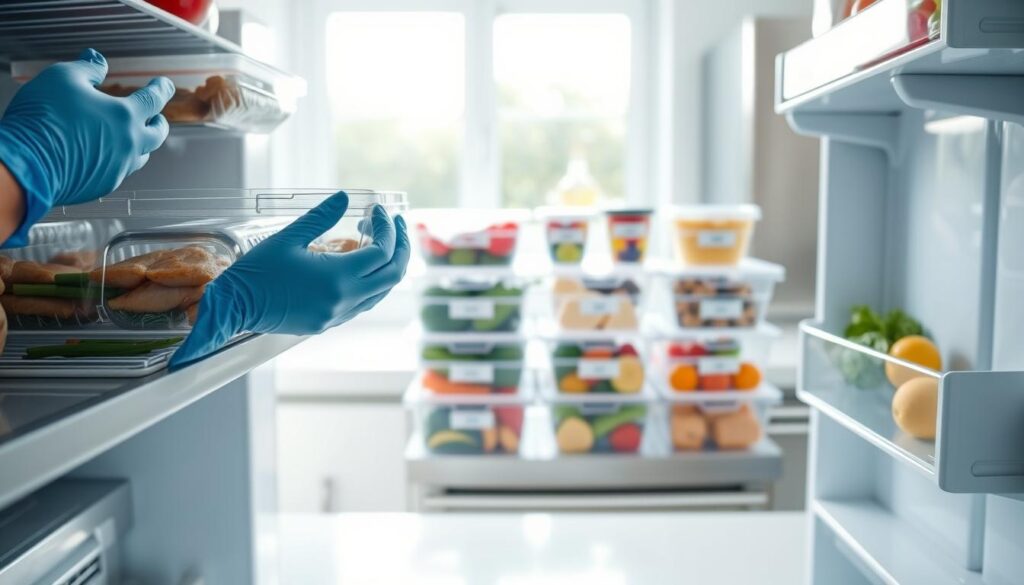
Keeping your food safe starts with a clear fridge layout. Raw meat, poultry, and seafood go on the bottom shelf. This stops drips from reaching cooked chicken above.
Ready-to-eat foods should be on higher shelves. Strategic placement greatly lowers the risk of foodborne illness at home.
Cleaning Your Fridge Shelves Regularly
Spills can occur, even with careful storage. I clean my fridge shelves weekly to keep them hygienic. Clean spills right away with hot, soapy water or a safe disinfectant.
- Remove all items from the shelf before cleaning.
- Use a mild detergent to scrub away residue.
- Dry the surface completely to prevent moisture buildup.
Using Sealed Containers to Prevent Odor Transfer
Right storage gear is key for preventing cross-contamination and keeping food fresh. I use airtight containers to keep flavors in and bacteria out. This also stops odors from spreading between dishes.
Sealing leftovers properly creates a protective barrier. This simple step keeps your cooked chicken safe and tasty until you’re ready to eat it again.
Creative Ways to Use Leftover Chicken Before It Expires
I often have extra cooked chicken that needs to be used before it goes bad. Finding creative leftover chicken recipes helps me avoid waste. By planning ahead, I can make tasty meals easily throughout the week.
Transforming Chicken into Salads and Wraps
One of my favorite uses for leftover chicken is in a fresh garden salad. I dice the meat and mix it with greens, vinaigrette, and veggies for a healthy lunch. For a quick meal, I wrap it in a whole-wheat tortilla with hummus or avocado.
Adding Chicken to Soups and Casseroles
When it’s cold outside, I add pre-cooked chicken to hearty soups. It saves me time because the chicken is already tender. I also mix it into creamy casseroles with pasta or rice for a comforting dinner everyone loves.
Quick Stir-Fry Ideas for Busy Weeknights
On busy evenings, I turn to quick stir-fry leftover chicken recipes. I toss the meat with frozen veggies and soy sauce in a hot pan. This method is fast and keeps my meal prep simple.
| Meal Type | Key Ingredients | Preparation Time |
|---|---|---|
| Garden Salad | Greens, Vinaigrette, Nuts | 5 Minutes |
| Chicken Wrap | Tortilla, Hummus, Spinach | 3 Minutes |
| Hearty Soup | Broth, Carrots, Celery | 15 Minutes |
| Fast Stir-Fry | Soy Sauce, Mixed Veggies | 10 Minutes |
Conclusion
Learning how to store food in the kitchen changes how you prepare meals. You now know how to keep food fresh and your kitchen safe. These easy steps help protect your family and cut down on food waste.
Keeping your fridge organized is key to keeping poultry fresh. Look at your storage containers and cooling methods as ways to improve your health. Making small changes in how you label and organize can make a big difference over time.
Do you have a favorite way to store leftovers or a go-to recipe for busy nights? Sharing your tips helps others feel more confident about food safety. Start using these methods today to enjoy meals that are always ready. Your dedication to these practices makes your kitchen safer and more efficient for everyone.
FAQ
How long can I safely keep cooked chicken in my refrigerator?
According to USDA food safety, cooked chicken should stay in the fridge for three to four days. After this, the risk of bacteria growing increases, even if it was cooked at high heat.
What exactly is the “danger zone” and how does it affect my leftovers?
The danger zone is between 40°F and 140°F. This is where harmful bacteria like Salmonella and Campylobacter grow fast. To keep my kitchen safe, I keep my fridge at 38°F or lower.
Can I freeze cooked chicken to extend its shelf life beyond the four-day limit?
Yes, freezing is great for keeping chicken fresh for longer. Cooked chicken can last four to six months in vacuum-sealed bags or heavy-duty Ziploc bags. It’s safe to eat forever at 0°F, but the taste and texture may change.
What is the best way to tell if my chicken has spoiled?
I check leftovers by sight and smell. Look for sliminess, greyish-green color, or a sour smell. But, some bacteria don’t smell or change color, so I stick to the four-day rule.
Why is the “two-hour rule” so important for cooling chicken?
Cooked poultry should not sit out for more than two hours. If it’s hotter than 90°F, it’s just one hour. Leaving chicken out too long can let Staphylococcus aureus toxins form, which can’t be killed by reheating.
What temperature should I reach when reheating my chicken?
I reheat chicken to 165°F to make sure it’s safe. I use a digital meat thermometer to check the thickest part of the meat. This kills any bacteria that might have grown.
Does the type of container I use really make a difference?
In my kitchen, airtight containers are essential. I use Pyrex glass or Rubbermaid Brilliance containers for a better seal. They prevent cross-contamination and keep the chicken from picking up fridge odors.
What is the safest method for thawing frozen cooked chicken?
I thaw chicken in the fridge overnight for safety. If I’m in a rush, I thaw it in cold water, changing the water every 30 minutes. But, I never thaw it on the counter.
Can I reheat my chicken more than once?
The USDA says it’s safe to reheat leftovers multiple times if they reach 165°F. But, I don’t recommend it. Reheating multiple times can make the chicken dry and less tasty. I prefer to portion it out before refrigerating to avoid reheating.