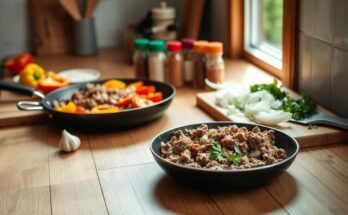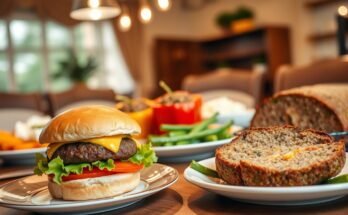
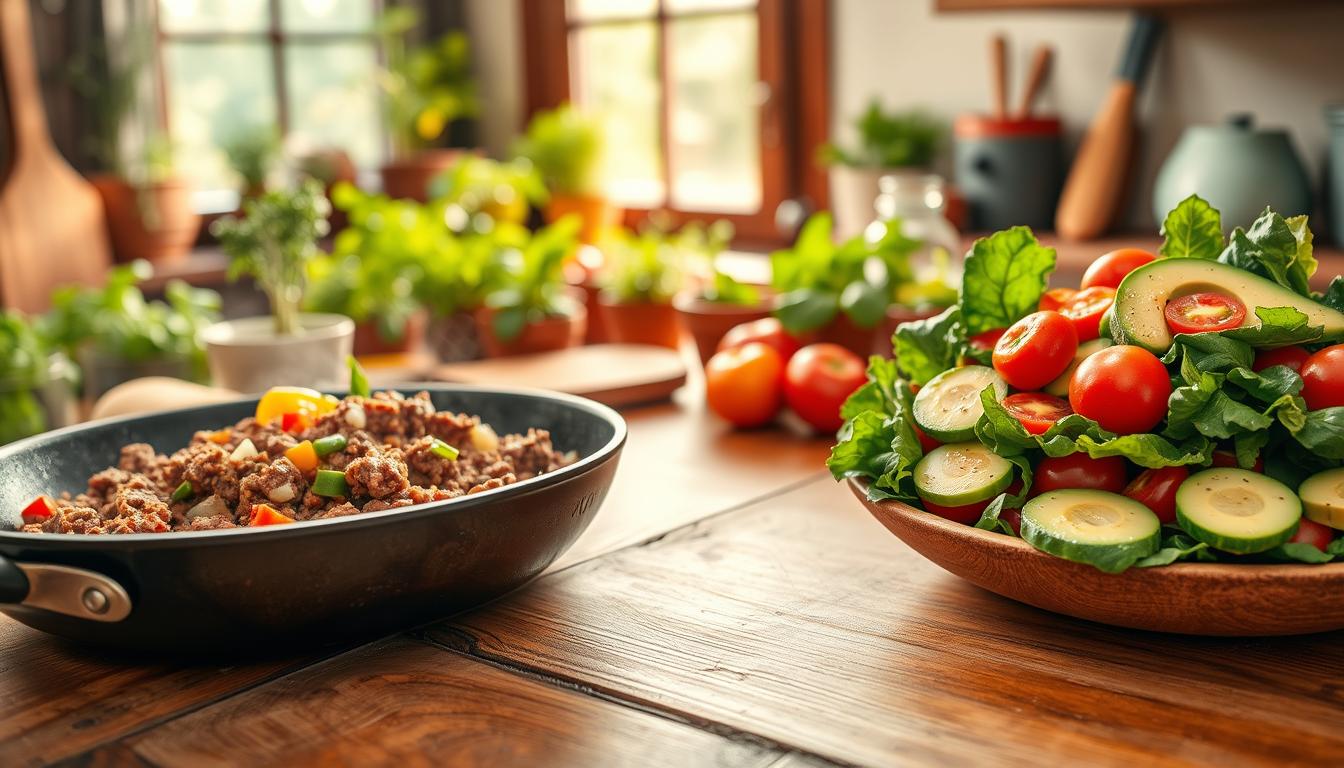
I stared at my fridge after a long day, feeling stuck. We’ve all been there, wondering how to make simple ingredients into something good. That’s why I started looking into healthy meals to cook with ground beef.
Turning a simple package of meat into a healthy meal doesn’t have to be hard. I found ways to make it quick and easy, fitting into a busy schedule. With these tips, you can make tasty, balanced meals that fill you up and save time.
Key Takeaways
- Focus on high-quality protein sources for better nutrition.
- Use time-saving techniques to streamline your evening routine.
- Balance your plate with fresh vegetables and whole grains.
- Master simple preparation methods for consistent results.
- Build confidence in the kitchen through actionable, easy recipes.
Why Ground Beef is a Staple for Healthy Cooking
Adding ground beef to my meals has changed how I cook at home. It’s a versatile and affordable protein that’s perfect for many healthy dishes. This helps me avoid unhealthy, processed foods.
For a high-protein dinner, I choose lean options. Knowing the ground beef nutrition helps me make better choices. For example, 93/7 lean grass-fed beef is a great choice because it’s low in saturated fats.
“Quality protein is the building block of a sustainable diet, and ground beef offers a nutrient-dense solution for those who want to eat well without spending hours in the kitchen.”
To make the most of your ingredients, learn what spices go well with ground beef. This can make simple recipes taste amazing. Here’s why lean ground beef is better for you:
| Nutrient Component | Value per 3.5oz Serving | Health Benefit |
|---|---|---|
| Protein | 23g | Muscle Repair |
| Calories | 150 kcal | Weight Management |
| Key Minerals | Iron & Zinc | Energy & Immunity |
| Vitamin Profile | B-Complex | Metabolic Support |
The convenience of ground beef is unmatched. It’s perfect for quick meals or hearty dishes. Its nutritional density keeps me full for longer. It’s a key part of a balanced lifestyle.
Selecting the Best Quality Ground Beef
My journey to healthy cooking starts at the butcher counter. Choosing the right meat is key to a healthy meal. Quality meat ensures your dish is tasty and nutritious.
Understanding Lean-to-Fat Ratios
In the meat aisle, I look at ground beef fat ratios closely. I aim for lean ground beef like 93/7 or 90/10. This keeps calories low while flavor stays high.
Leaner meat means less saturated fat in your diet. It also makes cooking easier, with less grease to drain. This choice boosts the ground beef nutrition in your recipes.
Grass-Fed Versus Conventional Options
I choose grass-fed beef when I can. It has better fatty acids than grain-fed beef. It’s packed with omega-3s and CLA, key for a healthy diet.
Choosing high-quality protein is key for a healthy lifestyle. It gives you the building blocks for wellness.
While grain-fed beef is common, grass-fed has more benefits. You’ll see a difference in taste and texture in your meals.
Reading Labels for Hidden Additives
Always read labels to avoid fillers. Some beef may have hormones or antibiotics I don’t want. Checking the packaging ensures you know what you’re getting.
| Beef Type | Fat Content | Best Use |
|---|---|---|
| Extra Lean | 96/4 | Tacos and Salads |
| Lean | 93/7 | Skillets and Bowls |
| Regular | 80/20 | Burgers and Meatloaf |
Essential Techniques for Healthy Meals to Cook with Ground Beef
Improving your cooking skills with beef can change your meal prep game. Learning basic ground beef cooking techniques boosts your dish’s quality and health. These simple methods help you make tasty, healthy meals to cook with ground beef that fit your lifestyle.
Mastering the Drain-and-Rinse Method
For high-fat blends, the drain-and-rinse method cuts down fat. Brown the meat, then drain the grease. Rinse the beef under warm water to remove fat before seasoning.
Using Non-Stick Cookware to Reduce Added Fats
The right pan is key for low-fat meals. I often use cast iron skillet cooking for better browning. But, a good non-stick pan is great for less oil, keeping calories low.
These tips are perfect for one-pot meals no dishwasher cleanup. The right tools make healthy cooking easy and delicious.
Deglazing Pans with Broth Instead of Oil
Deglazing your pan is a secret that enhances flavor. Use bone broth instead of oil or butter. It adds moisture and flavor, keeping your dish light and nutrient-dense.
Step-by-Step Guide to Lean Beef Skillets
Learning to cook with a skillet has changed my weeknight cooking. Cast iron skillet cooking makes a high-protein dinner quick and easy to clean. By following a set process, I make sure every meal is healthy and tasty.
Preparing Your Ingredients for Quick Cooking
I start by getting everything ready before I turn on the stove. Chopping veggies and measuring spices makes cooking faster. This prep is key to many easy beef skillet recipes that save time on busy nights.
Sautéing Aromatics for Maximum Flavor
I heat the pan and add a bit of oil or broth first. Then, I sauté onions and garlic for about four minutes. This step creates a robust flavor base that fills the dish.
Combining Beef with Whole Grains
After the aromatics are fragrant, I add lean ground beef to the pan. I brown the meat well before mixing in cooked whole grains like quinoa or brown rice. This mix offers a great balance of protein and complex carbs for energy.
| Grain Type | Cooking Time | Fiber Content | Best Pairing |
|---|---|---|---|
| Quinoa | 15 Minutes | High | Bell Peppers |
| Brown Rice | 40 Minutes | Medium | Mushrooms |
| Farro | 30 Minutes | High | Kale |
Preparing Nutrient-Dense Ground Beef Bowls
Protein-packed beef bowls are a great way to make a meal that’s fresh and full of life. These nutrient-dense recipes let you pick every ingredient. This makes them perfect for a quick high-protein dinner that’s filling but not heavy.
Building a Balanced Base with Quinoa or Cauliflower Rice
The base of a good bowl is key. I like cauliflower rice for its low carbs and lots of fiber. It makes the dish light and filling.
For something more filling, quinoa is a great choice. It adds a nutty taste and extra protein. You can find ideas for these bases in low-carb Korean beef bowls. They show how well these bases soak up juices.
Adding Fresh Toppings for Texture and Vitamins
To make your bowl better, add fresh toppings. They add crunch and lots of vitamins.
- Fresh Cilantro: Adds a bright, herbal note.
- Sliced Radishes: Provide a crisp, peppery bite.
- Creamy Avocado: Offers healthy fats and a smooth finish.
- Shredded Carrots: Bring a touch of natural sweetness.
Creating Healthy Homemade Dressings
I always top my bowls with healthy homemade dressings. This brings all the flavors together. It’s smart to avoid store-bought sauces, as they often have hidden sugars and processed oils.
Try making a simple lime-tahini sauce or a zesty ginger-soy vinaigrette. These dressings make the beef and veggies taste even better. Your meal stays healthy and tasty from start to finish.
Incorporating Vegetables into Beef Dishes
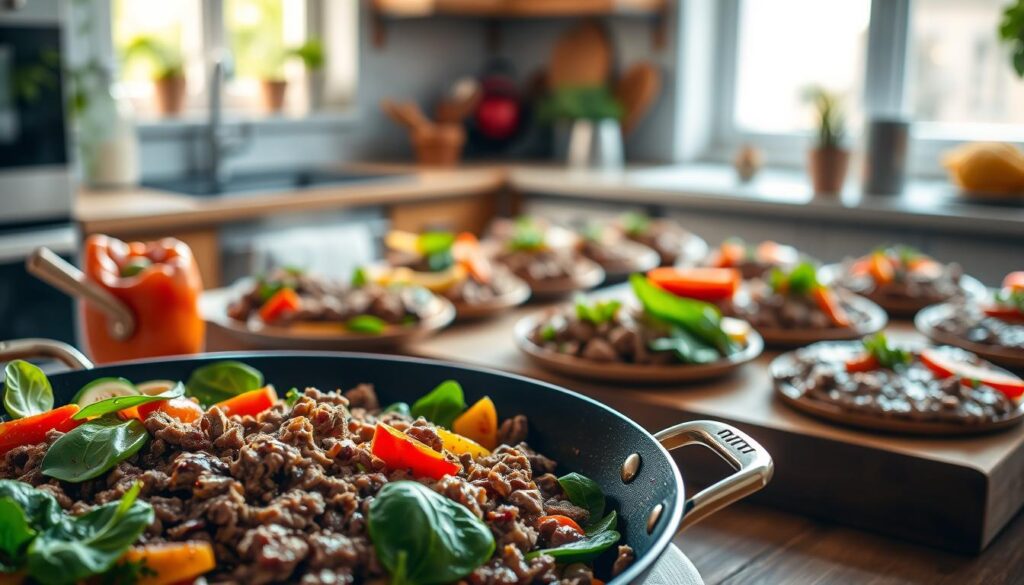
My kitchen routine changed once I started making vegetable-packed beef dishes a priority. Adding fresh produce not only boosts the health of my dinners. It also makes the meat taste better and feel more satisfying. These nutrient-dense recipes help me stretch my ingredients and keep my family happy.
Blending Finely Chopped Mushrooms with Beef
I love chopping mushrooms finely and mixing them into the ground beef. This adds moisture and a rich, savory flavor. It’s like the meat gets even more meaty.
“The secret to a great meal is often found in the balance of textures and the depth of natural flavors,”
many chefs agree.
Adding Leafy Greens at the End of Cooking
I always have spinach or kale ready to add to my skillet meals. Adding them in the last minute keeps them fresh and full of nutrients. This trick is key in my ground beef veggie skillet recipe, perfect for quick weeknight dinners.
Using Zucchini and Bell Peppers for Volume
Zucchini and bell peppers add crunch and fiber to your meals. I chop them into small pieces so they cook evenly with the beef. They help make your protein go further, leaving you with leftovers for tomorrow.
Batch Cooking and Meal Prep Strategies
Organizing my cooking schedule has changed how I manage busy weekdays. By setting aside a small time for meal prep strategies, I always have healthy, protein-rich meals ready. These batch cooking tips help me enjoy my evenings and meet my nutritional goals.
Portioning Meals for the Work Week
After cooking a big batch of ground beef, I split it into containers. Using airtight glass containers keeps it fresh for 3–4 days. This makes it easy to pack a balanced lunch before leaving for work.
“Preparation is the key to success in the kitchen, turning a chaotic week into a manageable and healthy experience.”
Freezing Cooked Beef for Future Use
If I cook more than I can eat in a few days, I freeze it. I use high-quality, freezer-safe bags to keep the beef fresh. This batch cooking strategy means I always have a protein source ready for those nights I don’t feel like cooking.
Reheating Tips to Maintain Moisture
Reheating ground beef can dry it out if not done right. I add a bit of beef or vegetable broth to the pan or container. This trick rehydrates the protein and keeps it tender, just like the day I cooked it.
| Storage Method | Temperature | Shelf Life | Best Use |
|---|---|---|---|
| Refrigerator | 40°F or below | 3–4 Days | Daily Lunches |
| Freezer | 0°F or below | 2–3 Months | Emergency Meals |
| Countertop | Room Temp | Under 2 Hours | Immediate Serving |
Flavor Profiles and Healthy Seasoning Swaps
The secret to tasty ground beef flavor profiles is in your pantry. By making healthy seasoning swaps, you can make quick weeknight dinners exciting. Just a few seasoning changes can greatly improve your dish.
Using Fresh Herbs Instead of Salt
Many cooks aim to cut down on salt. I use fresh herbs like parsley, cilantro, or basil for flavor. These herbs add a fresh taste that often makes salt unnecessary.
- Fresh Parsley: Adds a clean, peppery finish to Mediterranean-style beef.
- Cilantro: Perfect for taco-inspired bowls or Asian-fusion dishes.
- Basil: Pairs beautifully with tomato-based sauces and Italian seasonings.
Experimenting with Global Spice Blends
I love exploring the world through my kitchen with different spice blends. Dry spices help me create rich ground beef flavor profiles. This turns a simple skillet into a journey around the globe.
Here are some pantry staples for your next meal:
- Smoked Paprika: Provides a deep, earthy warmth to your beef.
- Cumin: Essential for creating authentic Mexican or Middle Eastern notes.
- Ginger: Adds a sharp, aromatic kick that works well in stir-fry recipes.
Adding Acid for Brightness
A squeeze of citrus is my go-to for finishing a dish. Acid cuts through the meat’s richness and enhances flavors. It’s a key healthy seasoning swap for lively quick weeknight dinners.
Using fresh lemon or lime juice adds brightness. I always have citrus fruits ready to add that final touch.
Safety and Storage Tips for Ground Beef
Keeping ground beef safe starts with how you store and prepare it. When I buy grass-fed beef or lean ground beef, I focus on cleanliness right away. These steps help avoid food sickness and keep your kitchen clean.
Proper Thawing Techniques
Thawing meat in the fridge is best, not on the counter. Place it on a plate in the bottom shelf for slow, even thawing.
This method keeps the meat cold and prevents bacteria from growing. If you’re in a hurry, cold water thawing is okay, but the fridge is safest for safe meat storage.
Temperature Guidelines for Safe Consumption
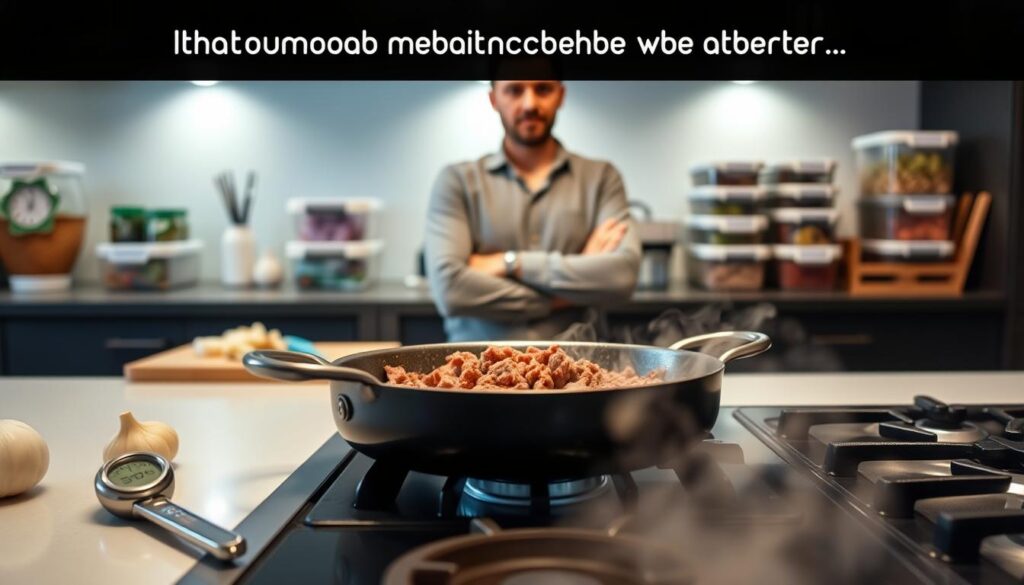
When cooking, make sure the meat hits 160°F. A digital meat thermometer is the only sure way to know it’s cooked right.
Don’t rely on color to tell if meat is cooked. Some might look brown before it’s safe. A thermometer makes sure your food is tasty and safe for everyone.
Managing Refrigerator Shelf Life
Raw ground beef should stay in the fridge for one to two days. If you won’t cook it in time, freeze it right away.
Keep the package sealed to stop juices from mixing with other foods. Organizing your fridge well keeps food fresh and prevents contamination.
| Action | Recommended Method | Safety Benefit |
|---|---|---|
| Thawing | Refrigerator (Overnight) | Prevents bacterial growth |
| Cooking | Internal Temp 160°F | Eliminates pathogens |
| Storage | Airtight Container | Maintains freshness |
| Shelf Life | 1-2 Days Chilled | Reduces spoilage risk |
Conclusion
Changing how you cook starts with picking ingredients that are good for you. Ground beef is a great choice for meals that are both tasty and healthy. It gives you the energy you need with important vitamins and minerals.
Being consistent and prepared in the kitchen is key. Using smart meal prep saves time and keeps you healthy. Check out 12 easy ground beef recipes for high-protein dinners to keep your meals exciting.
Flavor is very important in cooking. Using healthy seasonings can turn simple dishes into exciting, global meals. This way, you can avoid too much salt or processed foods.
You have the tools to make simple proteins into amazing, healthy meals. Try these tips tonight to improve your cooking. Your journey to a healthier life starts with delicious, protein-rich meals.
FAQ
What is the healthiest lean-to-fat ratio I should look for when buying ground beef?
When shopping for ground beef, I look for a lean ratio of 93/7 or 90/10. These leaner cuts help me control my calorie intake. They also offer essential nutrients like iron and zinc without the extra saturated fat found in 80/20 blends.
Why should I choose grass-fed beef over conventional options?
Grass-fed beef is better because it has a healthier fatty acid profile. I choose brands like Thousand Hills or Grass Run Farms. Their products have more omega-3 fatty acids and CLA, which are good for heart health and reduce inflammation.
How can I further reduce the fat content of my ground beef during the cooking process?
I use the drain-and-rinse method to make my meals lighter. After browning the meat, I drain the fat and rinse it with hot water. Then, I deglaze the pan with Kettle & Fire bone broth instead of oil. This lowers the fat content while keeping the meat moist and flavorful.
What are the best low-carb bases for a nutrient-dense beef bowl?
I use cauliflower rice or leafy greens like organic spinach for a light meal. For more energy, I choose whole grains like quinoa or Lundberg Family Farms brown rice. They offer complex carbs and a satisfying texture.
How long can I safely store cooked ground beef in my refrigerator?
I store cooked beef in an airtight container within two hours of cooking. According to USDA guidelines, it stays safe for 3–4 days in the fridge. If I can’t eat it by then, I freeze it to keep its quality.
What is the safe internal temperature for cooking ground beef?
I always check the meat with a digital thermometer to ensure it reaches 160°F. This ensures that harmful bacteria are killed, making my dinner safe and protein-rich.
Can I add vegetables to ground beef to make the meat go further?
Yes, I often mix finely chopped mushrooms or grated zucchini into the meat. This adds flavor, moisture, and fiber, helping me stay on track with my health goals without feeling hungry.
What is the most effective way to thaw frozen ground beef?
I thaw my beef in the fridge overnight for safety. This keeps the meat cold and prevents bacterial growth. I avoid thawing at room temperature to ensure the beef’s quality.
How can I add flavor to my beef dishes without using too much salt?
I use healthy seasoning swaps to control sodium. I rely on fresh herbs and global spices like smoked paprika and cumin. A squeeze of fresh lime juice adds a bright, acidic flavor to the dish.