Many people wonder how do home cooks make restaurant-quality pasta in their own kitchens. I’ve learned that it’s not just about the ingredients. It’s also about the pasta cooking techniques used by pros.
The magic happens when you master emulsification. This is when you mix your sauce and noodles with starchy water. It makes the sauce stick to the noodles, creating a smooth, tasty coating.
By following these steps, you can make a simple meal into a delicious experience. Your dinner will be as good as the best local trattoria. Let me show you how to improve your cooking skills to a professional level.
Key Takeaways
- Emulsification is the essential secret to a perfect sauce.
- Always reserve a cup of starchy water before draining your noodles.
- Combine the sauce and noodles in a pan to finish the cooking process.
- Use high-quality ingredients to ensure the best flavor profile.
- Consistent practice of these methods leads to professional results.
Understanding the Science of Authentic Pasta Dough
Making authentic Italian pasta starts before you even boil water. The mix of your ingredients affects how your pasta tastes. Knowing the difference between fresh pasta vs dried pasta helps pick the best base for your sauce.
Dried pasta uses semolina flour and water for a firm bite. Homemade pasta dough, on the other hand, adds eggs for a softer texture. Mastering these elements ensures your pasta is top-notch every time.
Selecting the Right Flour for Texture
Choosing the right flour is key for your homemade pasta dough. “00” flour makes noodles silky and tender, great for light sauces. Adding semolina flour gives a chewier texture.
| Flour Type | Protein Content | Best Use |
|---|---|---|
| Type 00 | Low to Medium | Silky, delicate noodles |
| Semolina | High | Firm, rustic shapes |
| All-Purpose | Medium | General everyday pasta |
The Role of Egg Ratios in Elasticity
Eggs add moisture and fat to your dough. The egg ratio affects the dough’s elasticity. Using more yolks makes the dough richer and more elastic.
Too much liquid makes the dough sticky. Too little prevents it from binding. Finding the right balance is a key skill for great pasta.
Resting the Dough for Proper Gluten Development
After mixing, let the dough rest. This step is vital for gluten development. It lets flour proteins hydrate fully.
Wrap the dough in plastic wrap and rest it at room temperature for thirty minutes. This step relaxes the gluten, making the dough easier to roll. Patience here ensures your pasta has the perfect al dente bite.
Essential Tools for the Professional Home Kitchen
My pasta journey started with the right tools. The right tools are as key as the ingredients. A heavy-bottomed pot is a must for even heat, keeping the boil steady.
Choosing Between Manual and Electric Pasta Machines
Choosing between manual and electric pasta machines depends on your style. Manual machines give you control over the dough, preventing tears. This is loved by those who enjoy the feel of the dough.
Electric machines are great for speed. They make making large batches easier. They help you get consistent, thin sheets every time.
The Importance of Quality Rolling Pins and Boards
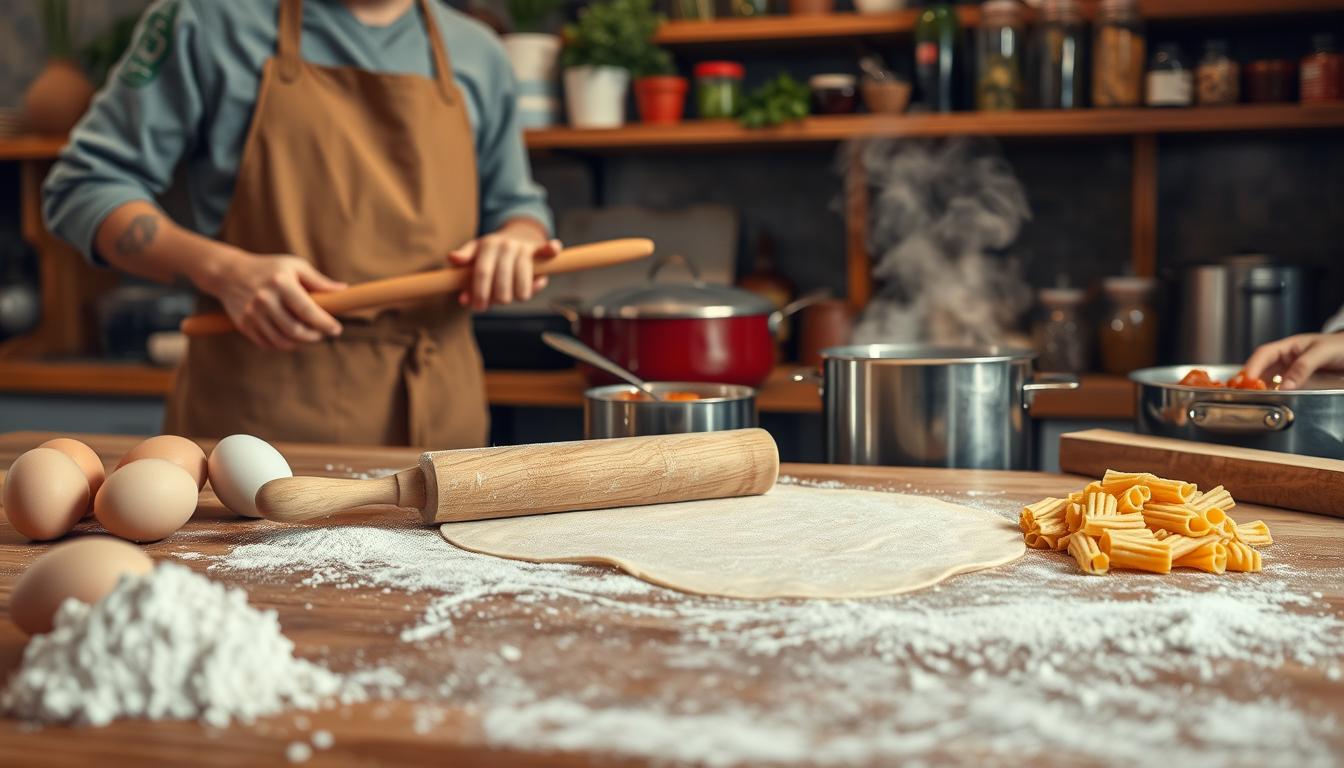
While machines are handy, a good wooden rolling pin and board are key. Wood grips the dough well, making it smooth. A rough board helps the dough stick during rolling.
A long, heavy rolling pin is better than a small one. It presses evenly, making the dough uniform. This tool is a secret to restaurant-quality pasta.
Selecting the Right Drying Racks and Cutters
Drying is key to keeping pasta’s shape. A dedicated drying rack stops noodles from sticking. This is vital if you’re not cooking them right away.
Material matters for cutters. Many prefer bronze-cut pasta dies for their texture. This texture helps sauces stick, making each bite full of flavor.
Mastering the Art of Kneading and Rolling
Making homemade pasta dough is a hands-on process. It’s a mix of skill and ingredients. The right effort is key to making the dough elastic and smooth.
Techniques for Achieving a Smooth, Silky Texture
Pasta kneading needs steady pressure and speed. Start by folding the dough and pushing it away with your palm’s heel. This aligns the gluten, making the dough smooth and elastic.
Knead for at least ten minutes. If the dough is too sticky, dust it with flour. Patience is your greatest tool here, as the dough will change from rough to smooth.
Troubleshooting Common Dough Consistency Issues
Even skilled cooks face dough challenges. Minor tweaks can fix most issues before shaping. Here are common problems I’ve seen:
- Dough is too dry: Add water slowly until it sticks together.
- Dough is too sticky: Add flour a little at a time until it’s smooth.
- Dough lacks elasticity: It might need more rest or kneading.
Achieving Uniform Thickness for Even Cooking
After resting, focus on pasta rolling. Use a machine or rolling pin for even pressure. Uneven thickness means uneven cooking.
Gradually increase your machine’s settings. Skipping levels can tear the dough. Uniform thickness ensures every bite is perfect.
How do home cooks make restaurant-quality pasta shapes by hand
Making pasta by hand is where the magic happens. It lets you control the texture and how the sauce coats the noodles. Each fold and cut makes your meal special, like a pro’s dish.
Forming Classic Shapes Like Tagliatelle and Pappardelle
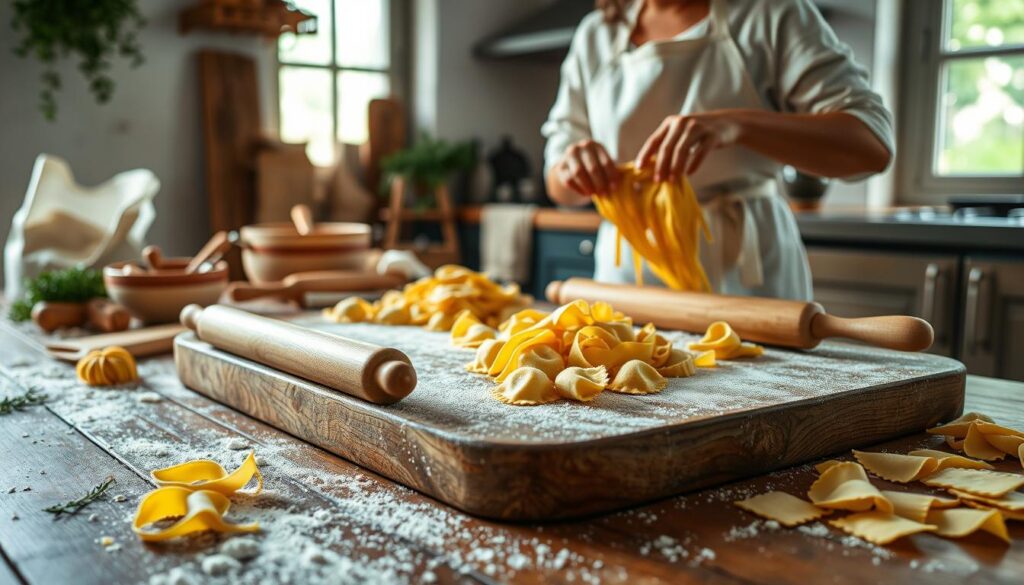
To make long ribbons, roll the dough thin and even. Dust it with flour to stop it sticking. Then, fold it into a cylinder and slice it to the right width. Tagliatelle is narrow, and pappardelle is wider.
Hand-cut ribbons have a rustic charm that holds sauce well. After cutting, toss them with flour to prevent clumping. This makes them perfect for boiling.
Techniques for Stuffed Pasta Like Ravioli and Tortellini
Stuffed pasta needs patience and precision. For ravioli, place filling mounds on dough, then cover with another sheet. Press around each mound to remove trapped air before sealing.
To make tortellini, cut dough into circles and fill them. Fold into a half-moon and seal the edges. Wrap the corners around your finger to form the shape. These shapes hold rich fillings that burst in your mouth.
Using Gnocchi Boards for Authentic Ridges
A wooden gnocchi board is key for authentic gnocchi. It has grooves that create ridges on the dough. These ridges help hold sauce, making every bite perfect.
To use the board, roll dough against the grooves with your thumb. This creates ridges and a slight indentation. It adds a professional touch to your gnocchi.
The Secrets to Perfecting Pasta Sauces
To get a silky finish on your pasta, you need a few simple tricks. Home cooks often focus too much on the noodles and forget about the sauce. Learning how to make your sauce stick to the pasta can take your cooking to the next level.
Emulsifying Fats and Pasta Water for Silky Coatings
The key to a glossy finish is emulsifying pasta sauce with starchy pasta water. This water, left in the pot, has starch from the pasta. I always save a cup of this liquid before draining my noodles.
Adding a bit of this starchy pasta water to your sauce helps the fat bind with it. This makes a stable emulsion that covers every strand perfectly. Without this step, your sauce might be too thin or separate from the pasta.
“The sauce should be a velvet cloak for the pasta, not a pool for it to drown in.”
Balancing Acidity and Fresh Herbs
After getting the right texture, focus on flavor. A good sauce balances richness with acidity. If it’s too heavy, a bit of lemon juice or white wine can fix it.
Add fresh herbs like basil or parsley just before serving. This keeps their color and smell fresh. Balancing acidity keeps your taste buds interested from start to finish.
Matching Specific Shapes to the Right Sauce Consistency
Choosing the right pasta is key when you know your sauce’s consistency. Thick sauces like ragù go well with shapes like rigatoni. These shapes hold the sauce inside.
On the other hand, light sauces like oil-based ones are best with long, thin noodles. Using a light sauce on thick noodles can mess up flavor distribution. Always think about your sauce’s weight when picking pasta.
The Crucial Step of Boiling and Salting
Boiling pasta might seem easy, but it’s often misunderstood. Many cooks overlook this step, which is key to a great dish. Learning how to pasta boil right can make all your kitchen work worth it.
Why Your Pasta Water Should Taste Like the Sea
One big mistake is not seasoning the water enough. You need to add salt so the pasta water tastes like the sea. This is your chance to season the pasta from the inside.
Without enough salt, your pasta will taste bland, no matter how tasty your sauce is. So, don’t hold back on the kosher salt when the water boils.
Managing the Rolling Boil for Consistent Results
To keep a good rolling boil, use a big pot of water for your pasta. A small pot will cool down too fast when you add pasta. This can make your noodles gummy and uneven.
A big pot keeps the water hot and lets the pasta move. This stops the noodles from sticking and helps them cook evenly.
Timing the Pasta for True Al Dente Texture
Getting the perfect al dente pasta takes watching and tasting. Start by setting your timer two minutes before the package says. This lets you check the pasta’s texture before it gets too hard.
The pasta should feel slightly firm in the middle. When it’s just right, drain it quickly or toss it in your sauce. Remember, the pasta’s texture is non-negotiable for a great meal.
The Finishing Touch of Mantecatura
Many home cooks focus on boiling but forget the final step. The mantecatura technique is key to a memorable dish. It turns a good meal into a restaurant-quality one by finishing pasta in the pan.
Understanding the Emulsion Process in the Pan
The goal is to emulsify pasta sauce for a velvety texture. Add starchy cooking water to your sauce when adding pasta. This water helps fats and liquids blend perfectly.
Stir vigorously during this step. The starch and fat mix, making the sauce thick and glossy. This coats every pasta strand evenly.
Adding Fresh Cheese and Butter at the Right Moment
Adding dairy at the right time is critical. Remove the pan from heat before adding cold butter or cheese. This prevents fats from breaking, ruining the smooth finish.
Fold these ingredients into the pasta while it’s off the heat. The pan’s residual heat melts the cheese and butter into a creamy emulsion. This ensures a stable and rich sauce until the last bite.
The Importance of Resting the Pasta Before Serving
After completing the mantecatura technique, don’t serve right away. Let the pasta rest for about thirty seconds. This allows the sauce to tighten and stick better to the noodles.
This brief pause lets flavors meld, creating a balanced taste. The starch absorbs the sauce, deepening the flavor. This simple step enhances the dish’s texture and flavor, impressing your guests.
Common Mistakes That Ruin Restaurant-Quality Pasta
Getting restaurant-quality pasta is more than just a good recipe. It’s about avoiding common mistakes. Even the most skilled home cooks can miss small details that change the pasta’s texture and taste. By improving your pasta cooking techniques, you can make your dishes as good as a pro’s.
Overcrowding the Pot and Temperature Drops
One big mistake is putting too much pasta in a small pot. This makes the water’s temperature drop fast. As a result, your noodles will be gummy and not al dente.
“Cooking is like painting or writing a song. Just as one note can ruin a melody, one small mistake in the kitchen can ruin a dish.”
Rinsing Pasta After Boiling
Many people rinse their pasta in cold water after draining. This is a big mistake. It washes away the starch that helps the sauce stick to the noodles. You want that starch to stay so your sauce coats every strand well.
Ignoring the Importance of Fresh Ingredients
The quality of your dish depends on the ingredients you use. Bad flour or eggs can make your dough tasteless and tough. Always choose fresh, high-quality ingredients for the best al dente pasta.
- Always use a large pot with plenty of water to maintain heat.
- Never rinse your pasta; let the starch work for you.
- Invest in high-quality flour to improve your pasta cooking techniques.
Conclusion
Making pasta from scratch is a rewarding journey. You now know how to make your kitchen skills shine. It takes patience and quality ingredients to make restaurant-quality pasta at home.
I want to encourage you to try new textures and sauces in your kitchen. By understanding the science of dough and the boiling process, you can get great results. Making pasta at home gets better with each batch you make.
Share your pasta-making journey and favorite flavors with others. Your kitchen can become a place where Italian traditions come alive. Start making fresh pasta today and enjoy sharing it with your loved ones.
FAQ
Why does my pasta at home never taste as cohesive as the dishes I eat at a local trattoria?
The secret is emulsification. Home cooks often serve sauce on top of noodles. But, finishing pasta in the pan with sauce and starchy pasta water creates a silky coating. This binds the ingredients into a single, flavorful dish.
When should I choose fresh egg-based dough over dried flour-and-water pasta?
Choose based on sauce chemistry. Fresh egg-based dough is great for cream or butter sauces. Dried dough, like De Cecco, works better for hearty sauces. This ensures the noodle texture matches the meal’s weight.
What specific equipment do I need to elevate my kitchen to a professional standard?
For al dente texture, use a heavy-bottomed pot from All-Clad. A Marcato Atlas 150 pasta machine is key for a smooth, silky texture. Also, choose bronze-cut pasta for better sauce adhesion.
How do I know which pasta shape to pair with my sauce?
See pasta shape as a vessel for sauce. Wide ribbons like pappardelle are best for meat ragùs. Delicate folds in stuffed pasta like tortellini trap light flavors. Gnocchi board ridges help sauce cling to pasta.
Why is pasta water often referred to as “liquid gold” in professional kitchens?
Pasta water is a strong emulsifier. It releases starch into the water as pasta boils. Adding this liquid to sauce binds fats and liquids, preventing oiliness. It’s key to a restaurant-quality finish.
What is the most important rule for boiling pasta correctly?
Season pasta water like the sea. This seasons the pasta from the inside. Use a lot of water to prevent overcrowding and keep a rolling boil. This prevents noodles from becoming gummy.
Can you explain the mantecatura technique and why it is necessary?
A: Mantecatura is the final step. Toss pasta in the sauce pan with cold butter, Parmigiano Reggiano, and pasta water. Stir vigorously to create a luxurious, silky emulsion. This technique melds flavors and achieves a professional finish.
What are the most common mistakes I should avoid to maintain the integrity of my dish?
Never rinse your pasta after boiling. Rinsing removes surface starch that sauce needs to cling. Also, avoid overcooking. Pull pasta a minute early to finish in the sauce for a perfect al dente bite.