
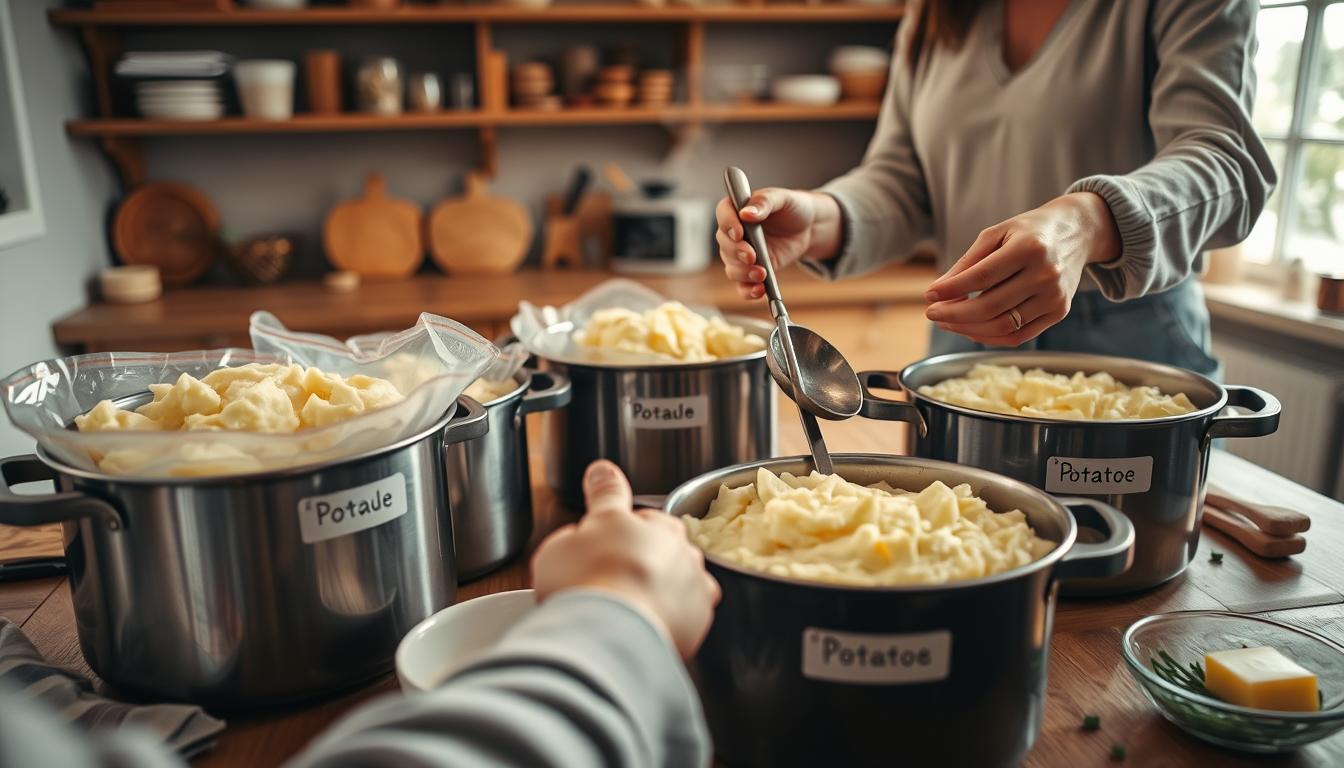
For years, I thought creamy side dishes had to be eaten right away. I thought freezing leftovers would mess up their texture. But then I found out that batch cooking potatoes is a great way to save time when you’re busy.
Switching to this method changed my kitchen routine for good. Now, I make 10 to 20 pounds at once. This way, I always have a quick side dish ready for any meal. It’s a real game-changer for holidays or simple weeknight dinners.
Many people wonder, can you freeze mashed potatoes and reheat them without losing their fluffy texture? The answer is yes, if you do it right. This guide will teach you how to keep your mashed potatoes perfect while enjoying the convenience of pre-made comfort food.
Key Takeaways
- Freezing prepared spuds is a great way to save time.
- Proper storage keeps the creamy texture and flavor.
- Batch preparation is ideal for big holiday meals or meal prep.
- Thawing methods are key to the final taste.
- Reheating correctly makes your side dish taste like it was just made.
Understanding the Science of Freezing Mashed Potatoes
To make freezer-friendly mashed potatoes, you need to know about starch. Freezing cooked potatoes stops a chemical process involving water, starch, and fats.
Not preparing your dish right can lead to bad results. Knowing the science helps keep your side dishes tasty even after freezing.
Why Texture Changes During the Freezing Process
Freezing potatoes can cause ice crystals to form. This expansion can damage the potato’s cell walls.
This damage often makes the potatoes grainy or watery when thawed. To avoid this, I reduce free water in my mix. Consistency is key for that fluffy, homemade taste.
- Starch retrogradation: Starch molecules tighten as they cool, making potatoes firm or gummy.
- Cellular breakdown: Quick freezing helps, but moisture content is a factor.
- Moisture migration: Proper sealing stops ice crystals from forming on food surfaces.
The Role of Fat Content in Maintaining Creaminess
High-fat ingredients like butter, heavy cream, or cream cheese are key for creamy mashed potatoes. They protect starch granules.
Adding these fats coats the starch, preventing moisture absorption during freezing and reheating. This keeps the texture smooth.
“Fat is not just about flavor; it is a structural component that stabilizes the emulsion of your mashed potatoes.”
Using top-quality dairy creates a barrier against liquid separation. This simple step keeps your side dish rich and satisfying every time.
Can You Freeze Mashed Potatoes and Reheat Them Successfully
Many home cooks wonder if can you freeze mashed potatoes and reheat them well. They worry the freezing will mess up the creamy texture. But, with the right steps, your mashed potatoes can taste just like new.
Managing Expectations for Leftover Quality
Freezing works well, but it needs some care to keep quality high. Your potatoes will taste best if eaten within one to two months after freezing.
After that, they might lose moisture or get ice crystals. Keeping your freezer at a steady temperature helps keep the potatoes smooth and tasty for your next meal.
Identifying Which Potato Varieties Freeze Best
Not all potatoes freeze the same. I suggest using high-starch varieties like Russets or Yukon Golds for the best results.
These potatoes have less water, which helps them stay firm when thawed. Choosing the right potato is key to successfully freezing and reheating mashed potatoes.
Preparing Your Mashed Potatoes for the Freezer
How you prepare your potatoes before freezing is key to their texture. Taking the right steps ensures your side dish stays creamy and tasty. Here are the essential steps to freeze mashed potatoes perfectly.
Cooling Techniques to Prevent Bacterial Growth
One key freezing mashed potatoes tip is to control temperature. Never put hot potatoes straight into the freezer. This can cause the freezer to get too warm and grow bacteria. Instead, spread the potatoes on a shallow tray to cool them down fast.
“Proper cooling is not just about texture; it is a critical safety measure to prevent the rapid growth of harmful bacteria in starchy foods.”
Let the tray cool in the fridge for about an hour before freezing. This slow cooling keeps the potatoes’ texture right. It also stops them from becoming watery, a common problem with frozen leftovers.
| Cooling Method | Time Required | Safety Level |
|---|---|---|
| Countertop Cooling | 2 Hours | Low |
| Refrigerator Cooling | 4-6 Hours | High |
| Shallow Tray Method | 1-2 Hours | High |
Portioning Strategies for Easy Meal Planning
For batch cooking potatoes, portioning is key. I scoop individual mounds of mashed potatoes onto a parchment-lined baking sheet. Once they’re frozen, I put them in a freezer-safe bag for storage.
This method lets you take just what you need for a meal without thawing everything. It saves space in your freezer and makes meal prep easier. Consistency in portion size also means every serving reheats evenly, making your dinner perfect.
Choosing the Right Storage Containers
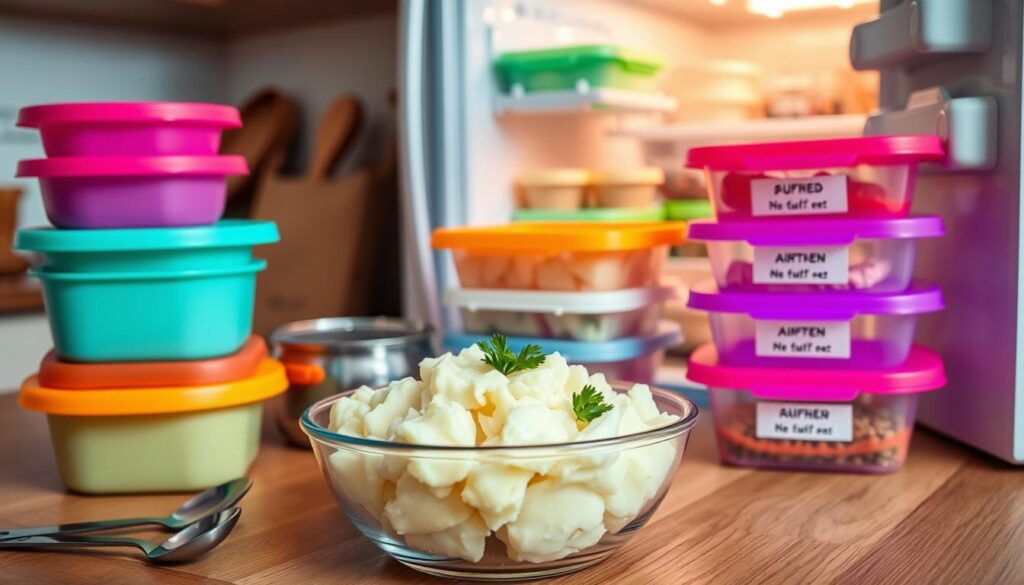
Choosing the right container for mashed potatoes is key. The right mashed potato storage containers protect your food from freezer dryness. They keep your food fresh for up to three months.
Benefits of Using Freezer-Safe Bags
Freezer-safe bags are great for saving space. They are flexible, so you can remove air before sealing. This compact design lets you stack them flat, freezing them evenly.
“The quality of your frozen food is only as good as the seal you provide.”
Why Airtight Glass Containers Are Effective
Airtight glass containers are durable and non-porous. They won’t absorb odors or chemicals. These containers offer a sturdy barrier against freezer temperature changes.
Preventing Freezer Burn with Proper Sealing
To prevent freezer burn, minimize air exposure. Use bags or glass containers and seal them well. Proper sealing keeps your potatoes creamy even after freezing.
Step-by-Step Guide to Freezing Mashed Potatoes
Learning the best way to freeze mashed potatoes is key to enjoying leftovers. It ensures your kitchen efforts don’t go to waste. By following a routine, you can enjoy creamy potatoes for weeks.
Preparing the Potatoes for Long-Term Storage
First, let your potatoes cool down to room temperature. Putting warm food in mashed potato storage containers can cause condensation. This leads to ice crystals and a bad texture. Once cooled, smooth the potatoes’ surface to reduce air exposure.
Flatten freezer-safe bags as much as you can. This shape helps them freeze faster and stack better in your freezer. Always leave a bit of space at the top for expansion.
Labeling and Dating Your Containers
Keeping your freezer organized is important. Use a permanent marker to date your containers. Knowing how long do mashed potatoes last in the freezer helps you use the oldest first.
These potatoes stay good for up to two months. Labeling stops forgotten containers from hiding in your freezer. It also ensures food safety.
Optimizing Freezer Placement for Even Freezing
Where you put your containers is key for even freezing. Place them in the back of the freezer for a stable temperature. This is key to preventing freezer burn and keeping quality consistent.
Avoid the freezer walls for your containers. Instead, place them in the center of a shelf. This lets cold air circulate and freeze the potatoes evenly.
| Storage Step | Action Required | Benefit |
|---|---|---|
| Cooling | Room temperature | Prevents ice crystals |
| Packaging | Airtight seal | Locks in moisture |
| Placement | Back of freezer | Maintains stable temp |
| Tracking | Label with date | Ensures freshness |
How to Thaw Frozen Mashed Potatoes Safely
If you want to know how to reheat frozen mashed potatoes, you must first master the art of thawing them correctly. The way you thaw your potatoes affects their final taste and texture. Proper thawing prevents a watery or grainy mess on your plate.
The Refrigerator Thawing Method
I always recommend the refrigerator method as the gold standard for food safety and quality. Move your container from the freezer to the fridge the night before. This slow thaw prevents ice crystals from ruining the potato’s starch structure.
Choosing this gentle thawing method keeps the dairy and fats in the mash stable. It prevents them from separating. Simply place your sealed container on the bottom shelf of your refrigerator for at least 12 to 24 hours.
Why You Should Avoid Countertop Thawing
It’s tempting to thaw your potatoes on the kitchen counter to speed up the process. But I strongly advise against this. Countertop thawing can create a perfect breeding ground for bacteria.
Rapid temperature changes can also make your potatoes gummy or unappealing. Consistency is key for high-quality leftovers. Avoiding the countertop ensures your thawing mashed potatoes process remains safe and delicious every time.
Reheating Methods for the Best Texture
Choosing the right method to reheat frozen mashed potatoes is key. It ensures your dish stays fluffy and tasty, not watery or grainy. Pick a method based on your time and how many you’re serving.
Using the Stovetop for Creamy Results
The stovetop is my top choice for reheating mashed potatoes from frozen. It lets you control the heat perfectly. Place thawed potatoes in a heavy saucepan over low heat. Stir often to avoid scorching and ensure even heating.
If they seem dry, add a bit of milk or cream. This keeps them silky and fresh-tasting, just like new.
Reheating in the Oven for Large Batches
For big gatherings, the oven is my go-to. Put the potatoes in a buttered dish and cover it with foil. This keeps them moist.
Heat at 350°F for 20 to 30 minutes. Remove foil for a firmer top, but covering is better for moisture.
The Microwave Method for Quick Meals
On busy nights, the microwave is quick and easy. Put potatoes in a bowl, cover with a damp paper towel. Heat in short intervals, stirring between each, to avoid cold spots.
| Method | Best For | Time Required | Texture Quality |
|---|---|---|---|
| Stovetop | Small batches | 10-15 minutes | Excellent |
| Oven | Large gatherings | 30-40 minutes | Very Good |
| Microwave | Quick meals | 3-5 minutes | Good |
Restoring Creaminess After Reheating
Getting that fluffy texture back after freezing is easy with a few tricks. When you reheat mashed potatoes from frozen, they might not be as moist as before. But, a few quick fixes can make them creamy again.
Adding Dairy to Revive the Consistency
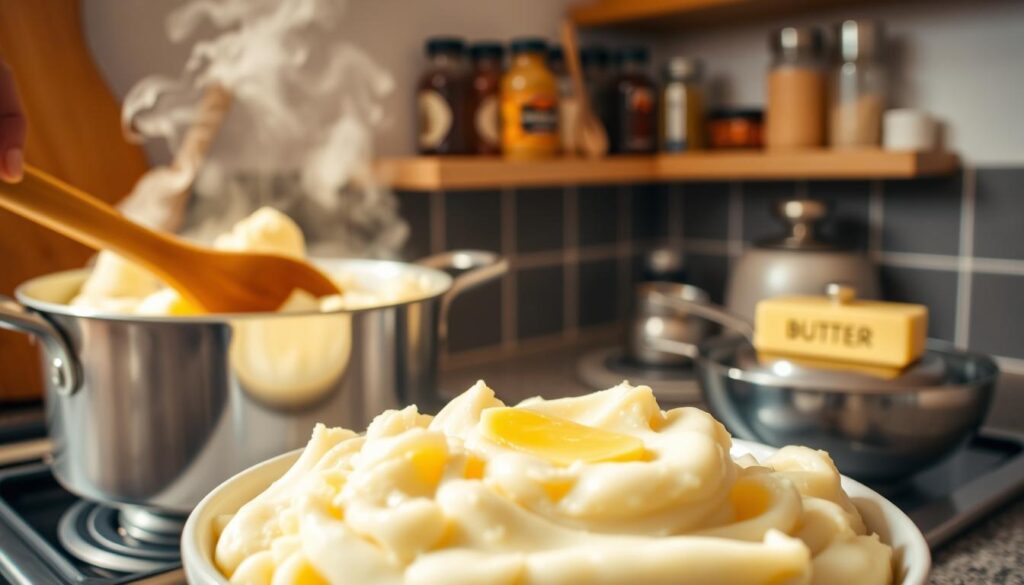
To make your mashed potatoes creamy again, add moisture slowly. Warm some milk or half-and-half before mixing it in. This way, the potatoes absorb the liquid without cooling down.
Incorporating Extra Butter or Cream
If your potatoes are a bit thick, a bit of butter can help. Butter’s fat coats the starches, making them feel softer. For an extra touch, a spoonful of heavy cream adds a luxurious finish.
Seasoning Adjustments After the Thaw
Cold temperatures can mute flavors, so taste before serving. After thawing mashed potatoes, they might need more salt and pepper. A sprinkle of fresh chives or garlic powder can reinvigorate the taste.
Common Mistakes to Avoid When Freezing Potatoes
Small errors in preparation can lead to disappointing results. Even with the best freezing mashed potatoes tips, small mistakes can affect the texture. Knowing these pitfalls helps keep your side dishes delicious.
Overcooking Potatoes Before Freezing
Boiling potatoes too long is a common mistake. Overcooked potatoes soak up too much water, becoming gluey or gummy when thawed. Aim for a fork-tender consistency, not mushy.
Using Too Much Liquid in the Initial Mash
Too much milk, cream, or broth can ruin your mashed potato leftovers. Extra liquid turns into ice crystals that ruin the creamy texture. Make your initial mash thicker to keep it creamy after reheating.
Improper Cooling Before Sealing
Never seal containers while potatoes are hot. Heat causes condensation, leading to freezer burn and unpleasant ice buildup. Let your mash cool to room temperature before freezing.
| Common Mistake | Resulting Issue | Prevention Strategy |
|---|---|---|
| Overcooking | Gluey texture | Cook until just fork-tender |
| Excessive Liquid | Watery separation | Use less dairy initially |
| Hot Sealing | Freezer burn | Cool completely first |
| Large Portions | Uneven thawing | Freeze in smaller batches |
Avoiding these mistakes will help you manage your mashed potato leftovers better. Cooling your food properly and controlling ingredients leads to better results. These freezing mashed potatoes tips are key for saving time without losing flavor.
Creative Ways to Use Leftover Mashed Potatoes
When I have leftover mashed potatoes, I enjoy trying new recipes. These versatile spuds are more than just a side dish. They’re a great base for many comforting meals. Keeping freezer-friendly mashed potatoes on hand saves time and reduces waste.
Transforming Leftovers into Potato Pancakes
Frying leftover potatoes into crispy pancakes is a favorite of mine. I mix the cold mash with an egg, flour, and chopped chives. Pan-frying them until golden creates a tasty contrast.
Using Mashed Potatoes in Shepherd’s Pie
For a hearty dinner, top a Shepherd’s Pie with mashed potato leftovers. The potatoes brown in the oven, making a savory crust. It’s a satisfying way to make a complete meal.
Incorporating Potatoes into Soups and Casseroles
Potatoes can also thicken soups and casseroles. I add a scoop of freezer-friendly mashed potatoes to vegetable soups for a creamy texture. They also bind ingredients in casseroles, adding a buttery flavor.
Safety Guidelines for Storing and Reheating
I always put safety first when managing my freezer. This ensures my family stays healthy. Proper storing mashed potatoes is key, from stove to freezer. By following these steps, you can enjoy your meals safely.
Recognizing Signs of Spoilage
Knowing how long do mashed potatoes last in the freezer is important. They stay good for up to two months in the freezer. If you see any of these signs, throw them out:
- A sour or off-putting odor upon thawing.
- Visible mold growth or unusual discoloration on the surface.
- A slimy or sticky texture that persists after heating.
- Ice crystals that suggest the container was not airtight.
Understanding Safe Temperature Zones
Bacteria grow in the “danger zone,” between 40°F and 140°F. Cool your potatoes fast before refrigerating or freezing. Never leave cooked potatoes at room temperature for more than two hours.
When reheating, use safe reheating methods to heat above 165°F. This kills any bacteria. Make sure the dish is hot in the center before serving.
Conclusion
Freezing your favorite side dishes changes how you manage your kitchen. You now know how to keep food fresh and tasty for weeks.
Many home cooks wonder if you can freeze mashed potatoes and reheat them. My guide shows that with the right method, it’s easy and works for any busy family.
Your freezer is a key tool for stress-free holiday meals or quick dinners. Using quality ingredients and airtight storage ensures every dish tastes great.
Try out your own recipes with these storage tips. Knowing how to freeze and reheat mashed potatoes gives you the freedom to cook more. Your future self will thank you for the delicious, homemade meals ready in minutes.
FAQ
Which potato varieties do you recommend for the best results after freezing?
High-starch potatoes like Yukon Gold and Russet are top choices. Yukon Gold is my go-to because they stay creamy after freezing. Waxy potatoes can become watery.
Why is it important to use full-fat dairy when preparing potatoes for the freezer?
Dairy fats and potato starch mix well. This prevents starch breakdown when frozen. I use Kerrygold butter and heavy cream for a rich, velvety texture.
How long can I safely store my mashed potatoes in the freezer?
For the best taste, eat your frozen mash within three months. After that, the risk of freezer burn increases, affecting taste.
Can I put my mashed potatoes in the freezer while they are stil hot?
Never. Let potatoes cool to room temperature before freezing. Hot food can raise freezer temperature, risking bacterial growth.
What is the best way to portion mashed potatoes for easy weeknight meals?
Use a scoop to portion on a parchment-lined baking sheet. Freeze until firm, then bag. This way, you can take only what you need.
Do you prefer glass containers or freezer bags for long-term storage?
It depends on space. I often use Pyrex for its seal. If short on space, I use freezer-safe bags, squeezing out air.
How should I thaw my potatoes to ensure the texture stays creamy?
Thaw in the fridge. This slow thaw keeps potatoes creamy. Avoid thawing on the counter to prevent uneven temperatures.
What is your preferred method for reheating a large batch of potatoes for Thanksgiving?
Oven reheating is best for big gatherings. Heat at 350°F, stirring occasionally. This keeps potatoes even and prevents drying.
My potatoes look a little dry after reheating; how can I fix them?
Fix dry potatoes with warm milk or heavy cream. A bit of butter and whisking restores creaminess and flavor.
How can I tell if my frozen mashed potatoes have gone bad?
Look for crystallization, sour smell, or slimy texture. If unsure, it’s best to discard for safety.
What can I do with leftover mashed potatoes if I don’t want to serve them as a side dish?
Repurpose mash into potato pancakes or Shepherd’s Pie topping. They’re also great for thickening soups, making them versatile.