
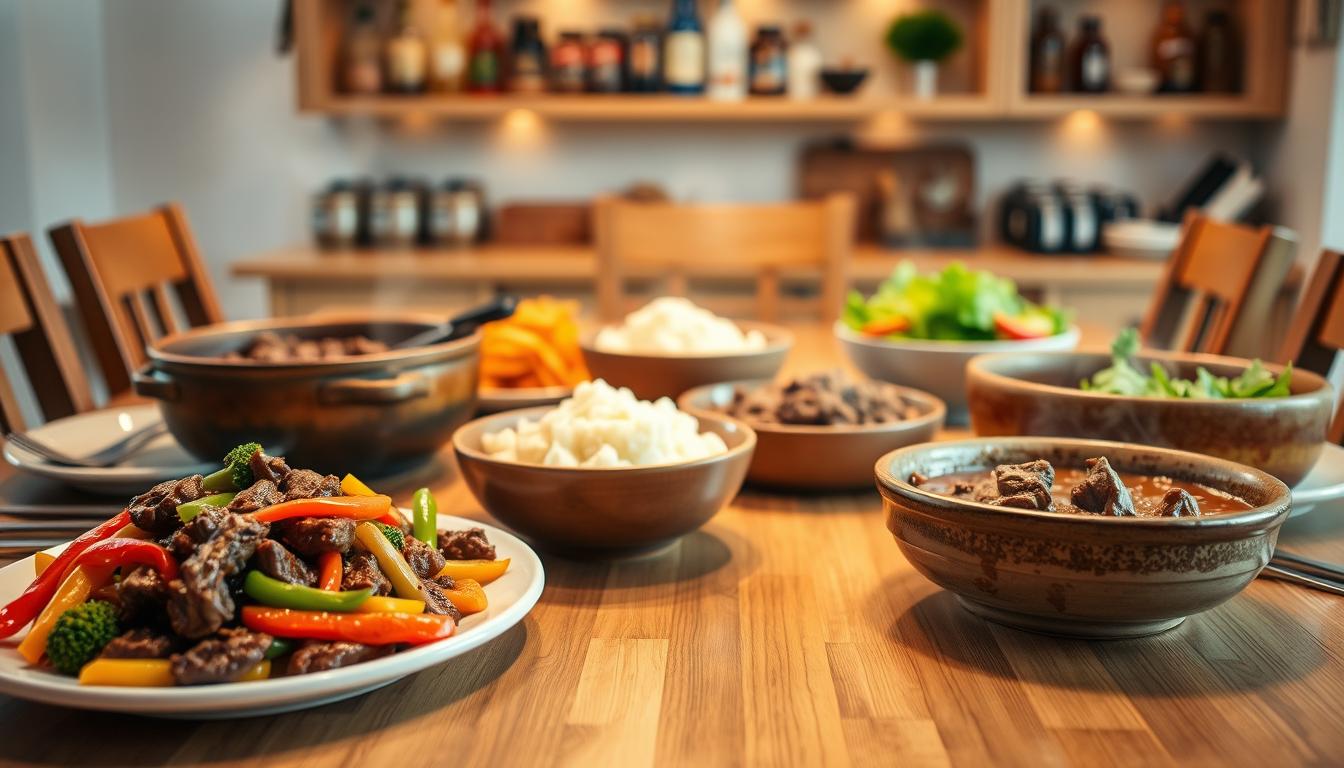
I often find myself staring into the pantry after a long day, wondering how to feed my family without spending too much. It’s a daily challenge to balance our tight budget and ensure my kids eat well. Cooking at home has become my secret to making family-friendly beef dinners that bring us together.
You don’t need expensive ingredients for a memorable meal. By using simple, high-quality staples, I’ve mastered cheap beef recipes that everyone loves. Many of these dishes can be ready in 30 minutes or less, perfect for busy days. For inspiration, check out these 30-minute meals to make your kitchen routine easier.
I aim to help you cook with confidence while keeping costs low. With a few smart methods, you can serve delicious meals that your family will love every night.
Key Takeaways
- Focus on simple, versatile ingredients to keep your grocery budget manageable.
- Prioritize quick cooking methods to get dinner on the table in under 30 minutes.
- Choose meals that are both nutritious and appealing to children.
- Use smart substitutions to make your favorite dishes lighter or more economical.
- Mastering a few core techniques will boost your confidence in the kitchen.
Mastering the Art of Budget-Friendly Beef Selection
Finding quality protein without breaking the bank is possible. A good meat selection guide helps you spot great deals. Smart shopping is key to a delicious meal at home.
Identifying Affordable Cuts at the Butcher Counter
Many overlook the best deals because they seem hard to cook. But cuts like chuck roast, brisket, and bottom round are perfect for saving money. They’re cheaper because they need more cooking time.
Ground beef is also a great choice for those on a budget. It’s versatile and can be used in many dishes. Here are some reliable cuts to look for:
- Chuck Roast: Perfect for slow cooking and shredding.
- Beef Shank: Ideal for rich, bone-in stews.
- Ground Beef: The ultimate versatile pantry staple.
- Bottom Round: Great for thin slicing and braising.
Understanding the Relationship Between Toughness and Flavor
It’s a myth that expensive steaks are always the tastiest. Cuts like the shoulder or leg are often more flavorful. They have more connective tissue, which adds depth to your dish.
These cuts may be tougher, but they become tender with slow cooking. Just remember to cook them with enough heat and time. Using these cuts is a budget-friendly secret.
Why Marbling Matters Even in Cheaper Cuts
Marbling is the fat found in meat. Even with cheaper cuts, look for visible white streaks. This fat melts during cooking, making the meat juicy.
Without enough marbling, even cheap beef can be dry. Always check for enough fat to keep the meat juicy. This ensures your meal is tender and flavorful.
Essential Kitchen Tools for Transforming Budget Beef
You don’t need a fancy kitchen to cook beef on a budget. The right tools can turn cheap, tough cuts into a fancy meal. These kitchen essentials for beef will make sure your meals are always great.
The Role of the Slow Cooker in Breaking Down Connective Tissue
A slow cooker is key for saving money on meat. It breaks down tough tissues in cheap cuts over time. Low heat turns a chewy chuck roast into a tender delight.
Using Cast Iron Skillets for Proper Searing
A cast iron skillet is perfect for a deep, savory crust. It keeps heat well, helping you get a perfect sear. This adds flavor and texture to even the cheapest beef.
Why a Sharp Chef Knife is Your Best Financial Asset
A sharp knife is very important, but often overlooked. A dull knife makes cutting hard, leading to waste. A sharp knife means better cuts, safety, and less waste.
| Tool | Primary Benefit | Best For |
|---|---|---|
| Slow Cooker | Tenderizes tough fibers | Stews and roasts |
| Cast Iron Skillet | High heat retention | Searing and browning |
| Chef Knife | Precision cutting | Trimming and slicing |
My Proven Techniques for Tenderizing Tough Meat
Turning tough, affordable beef into a tender masterpiece is easier than you think. Tenderizing meat is key to making budget cuts taste like high-end cuts. With a few simple beef preparation hacks, you can make your meat taste like it came from a fancy restaurant.
The Science Behind Acidic Marinades
Acidic ingredients like vinegar, lemon juice, or yogurt soften muscle fibers naturally. When I marinate beef in these acids, they break down tough proteins. This makes the meat ready for seasoning and cooking.
For the best results, marinate your beef for at least four hours. But be careful not to overdo it, as too much acid can make the meat mushy. Using these beef cooking techniques keeps your dinner firm and juicy.
Mechanical Tenderization Methods That Actually Work
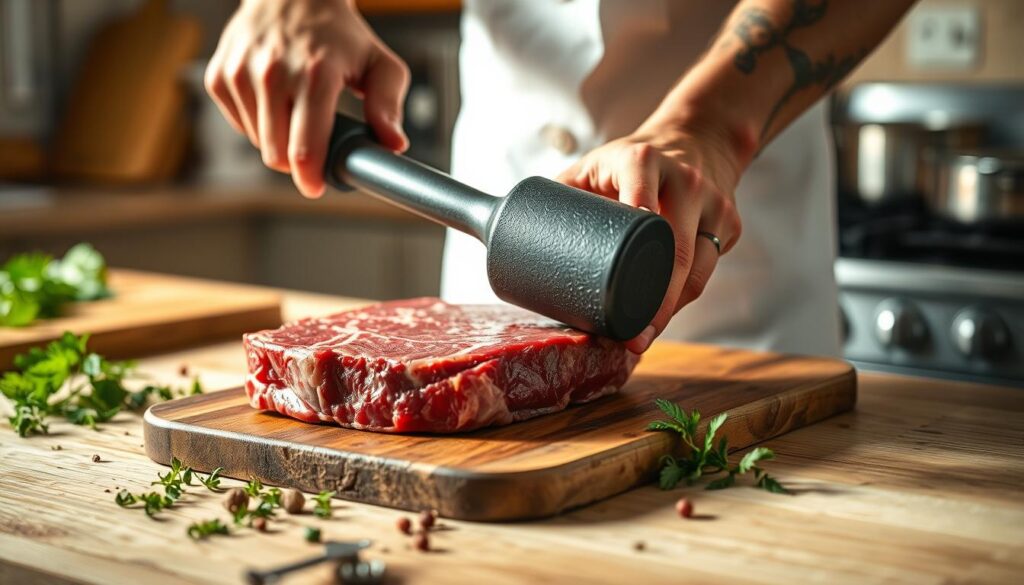
At times, you need to physically help the meat. I often use a meat mallet to pound thinner cuts. This breaks down connective tissue, making quick-cooking steaks from tougher, cheaper cuts.
Scoring the meat’s surface with a sharp knife is another effective method. Shallow, diagonal cuts across the grain shorten muscle fibers. This simple trick makes a big difference with leaner, tougher roasts.
Low and Slow Braising Secrets
For very tough cuts like chuck or brisket, patience is key. I use low and slow braising to melt away chewy collagen. Simmering the beef in liquid at a low temperature breaks down connective tissue into a rich, gelatinous texture.
I make sure the liquid covers about halfway up the meat to keep it moist. This method is the secret to that melt-in-your-mouth quality everyone loves. Learning these beef cooking techniques will change how you shop for affordable groceries.
Developing Flavor Profiles Without Expensive Ingredients
Flavor building is key for anyone wanting to make affordable dinners. You don’t need to spend a lot to make meals that taste like they’re from a fancy restaurant. By using smart cooking techniques, you can turn simple ingredients into unforgettable dishes.
Building a Foundation with Aromatics
Every great dish starts with a solid base of aromatics. I always start by sautéing onions, garlic, and celery in a bit of oil or fat. This releases essential oils that give a deep, savory flavor to any beef dish.
Don’t rush this step. Let these vegetables soften and turn golden brown. This creates a natural sweetness that balances the richness of the meat. This simple habit can greatly improve your cooking at home.
Utilizing Pantry Staples to Enhance Umami
You probably have ingredients in your cupboard that can instantly boost the savory flavor of your food. Umami is that mouth-watering quality that makes beef dishes feel satisfying. I use a few key staples to achieve this depth without spending extra money.
Keep these items on hand to elevate your next meal:
- Soy sauce: Adds a salty, fermented complexity.
- Worcestershire sauce: Provides a tangy, spiced depth.
- Tomato paste: Concentrates flavor and adds a rich color.
The Power of Deglazing with Affordable Liquids
After searing your beef, you’ll notice brown bits stuck to the bottom of the pan. These bits, known as fond, are packed with concentrated flavor. Deglazing is a key technique for capturing that goodness.
I simply pour a small amount of liquid into the hot pan and scrape the bottom with a wooden spoon. You can use affordable liquids like beef broth, a splash of vinegar, or even water to lift those flavors into your sauce. This easy method ensures that your affordable dinner ideas always deliver a bold and professional taste.
My Favorite Cheap Beef Recipes for Weeknight Dinners
Finding weeknight beef meals that won’t break the bank is easy. I’ve perfected my cooking to make every dollar count. By choosing the right cuts, you can make delicious dinners without spending a lot.
“Cooking is at once child’s play and adult joy. And cooking done with care is an act of love.”
Creating Hearty Beef Stews on a Budget
Stews are great for making tough cuts tender and tasty. I use chuck roast for this because it gets soft with slow cooking. Adding carrots, potatoes, and onions makes the meal filling and fancy without the high cost.
Stretching Ground Beef with Legumes and Vegetables
I buy a big pack of ground beef to make many meals. You can find lots of ground beef recipes online. Adding lentils, black beans, or mushrooms makes the meal bigger and healthier.
Seasoning is key to making the dish taste great. Learn about spices for ground beef to keep your meals exciting. This way, you can make tasty, affordable meals for your family.
Quick Stir-Fry Techniques for Thinly Sliced Chuck
For quick dinners, I stir-fry thinly sliced chuck roast. This method is perfect for busy nights when you want cheap beef recipes that are quick and tasty.
- Always sear the meat in a very hot pan to lock in juices.
- Use a splash of soy sauce or vinegar to deglaze the skillet.
- Keep your vegetables crisp by adding them at the very end of the cooking process.
Batch Cooking Strategies to Save Time and Money
Using a system for batch cooking beef is a smart way to save time and money. Spend a few hours on the weekend cooking your proteins. This way, you avoid daily cooking stress.
It makes sure you always have a healthy, tasty meal ready when you’re busy.
Planning Your Weekly Beef Purchases
Looking for bulk deals helps keep costs down. A 5 lb pack of ground beef costs between $18 and $22. This makes it a great deal for cooking a lot at once.
Divide the meat into smaller portions for different ground beef recipes during the week.
Check store flyers for sales on large packs. Buying when prices are low helps you stock up without spending too much. This makes your kitchen more efficient.
Proper Storage and Freezing Techniques
Right beef storage tips are key for quality and safety. I use airtight freezer bags and press out air to prevent freezer burn. Labeling bags with the date helps me use the oldest items first.
For quick use, keep meat in the fridge. For longer storage, the freezer is best. Proper wrapping keeps your beef fresh and tasty for months.
Reheating Leftovers Without Sacrificing Texture
Reheating can make food dry or rubbery, but it doesn’t have to. Adding water or broth before heating helps keep it moist. For leftover rotisserie or beef, use gentle heat.
Low heat in a skillet works better than a microwave. It keeps the meat tender. Here’s a quick guide for storage and reheating.
| Storage Method | Ideal Duration | Best Use Case |
|---|---|---|
| Refrigerator | 1-2 Days | Immediate meal prep |
| Freezer (Airtight) | 3-4 Months | Long-term planning |
| Vacuum Sealed | 6+ Months | Bulk preservation |
Common Mistakes to Avoid When Cooking Cheap Beef
Learning to avoid beef cooking mistakes is key to a great meal. Even when you’re cooking beef on a budget, small mistakes can ruin dinner. Focus on technique to ensure every bite is tender and flavorful.
The Dangers of Overcooking Lean Cuts
Many think all beef needs to be well-done. But lean cuts lack fat, making them dry and chewy if overcooked.
Use a meat thermometer to check the internal temperature. Pull the meat off the heat just before it reaches your target. This simple trick prevents overcooking and improves your weeknight beef meals.
Why You Should Never Skip the Resting Period
One common mistake is cutting into a steak or roast right after it’s done. Letting it rest for 5 to 10 minutes is absolutely essential. It allows juices to spread evenly.
Skipping the resting period means juices will spill out, not stay in the meat. This makes the beef much better in texture. Patience is a key ingredient in cooking.
Avoiding the Pitfalls of Improper Slicing
The way you slice beef affects its texture. Always slice against the grain to make it easier to chew.
Slicing with the grain leaves tough strands. This is a big problem for budget-friendly cuts. Identifying the grain before slicing improves your dish’s quality.
| Common Mistake | Resulting Texture | Recommended Fix |
|---|---|---|
| Overcooking | Dry and stringy | Use a meat thermometer |
| Skipping rest | Loss of juices | Wait 5-10 minutes |
| Slicing with grain | Chewy and tough | Slice against the grain |
How to Source Quality Beef Without Breaking the Bank
I’ve found that sourcing quality meat is easy when you know the right places. Many think top-notch meat costs a lot, but it doesn’t have to. By changing how you shop, you can find budget-friendly beef that’s delicious.
Shopping Seasonal Sales and Clearance Sections
One great grocery savings tip is to check the clearance section. Stores often lower prices on quality beef that’s close to expiring. These are perfect for one-pot meals with no cleanup needed.
Also, watch for seasonal sales. During holidays or grilling seasons, big cuts are often cheaper. Plan your meals for these sales to save on premium cuts.
Building a Relationship with Local Butchers
Talking to the butcher is valuable. Regular visits can lead to better deals. They might share the best value cuts or offer custom prices.
They can also show you hidden gems. Building a relationship with your butcher means fresher meat and supporting local businesses. They can also guide you on cooking tougher cuts.
Buying in Bulk and Portioning at Home
Buying in bulk saves money over time. Large cuts or packs are cheaper than pre-cut steaks. It’s a bit more work, but it pays off.
At home, I trim and portion the meat into bags. Vacuum sealing or heavy-duty wrap keeps it fresh for months. This habit is a key grocery savings tip for cooks.
Creative Ways to Serve Cheap Beef Recipes
Presentation is key to making cheap beef recipes look like they came from a fancy restaurant. You don’t need to spend a lot to make your dish look amazing. Just focus on the little details to turn simple ingredients into a memorable meal.
Elevating Simple Dishes with Fresh Garnishes
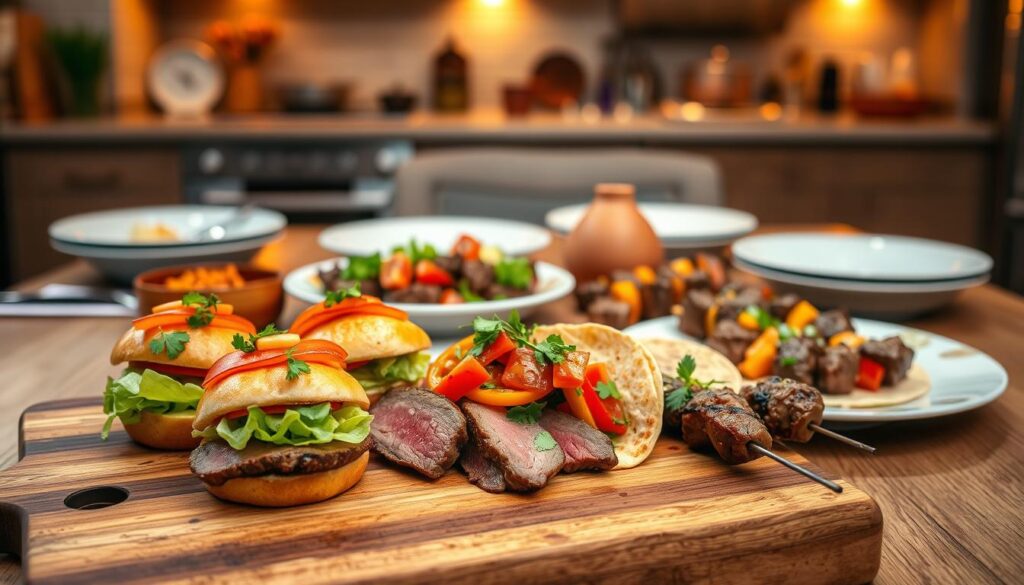
I often add fresh garnishes to brighten up my dishes. Chopped parsley, sliced scallions, or a squeeze of lime can make a big difference. These simple additions contrast nicely with the rich flavors of slow-cooked meat.
Using fresh herbs is a great affordable dinner idea for weeknights. It shows your guests that you care about the meal. Even a basic stew looks better with a splash of green on top.
Pairing Beef with Inexpensive Seasonal Sides
Creating a balanced plate doesn’t have to cost a lot. I pair my beef with seasonal veggies that are on sale. Roasted root veggies or steamed greens are great family-friendly beef dinners that save money.
These sides add texture and nutrition without extra effort. Choosing in-season produce means better flavor at a lower price. This makes your meal feel complete and satisfying for everyone.
Presenting Meals to Impress Family and Guests
Mastering creative beef serving is all about how you arrange the food. Use a clean plate and wipe the edges for a professional look. Placing the beef slightly off-center or layering it over grains can make a big difference.
The following table shows how different garnishes can change your meal:
| Garnish Type | Flavor Impact | Visual Effect |
|---|---|---|
| Fresh Scallions | Mild Onion Bite | Bright Green Contrast |
| Lime Wedges | Acidic Brightness | Clean, Modern Look |
| Chopped Parsley | Herbal Freshness | Classic Restaurant Style |
| Toasted Sesame Seeds | Nutty Crunch | Textured Finish |
Conclusion
Learning to cook affordable beef is rewarding. It saves money and makes meals tasty. You can enjoy healthy meals without spending a lot.
I suggest trying my top 10 easy beef recipes. They prove that simple ingredients can make great meals. You don’t need to spend a lot to eat well.
These recipes are perfect for any occasion. Whether it’s for a family dinner or a gathering, there’s something for everyone. I hope you find joy in cooking and feeding your loved ones on a budget.
FAQ
What are the best affordable cuts of beef to look for at the grocery store?
For budget-friendly options, I look for Chuck Roast, Top Round, and Bottom Round. These cuts are tougher but cheaper. With slow cooking, they taste better than expensive steaks.
How can I tell if a cheaper cut of beef will be juicy?
Look for marbling, the white fat in the meat. It makes the meat juicy and flavorful. Lean cuts without marbling tend to dry out.
Do I really need a cast iron skillet to cook cheap beef?
A Lodge Cast Iron skillet is highly recommended. It keeps heat well, creating a flavorful crust. This makes even budget cuts taste like high-end steak.
What is the most effective way to tenderize tough meat without expensive tools?
I use acidic marinades and mechanical tenderization. Vinegar or lemon juice softens the meat. If in a rush, pounding with a meat mallet works too.
How do I add rich flavor to my beef dishes without buying pricey spices?
Start with onions, garlic, and celery for flavor. Use Worcestershire sauce or soy sauce for umami. Deglazing the pan with broth or vinegar adds more flavor.
Can I make ground beef go further to feed a large family?
Yes, adding lentils or black beans to ground beef stretches it. It also adds nutrients without increasing cost.
Why does my beef always turn out chewy even when I follow a recipe?
Slicing against the grain is key. Cutting with the grain makes meat tough. Always let the meat rest to keep it juicy.
Is it safe to buy beef from the clearance section?
Yes, it’s safe if the meat is fresh and you cook or freeze it right away. Stores like Kroger or Walmart often have good deals.
How should I store bulk beef to prevent freezer burn?
Portion the meat into meal sizes before freezing. Use Ziploc bags and remove air for best storage. Labeling bags helps you use older meat first.
How can I make a budget beef stew look more appealing?
Add color with garnishes like parsley or chives. Serve with colorful sides like carrots or cabbage slaw. This makes the stew look and taste great.