Preparing a succulent roast at home can seem daunting. Many struggle with dry, tough results that lack flavor. This guide aims to help you master roasting pork loin with precision.
Knowing what temperature should pork loin be cooked to is key. It balances food safety with keeping the meat moist. My professional tips ensure your dinner is never overdone or unsafe.
I’ll explain the science behind managing heat and resting times. Confidence in cooking comes from knowing when your food is perfect. Let’s explore the essential techniques for a juicy, tender result every time.
Key Takeaways
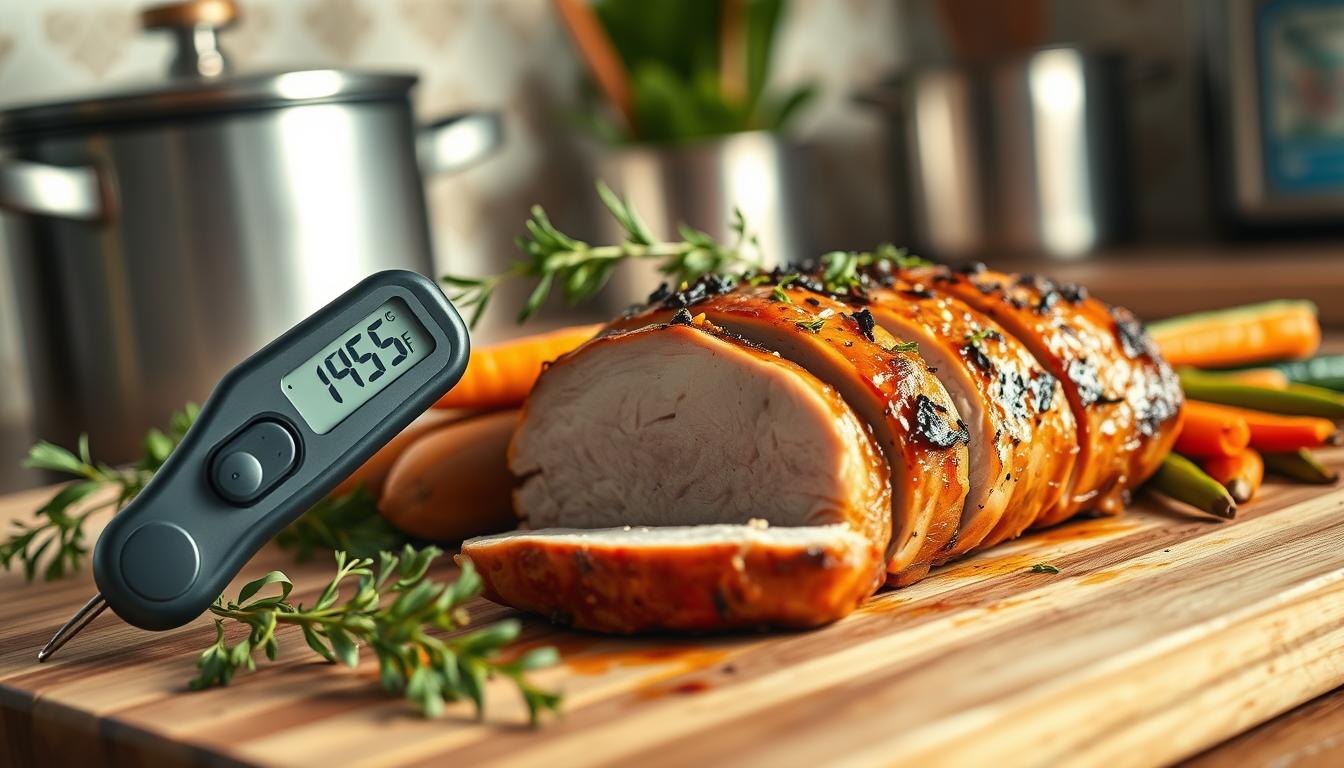
- Aim for an internal reading of 145°F for the best balance of safety and texture.
- Always use a digital meat thermometer to ensure accuracy during the roasting process.
- Allow your meat to rest for at least ten minutes before slicing to lock in natural juices.
- Avoid overcooking, as this lean cut loses moisture rapidly once it passes the ideal heat threshold.
- Consistent monitoring prevents the common mistake of serving dry, unappetizing meat.
Understanding the Science of Pork Loin Doneness
To get the perfect pork loin doneness, we need to change how we cook meat today. Many people cook pork until it’s gray and tough, following old advice. But, modern farming has made meat better at your local store.
Why Modern Pork Standards Have Changed
Years ago, pigs were fattier, which raised the risk of foodborne illness if not cooked right. Now, farmers raise leaner pigs to meet health demands. This makes pork cooking safety easier without drying out the meat.
Leaner meat doesn’t have the fat that used to keep it moist during long cooking. So, you don’t have to overcook it to be safe. This change means you can get a tender, juicy pork every time.
The Difference Between Pork Loin and Pork Tenderloin
Many people get confused between pork loin vs tenderloin. They’re different cuts with unique features. Knowing the difference is key for pork cooking safety and great cooking.
The pork loin is thick and often has fat on top, perfect for roasting. The tenderloin is long, thin, and lean, cooking fast. Because of their size, they can’t be swapped in recipes. Understanding pork loin vs tenderloin helps you cook them right.
What Temperature Should Pork Loin Be Cooked To for Optimal Results
Getting the perfect pork loin internal temperature is key to a great meal. Many worry about overcooking, making the meat dry and tough. Knowing about heat helps keep your roast juicy and full of flavor.
The USDA Safety Guidelines Explained
For years, people cooked pork to very high temperatures. But, the USDA pork guidelines have changed with new research. Now, they say cook whole cuts of pork to 145° F.
This new rule keeps the meat safe and tasty. It’s a clear guide for home cooks. It ensures a safe pork temperature without losing flavor.
Why 145 Degrees Fahrenheit is the Sweet Spot
The answer to what temperature pork loin should be cooked to is 145° F. This internal temp for pork is perfect because it’s safe and keeps the meat juicy. At this temperature, the meat doesn’t lose too much moisture.
Cooking too long makes the meat dry and tasteless. By stopping at 145° F, the meat stays tender and juicy. This method is safe and tasty for your family.
| Doneness Level | Internal Temperature | Texture Description |
|---|---|---|
| Medium-Rare | 145° F | Very juicy and tender |
| Medium | 150° F – 155° F | Firm but moist |
| Well-Done | 160° F+ | Dry and tough |
Essential Tools for Measuring Internal Temperature
To get the perfect pork loin internal temperature, you can’t just guess or rely on looks. Guessing or using visual cues can make your meat dry and overcooked. You need a tool that gives you quick and accurate readings to ensure your meal is both safe and delicious.
Choosing the Right Digital Instant-Read Thermometer
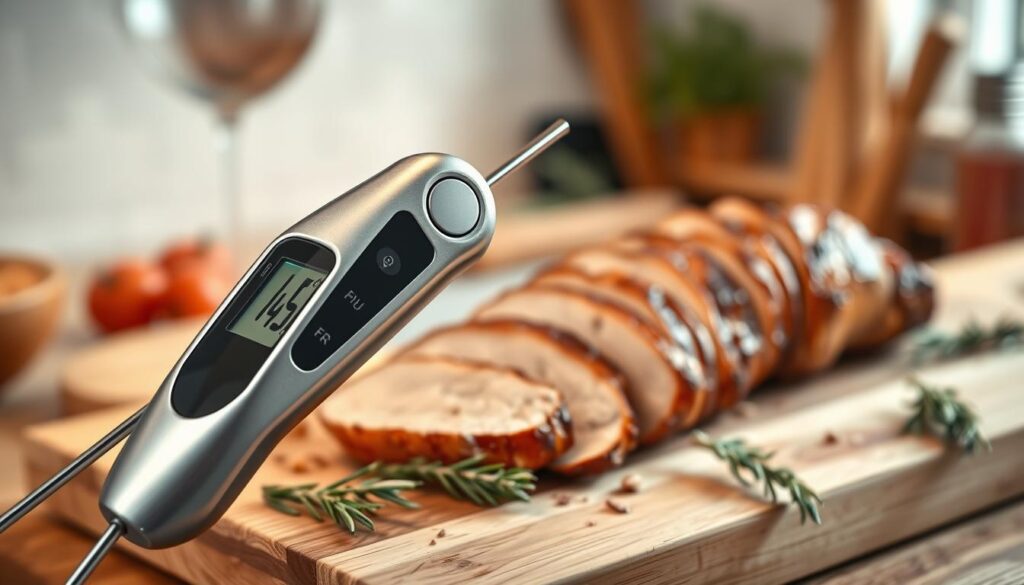
I always suggest using a digital meat thermometer for pork. It’s way more accurate than old-fashioned analog dials. These devices can show temperature changes in seconds, which is key for lean cuts of meat. A good meat thermometer for pork helps avoid serving tough, dry meat.
“The difference between a masterpiece and a disaster is often just a few degrees of heat.”
When buying a new thermometer, look for one with a thin probe tip. This keeps more juices in the meat. Also, a digital meat thermometer with a backlit display is great for cooking in dim light or late at night.
Calibrating Your Thermometer for Accuracy
Even the best tools can lose their precision over time. So, I always calibrate my equipment regularly. You can check your device by using the ice-water method to make sure your pork loin internal temperature readings are accurate. This simple step ensures your meat thermometer for pork is always giving you reliable data.
| Thermometer Type | Accuracy Level | Response Time |
|---|---|---|
| Analog Dial | Low | Slow (30+ seconds) |
| Digital Instant-Read | High | Fast (2-5 seconds) |
| Leave-in Probe | Medium | Continuous |
To calibrate, fill a glass with crushed ice and cold water. Put the probe in the ice slurry without touching the glass sides. If it doesn’t show 32 degrees Fahrenheit, adjust it as the maker says to get it right again.
Preparing Your Pork Loin for the Perfect Roast
How you handle your raw ingredients is key to a great roast. Spending a bit more time prepping your meat ensures a juicy pork loin every time. These easy pork roasting tips will get you started on a tasty meal.
Trimming the Fat Cap for Even Cooking
Pork loins often have a fat cap on one side. Trimming this layer to about an eighth of an inch is best. This even thickness lets heat cook the meat evenly, avoiding dry spots.
Less fat also means fewer flare-ups when grilling. A thin fat layer prevents the outside from burning before the inside is cooked. Remember, meat can rise by 10°F while resting, so precise trimming is key.
The Benefits of Brining Before You Cook
Brining is a top pork roasting tip for a moist result. Soaking the meat in saltwater solution makes it absorb more liquid and flavor. This keeps the meat moist during high-heat cooking.
A brined piece of meat is more forgiving if it’s cooked a bit too long. It becomes a juicy pork loin full of flavor. You can add herbs, garlic, or citrus to your brine for a unique taste.
| Prep Method | Primary Benefit | Best For |
|---|---|---|
| Fat Trimming | Even Heat Distribution | Uniform Roasting |
| Wet Brining | Moisture Retention | Leaner Cuts |
| Dry Rubbing | Flavor Development | Crispy Exterior |
Step-by-Step Guide to Roasting Pork Loin in the Oven
To get a tender roast, it’s all about the oven temperature and time. When learning how to cook pork loin, remember that consistency is key. A good roast should be tender, juicy, and evenly cooked.
Setting the Ideal Oven Temperature
For most home kitchens, set your oven to 350° F. This temperature helps the meat cook through without drying out. When cooking pork loin in oven, plan for 8 to 11 minutes per pound of meat.
Keep track of your roast’s weight to estimate cooking time. But remember, these times are just guidelines. The actual time can change based on your loin’s shape and your oven’s accuracy.
| Weight (lbs) | Estimated Time (min) | Target Temp (°F) |
|---|---|---|
| 2 lbs | 16 – 22 | 145 |
| 3 lbs | 24 – 33 | 145 |
| 4 lbs | 32 – 44 | 145 |
| 5 lbs | 40 – 55 | 145 |
Monitoring the Internal Temperature During the Roast
Time is useful, but the only sure way to perfection is checking the internal temperature. Use a digital probe thermometer in the thickest part of the loin. This prevents overcooking.
Start checking the temperature 15 minutes before the estimated time. When it hits 145° F, take the roast out of the oven. Carryover heat will continue to cook the meat as it rests, making it safe and delicious.
Grilling Techniques for a Juicy Pork Loin
Grilling a pork loin is a great way to make a delicious dish. Grilling pork loin adds a smoky flavor that makes the meat taste amazing. It might take more work than baking, but it’s worth it.
Direct Versus Indirect Heat Methods
Knowing about heat zones is key when grilling a pork loin. Direct heat is used to sear the meat, creating a nice crust. I use this method at the start of cooking.
Indirect heat is better for cooking the meat through without burning it. Place the loin away from the heat to cook it gently. This method helps the meat stay juicy and reach a safe temperature.
Managing Flare-ups to Prevent Charring
Flare-ups happen when fat hits the heat, causing flames. To stop them, I keep water ready to spray on the flames. Trimming fat before grilling also helps prevent flare-ups.
Not sure which method to use? Check out this guide to find the best approach for your grill.
| Method | Best Use Case | Heat Level | Primary Benefit |
|---|---|---|---|
| Direct Heat | Searing the surface | Medium-High | Flavorful crust |
| Indirect Heat | Internal cooking | Medium-Low | Even doneness |
| Combination | Full preparation | Variable | Best of both worlds |
Learning these techniques will help you grill a pork loin perfectly every time. Always flip the meat halfway to cook it evenly.
The Importance of Resting Your Meat
The secret to a succulent roast often lies in what happens after you turn off the oven. Many home cooks feel the urge to slice into their meal the moment it leaves the heat. But, resting pork loin is a critical step that you should never skip if you want the best texture.
Why Juices Redistribute During the Rest
When meat cooks, the heat forces the internal juices toward the center of the cut. If you cut the roast immediately, these juices will spill out onto your cutting board instead of staying in the meat. This loss of moisture is exactly what leads to dry, tough slices.
During the resting phase, the muscle fibers begin to relax and cool down. This natural process allows the moisture to redistribute evenly throughout the entire roast. By waiting, you ensure that every bite remains tender and flavorful.
How Long to Let Your Pork Loin Sit
Determining the correct pork loin resting time depends largely on the size of your cut. As a general rule, you should let the meat sit for at least 3 minutes after it reaches the target temperature. For larger roasts, I recommend waiting up to 10 minutes to ensure the juices have fully settled.
Patience is truly the secret to professional-level results in your own kitchen. While it might be difficult to wait when the aroma is filling your home, your efforts will be rewarded with a much juicier final product. Always remember that resting pork loin is just as important as the cooking process itself.
Common Mistakes That Lead to Dry Pork
Learning to avoid a juicy pork loin turning dry can be tricky. It often comes down to two main mistakes. Rushing the cooking process is a big one. By knowing these errors, you can make sure your pork stays tender and tasty.
Overcooking Due to Carryover Heat
One common mistake is not considering carryover cooking pork. Even after taking the meat out, it keeps cooking for a few minutes. Waiting until it’s too hot can make it tough and dry.
To avoid dry pork, remove the loin when it’s five degrees shy of your target. This lets the meat finish cooking slowly. It’s the key to keeping it juicy.
Cutting Into the Meat Too Soon
Being patient is just as important as knowing the right temperature. Cutting into the meat too soon is a big mistake. It lets the juices spill out before they can spread evenly.
Let your meat rest for at least ten minutes before cutting. This keeps the juices inside, making it moist. Understanding carryover cooking pork and letting it rest will greatly improve your cooking.
How to Tell if Your Pork is Done Without a Thermometer
It’s important to know if your pork is cooked safely. But can you tell just by looking and feeling? While a meat thermometer for pork is best, there are old ways to check. These methods use your eyes and touch, not just numbers.
The Touch Test Method
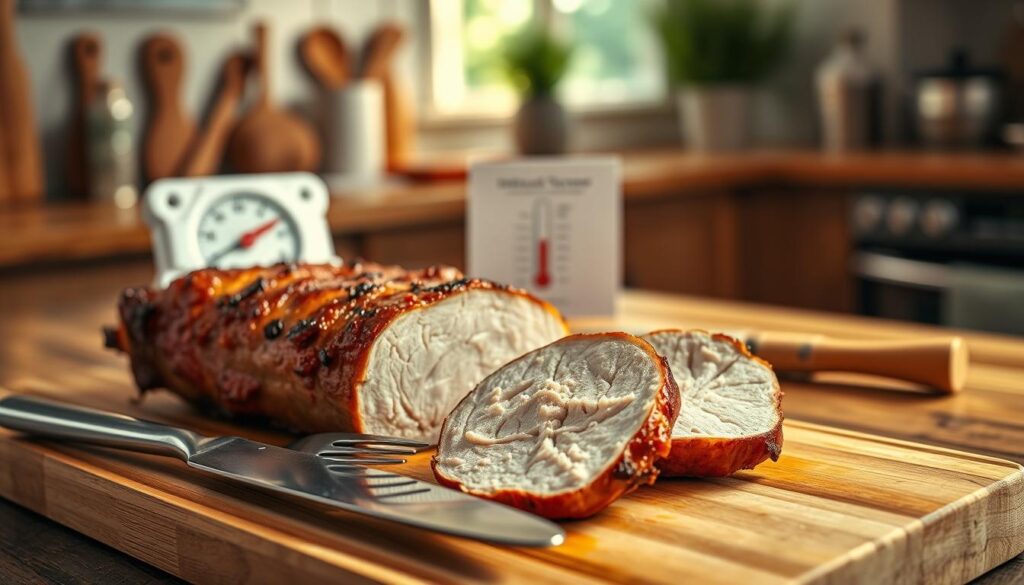
The touch test is a simple way to check if pork is done. It compares the meat’s firmness to your hand. If it’s soft, it’s probably not cooked enough. As it cooks, it gets firmer.
To do this, press the thickest part of the loin with your finger. If it feels like the base of your thumb, it’s almost ready. But remember, this method isn’t as precise as a meat thermometer for pork.
“Cooking is an art, but food safety is a science that should never be left to guesswork.”
Visual Cues and Juice Clarity
Another way to check if pork is done is by looking at the juices. When you pierce the meat, clear juices mean it’s cooked. Pink or red juices mean it needs more cooking.
Also, look at the meat’s color. A bit of pink in the middle is okay. It keeps the pork juicy. But, these signs aren’t as sure as a thermometer for a safe pork temperature.
| Method | Reliability | Best Use Case |
|---|---|---|
| Digital Thermometer | High | Ensuring food safety |
| Touch Test | Low | Quick estimation |
| Juice Clarity | Moderate | Secondary check |
Knowing how to check pork manually is useful. But always make sure it’s cooked to the right temperature for safety.
Conclusion
Getting the perfect internal temperature for your pork loin makes cooking better. It’s all about being precise to make sure every meal is safe and tasty.
You now know how to avoid guessing. Use a digital thermometer, let it rest, and steer clear of overcooking. This way, you’ll always get tender results.
I hope this guide boosts your confidence in cooking pork loin. Your guests will love the difference in texture and flavor thanks to careful temperature control.
Good meals focus on safety and quality. Try these tips for your next dish to see how easy it is to get pro results at home.
What recipe will you try first with your new skills? Don’t be afraid to try different seasonings and rubs to make it your own.
FAQ
Why is it safe to eat pork that is slightly pink in the middle?
Many home cooks follow old advice. But, modern agricultural practices have made pork safe. The USDA says to cook pork to 145° F and rest for three minutes. This keeps the meat succulent and slightly pink.
Can I use a pork loin and a pork tenderloin interchangeably in my recipes?
No, you shouldn’t. Pork loin and pork tenderloin are different cuts of meat. A loin is thick, while a tenderloin is thin. Cooking a tenderloin like a pork roast makes it tough.
What is the best way to ensure my meat hits the target temperature accurately?
Don’t rely on looks or timing alone. Use a digital meat thermometer like the ThermoWorks Thermapen ONE. Calibrate it often for accurate readings.
Should I remove the fat cap from my pork loin before I put it in the oven?
Trim the fat cap to a quarter-inch. This fat insulates and flavors the meat. It helps cook evenly, a key pork roasting tip.
Why do you recommend brining the pork before roasting or grilling?
A: Brining keeps the meat moist. It seasons the meat deeply. This helps if you accidentally cook it a bit too long.
What is carryover cooking and how does it affect my pork roast?
A: Carryover cooking pork means the meat’s temperature rises after it’s removed. I pull my roast at 140° F. The meat will reach 145° F during the resting pork loin phase.
How do I prevent flare-ups when cooking pork loin on a grill?
Use the indirect heat method on your Weber Spirit grill. Place the meat away from the direct flame. This prevents charring and keeps the meat juicy.
How long should I let my pork rest before I start slicing it?
Let the pork rest for 10 to 15 minutes. This lets the juices spread evenly. Slicing too soon makes the meat dry.
If I don’t have a thermometer, how can I tell if the pork is done?
Use the touch test if you don’t have a thermometer. The meat should feel firm but springy. Look for clear juices, not red.