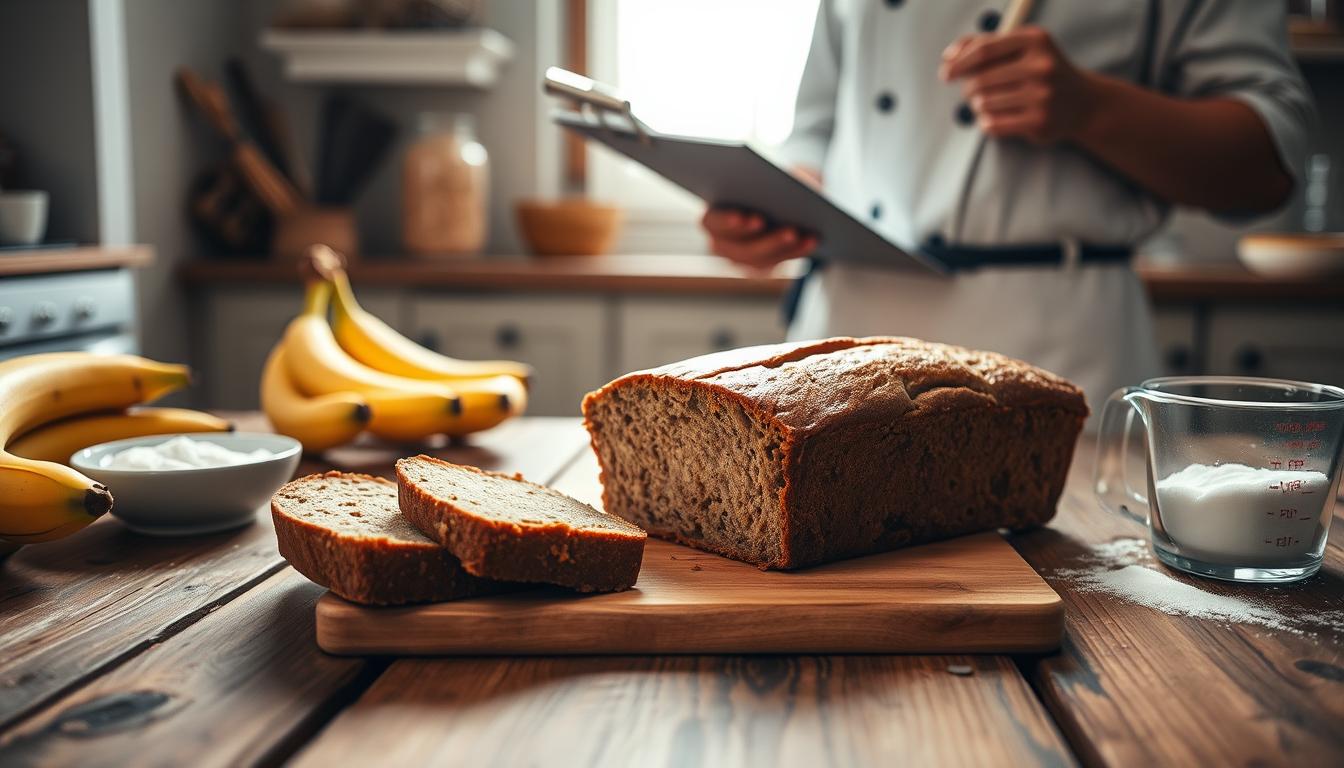
I’ve spent years baking, but a common problem was a dense, wet center. Many home bakers wonder why does my banana bread come out gummy even when they follow the recipe exactly. This issue can ruin what could be a perfect treat.
Understanding baking science is key to success. By tweaking your technique, you can transform your banana bread into a light, fluffy delight. Small changes in measuring ingredients or oven heat can make a big difference.
In this guide, I’ll show you how to fix gummy banana bread for good. You’ll learn to spot and avoid common mistakes that lead to heavy loaves. Let’s work together to achieve the perfect bake.
Key Takeaways
- Measure flour using a kitchen scale for accuracy.
- Avoid over-mixing the batter to prevent excess gluten.
- Ensure your oven is fully preheated before baking.
- Use ripe fruit to balance moisture levels correctly.
- Allow the loaf to cool completely on a wire rack.
- Check for doneness using a wooden skewer or toothpick.
Understanding the Science Behind Gummy Banana Bread
If you’ve ever had gummy banana bread, you know about cake cleaching. This term describes a sticky, gluey layer at the bottom of the loaf. It makes the bread feel heavy and undercooked, even if the top looks great.
The Role of Moisture in Quick Breads
Managing moisture is key when baking quick breads. Bananas have a lot of water, and too much can make the bread soggy. This is why it’s important to balance the wet and dry ingredients.
Getting the moisture right helps the bread stay light and fluffy. Too much liquid can make the bread dense and gummy. It’s all about finding the right balance to let the steam out during baking.
How Over-Mixing Affects Gluten Development
Over-mixing batter can also ruin the texture. Flour has proteins that form gluten when mixed with liquid. Too much gluten makes the bread tough and rubbery.
I always mix the dry and wet ingredients gently. Stopping when the flour streaks disappear helps keep the bread soft. This simple trick makes a big difference in the taste and texture of my baked goods.
| Factor | Ideal Condition | Problematic Condition |
|---|---|---|
| Mixing Intensity | Gentle folding | Vigorous beating |
| Moisture Level | Balanced hydration | Excessive liquid |
| Gluten Formation | Minimal development | Excessive development |
| Resulting Texture | Light and fluffy | Dense and gummy |
Why Does My Banana Bread Come Out Gummy
Ever wondered why your banana bread turns out gummy? You’re not alone. Many bakers struggle with achieving a light, airy crumb. Finding out why is key to baking success.
Identifying Excess Moisture from Overripe Bananas
Bananas are the heart of banana bread, but they can be unpredictable. Recipes often specify a certain number of bananas, but sizes and moisture levels vary.
Using very ripe bananas adds a lot of extra liquid to your batter. This can make the loaf’s center stay wet and heavy.
The Impact of Under-Baking on Texture
Even with the right ingredients, under-baking can ruin your loaf. Many take their bread out when it’s golden on top but not fully cooked inside.
This can create a gummy center. Make sure your loaf is fully cooked by checking the center. It takes the longest to set.
Measuring Flour Incorrectly and Its Consequences
One big mistake is not measuring flour correctly. Scooping flour from the bag can pack it down, adding too much to your batter.
This can make your banana bread dense. It might even cause the bread to collapse, leading to a gummy, rubbery bottom.
Step One: Selecting and Preparing the Right Bananas
The secret to a perfect banana bread starts before you even turn on the oven. The quality of your bananas is key to the bread’s texture and taste. By focusing on these early steps, you’re on your way to a professional result every time.
Choosing the Perfect Level of Ripeness
When I go shopping for bananas, I look for ones with lots of brown spots. These spots mean the starches have turned into sugar, adding natural sweetness. Avoid bananas that are completely blackened, as they can make the bread too wet.
Getting the ripeness just right is important for a moist banana bread with a rich flavor. If bananas are too green, the bread won’t be sweet or moist enough. I aim for bananas with a thin peel and soft to the touch.
Draining Excess Liquid Before Mashing
Many people mash bananas right into the bowl without checking their moisture. Overripe bananas can release a lot of liquid, making the batter too wet. This is why some bakers struggle with preventing gummy bread.
Before mashing, I put the peeled bananas in a fine-mesh sieve for a few minutes. This lets any extra liquid drain off, leaving just the fruit pulp. By removing this extra moisture, your bread will be light and tender, not dense and soggy.
Step Two: Mastering the Dry Ingredient Ratios
Precision is key to making a great loaf. When I started baking, I often made dense banana bread. I used measuring cups, but learned baking is a science. Small changes in dry ingredients can affect the loaf’s texture.
The Importance of Using a Kitchen Scale
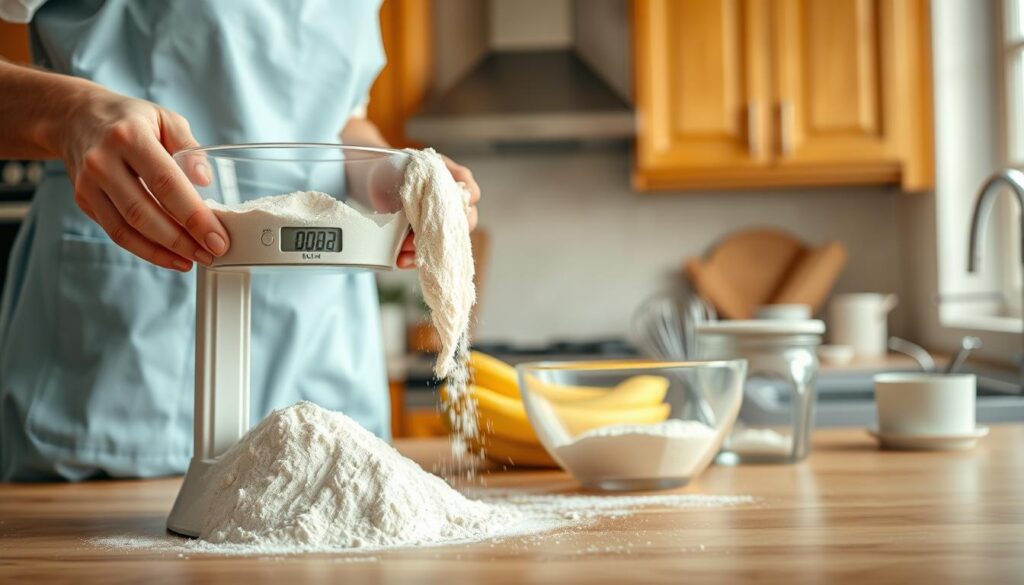
A kitchen scale is the best way to measure flour accurately. Measuring cups can be off because they pack flour down. This leads to too much dry material. Using a scale ensures your perfect banana bread has the right texture.
Investing in a digital scale helps balance your banana bread ingredients. It makes your baking routine easier. You’ll see a big difference in consistency without volume measurements.
Sifting Flour to Prevent Dense Pockets
Even with a scale, clumpy flour can be a problem. Sifting your dry ingredients is essential. It aerates the flour and removes lumps. This keeps your batter light and fluffy.
Sifting makes your dry ingredients mix well with wet ones. It stops dense flour pockets that mess up your loaf’s texture. Here’s why weight is better than volume for baking.
| Measurement Method | Accuracy Level | Consistency |
|---|---|---|
| Measuring Cups | Low | Variable |
| Kitchen Scale | High | Reliable |
| Sifting Flour | High | Uniform |
Step Three: The Proper Technique for Mixing Batter
The secret to making quick breads light and airy is in your mixing technique. Many home bakers accidentally ruin their loaves by mixing too much. By handling your ingredients with care, you can get a professional result every time.
Avoiding Over-Mixing to Keep Gluten Low
When baking quick breads, aim to mix wet and dry ingredients just right. Using an electric mixer too fast can make your loaf tough. Always use a slow speed and stop when flour streaks disappear.
Over-mixing batter leads to a dense or gummy crumb. Once flour gets wet, gluten strands tighten. Keep mixing short to keep your banana bread perfect.
Folding Ingredients Gently with a Spatula
Finishing by hand is the best way to control. Use a rubber spatula to fold dry ingredients into wet ones in a circular motion. This gentle approach stops overworking the dough.
Keep an eye on your bowl as you fold. Stop folding when all dry flour is mixed into the wet base. This simple step is key to a light, moist banana bread texture that will wow anyone.
Step Four: Choosing the Correct Pan and Preparation
The right pan is key for baking banana bread. Not just any pan will do. The material and quality of your banana bread pan affect how evenly it heats. To avoid a soggy center, pick your pan wisely.
Why Metal Pans Conduct Heat Better Than Glass
Metal pans are great because they conduct heat well. This leads to a more even bake than glass pans. A light-colored aluminum pan is my go-to for quick heat transfer.
Glass pans, on the other hand, heat up slowly. This can cause the outside to brown too much while the inside stays raw. Always choose metal pans for the best results.
| Pan Material | Heat Conductivity | Best Use Case | Resulting Texture |
|---|---|---|---|
| Light Metal | High | Quick Breads | Even and Golden |
| Dark Metal | Very High | Crispy Crusts | Darker Edges |
| Glass | Low | Casseroles | Soft or Gummy |
Proper Greasing and Lining Techniques
Even the best banana bread pan can be a problem if your loaf sticks. I grease my pan well with butter or non-stick spray. Then, I line the bottom with parchment paper for extra protection.
This method helps your loaf come out clean and intact. It makes your hard work pay off with a loaf that looks like it was made by a pro.
Step Five: Monitoring Oven Temperature and Placement
Getting the heat right in your kitchen is key to baking science. Even with a perfect recipe, a bad environment can mess up your loaf. I found out my oven wasn’t always as hot as it said.
To bake great banana bread, you need to know your oven. Don’t open the oven door too often. It lets heat out and can make your loaf sink or not bake right.
Calibrating Your Oven for Accuracy
An oven thermometer is a cheap way to check if your oven is at the right temperature. Many ovens can be off by a lot, which affects oven temperature for bread. I always have a thermometer in my oven to keep track.
If your thermometer shows a lower temperature than your oven dial, adjust your settings. This small change can make a big difference in your baking. Don’t just trust the oven’s display; it can be misleading.
Positioning the Pan for Even Heat Distribution
Where you put your pan is as important as the heat. I always place my loaf in the center of the middle rack. This lets air move around the pan and keeps the oven temperature for bread even.
Don’t overcrowd your oven. It blocks air flow, which is needed for your loaf to rise right. By keeping the center open, you prevent a gummy texture that can ruin your loaf.
Step Six: Testing for Doneness Without Guesswork
Learning how to test for doneness is key to baking perfect bread. Just using the timer can lead to undercooked bread. By using specific methods, you can bake bread perfectly every time.
Using the Toothpick Test Effectively
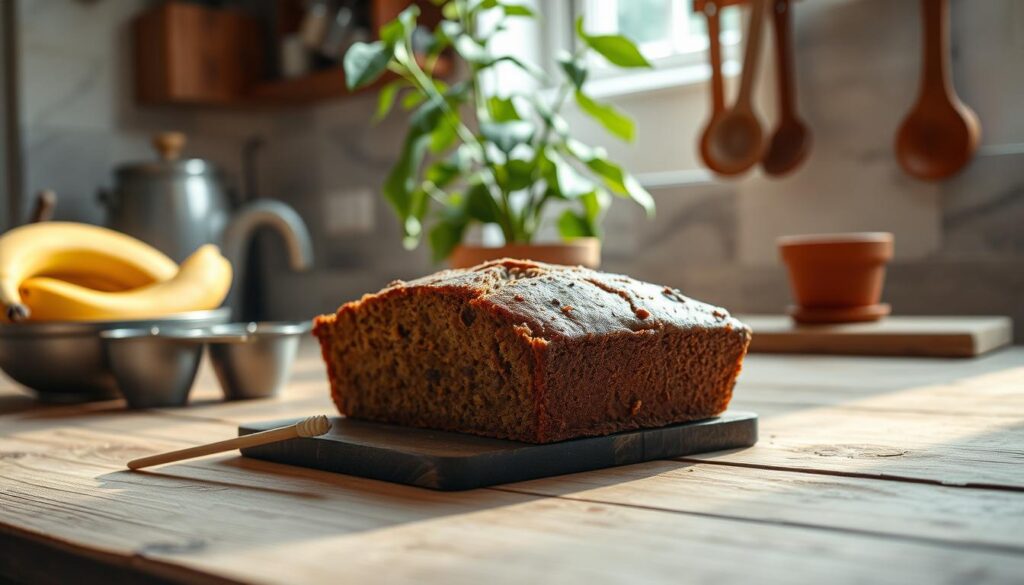
The toothpick test is a classic way to check if bread is done. I stick a wooden toothpick into the thickest part of the bread. If it comes out clean or with a few moist crumbs, it’s ready. If it’s wet, adjust the oven temperature for bread and bake a bit longer.
I also look for visual signs. A done loaf has a deep golden-brown crust and edges that pull away from the banana bread pan. These signs mean the bread is set right.
Checking Internal Temperature for Precision
While the toothpick test is good, an instant-read thermometer is more accurate. I aim for an internal temperature of 200°F to 205°F. This ensures the bread is fully cooked without drying out.
If the loaf browns too fast but the center is raw, tent it with foil. This helps the middle cook while keeping the crust from burning. A good banana bread pan also helps with even baking.
| Method | Reliability | Best For |
|---|---|---|
| Toothpick Test | Moderate | Quick checks |
| Internal Temp | High | Precision baking |
| Visual Cues | Low | General monitoring |
Step Seven: Cooling and Storing Your Bread Properly
When your timer goes off, your banana bread journey is just half done. Many bakers rush the cooling phase, which can mess up the texture. Cooling your banana bread right is key to keeping it moist but not too wet.
I let my bread rest in the pan for 10 minutes after it comes out of the oven. This helps the structure set, making it easier to handle. If you take it out too early, it might fall apart.
The Importance of the Wire Cooling Rack
After resting, move the loaf to a wire cooling rack. This tool is vital for letting air circulate around the bread. Without air, the bottom gets soggy.
“Patience is the most important ingredient in any recipe, specially during cooling.”
A wire rack ensures even cooling. It keeps the crust firm and the inside just right. This simple step greatly improves your bread’s quality.
Preventing Steam Buildup During Storage
When the bread cools down, store it right to keep its texture. Never wrap a warm loaf, as it traps steam. This steam can make the crust soggy.
Wait for the bread to cool to room temperature before storing it. If your bag gets damp, crack it open to let moisture out. Good cooling and storage keep your banana bread fresh for days.
Troubleshooting Common Mistakes I Made
Fixing my baking mistakes taught me a lot. I used to get upset when my banana bread was dense. But, I learned that banana bread troubleshooting gets better with time. Spotting these small mistakes helped me avoid gummy banana bread for good.
Adjusting for High Altitude Baking
Baking at high altitudes changes how your bread turns out. The air pressure is lower, so your batter rises faster. This can make the bread rise too quickly and then sink, leaving it heavy and wet in the middle.
To fix this, I use less sugar and leavening agents. I also bake at a higher temperature. These changes help the bread set properly and avoid being gummy when baked in the mountains.
Fixing Issues with Leavening Agents
Old baking powder or baking soda can make your bread dense. If these agents are past their prime, they don’t work right. This results in a dense, gummy layer at the bottom that never cooks fully.
Baking is a science, but it is also an art that requires you to listen to your ingredients and respect the process of chemistry in your oven.
I test my baking powder by adding it to hot water. If it doesn’t bubble up right away, it’s time for new powder. Keeping your leavening agents fresh ensures your bread will always be light and fluffy.
| Issue | Primary Cause | Quick Fix |
|---|---|---|
| Dense Texture | Expired Leavening | Check expiration dates |
| Sunken Center | High Altitude | Reduce sugar/leavening |
| Gummy Bottom | Under-baking | Use internal thermometer |
My Personal Tips for Consistent Results
Once you know the basics, you can add your own twist to banana bread. Small changes can make a big difference. These banana bread recipe tips will help you keep your bread moist and flavorful.
Adding Texture with Nuts and Seeds
Adding nuts or seeds makes your banana bread better. Walnuts or sunflower seeds add a nice crunch. But, they can make the bread heavier.
To keep your moist banana bread light, add a bit more baking powder. This helps the bread rise with the added ingredients. Mix these in last to avoid over-mixing.
Experimenting with Flour Blends
Try different flours to make your banana bread unique. Mixing in almond or oat flour adds a special flavor. But, you might need to adjust the liquid.
“Baking is a science, but it is also an art form that invites you to experiment and find what truly makes your heart sing.”
Start by using 20% of an alternative flour. This keeps the bread’s structure while adding a new taste. Here’s a table with common adjustments I make.
| Ingredient Type | Texture Impact | Adjustment Needed |
|---|---|---|
| Walnuts | Crunchy | Add 1/4 tsp baking powder |
| Almond Flour | Dense/Nutty | Reduce liquid slightly |
| Chia Seeds | Gel-like | Increase liquid by 1 tbsp |
| Oat Flour | Soft/Chewy | No major change |
Follow these banana bread recipe tips to customize your bakes. Whether you like a classic or something crunchy, these banana bread ingredients will help. Remember, practice and paying attention to your batter are key to success.
Conclusion
Baking the perfect loaf of bread is a journey that mixes science with art. You now know how to make a moist, tender treat without a gummy texture. This is true every time.
My top banana bread recipe tips are about being precise and patient. Changing your mixing speed or oven settings can greatly affect the bread’s texture. These habits will become natural as you bake more.
Fixing banana bread problems means watching your batter and oven carefully. If the center is dense, check your flour or pan material. These details are key to consistent results in your kitchen.
Don’t skip the cooling step for banana bread. Letting it rest on a wire rack helps steam escape, perfecting the structure. This simple step ensures your hard work pays off with a professional finish.
I invite you to share your banana bread creations with others. Your feedback helps me improve these methods. Keep trying new ingredients and enjoy the journey of perfecting your loaf.
FAQ
What exactly is cake cleaching and how does it affect my banana bread?
Cake cleaching is when a loaf gets a gummy layer. This happens when there’s too much moisture and the gluten doesn’t develop right. To avoid this, I make sure my flour and wet ingredients are in the right ratio.
How can I prevent my overripe bananas from adding too much moisture?
I use very spotty bananas for sweetness but they have a lot of water. My trick is to mash them in a bowl and drain the excess water. This keeps the banana bread from getting soggy.
Why do you suggest using a kitchen scale instead of traditional measuring cups?
Measuring cups can be off by a lot. A cup of flour can weigh differently. Using a digital scale, I get the exact weight. This helps avoid a dense or gummy loaf.
Is there a specific brand of pan that helps prevent an under-baked center?
I use a Nordic Ware Natural Aluminum Loaf Pan. Metal pans heat better than glass or ceramic. This ensures my bread is evenly cooked and has a nice crust.
How do I know if I have over-mixed the batter?
If the batter looks smooth and elastic, it’s over-mixed. This makes the bread tough. I fold the ingredients gently with a silicone spatula to keep it light.
What is the ideal internal temperature for a finished loaf of banana bread?
I use a Thermapen to check the temperature. It should be between 200°F and 205°F. This ensures the bread is fully cooked and not gummy.
Why is it a mistake to let the bread cool inside the loaf pan?
Cooling in the pan makes the bread soggy. I transfer it to a wire rack within ten minutes. This lets it cool evenly and prevents moisture buildup.
Can expired leavening agents cause my bread to be dense?
Yes, old baking soda won’t make the bread rise. It should fizz when mixed with vinegar. If not, it’s time to get new baking soda.
Does high-altitude baking require changes to the moisture or temperature?
At high altitudes, I raise the oven temperature and add more liquid. The air pressure is lower, so things rise faster. Adding extra sour cream or egg replacer helps the loaf stay good.
How can I add nuts or seeds without making the bread feel heavy?
I add Fisher Walnuts or pumpkin seeds for crunch. Tossing them in flour before adding keeps them from sinking. This helps the bread stay light and even.