Many home cooks find it hard to cook lean cuts of meat. Friends often ask how do you know when pork tenderloin is done without it getting dry. This is a common problem that can make dinners tough and overcooked.
Today, I aim to give you a solid pork cooking guide to end the guessing game. By learning these professional tips, you’ll make meals as good as those in restaurants, every time.
You should be able to make juicy, tasty meals that wow your family. Let’s look at the easy steps to get your meat to the perfect temperature safely and well.
Key Takeaways
- Use a digital meat thermometer for the most accurate temperature readings.
- Aim for an internal temperature of 145°F for optimal safety and texture.
- Always allow the meat to rest for at least five minutes before slicing.
- Avoid relying on visual cues like color, as they can be misleading.
- Proper preparation builds confidence for cooking lean cuts of meat.
Understanding the Science of Perfectly Cooked Pork
Getting a perfect pork tenderloin is not just luck. It’s about knowing the science behind the meat. This cut is very lean, with little fat and connective tissue. This means it can dry out quickly if cooked too long.
Why Pork Tenderloin Requires Precision
When cooking pork tenderloin, precision is key. It has very little fat, so the internal temperature of pork must be watched closely. This helps keep the meat moist and tender.
Don’t rely on old ways like checking for a gray center. Instead, use precise heat control. This way, you get a tender, slightly pink center that’s both safe and tasty. This is what makes a good roast stand out.
The Shift in USDA Guidelines for Pork Safety
For years, we were told to cook pork to 160° F. This was to avoid trichinosis, a parasite once common in pork. But now, thanks to better farming, the USDA has changed the safe pork cooking temperature to 145° F.
This change is great for those who want to cook pork safely without losing flavor. Cooking at this lower temperature keeps your tenderloin juicy and full of flavor every time.
How Do You Know When Pork Tenderloin Is Done Using a Thermometer
The secret to a juicy pork tenderloin is precise equipment. Many home cooks struggle with knowing when it’s done. They often rely on old ways instead of tools.
Using a dedicated tool removes guesswork. It ensures a perfect result every time.
Selecting the Right Digital Meat Thermometer
For cooking pork safely, the right tool is key. I recommend a high-quality digital meat thermometer for pork. These are better than old dial versions.
They give quick readings, so you don’t lose heat. Digital probes are more accurate and easy to use. This small investment makes your meals better.
Where to Insert the Probe for Accurate Readings
Where you put the probe matters a lot. Always insert it into the thickest part of the tenderloin. This gives a true reading.
Don’t touch the pan or hit bones. These can give false high temperatures. Slide the probe horizontally through the side. This keeps the sensor in the center.
Target Temperatures for Juiciness and Safety
Knowing the safe pork cooking temperature is key. The internal temperature of pork should be 145° F. This is for safety and the best taste.
Cooking too long can make the meat dry. Staying at 145° F keeps it juicy. Precision is truly the key to a great tenderloin.
Visual Cues and Texture Checks for Doneness
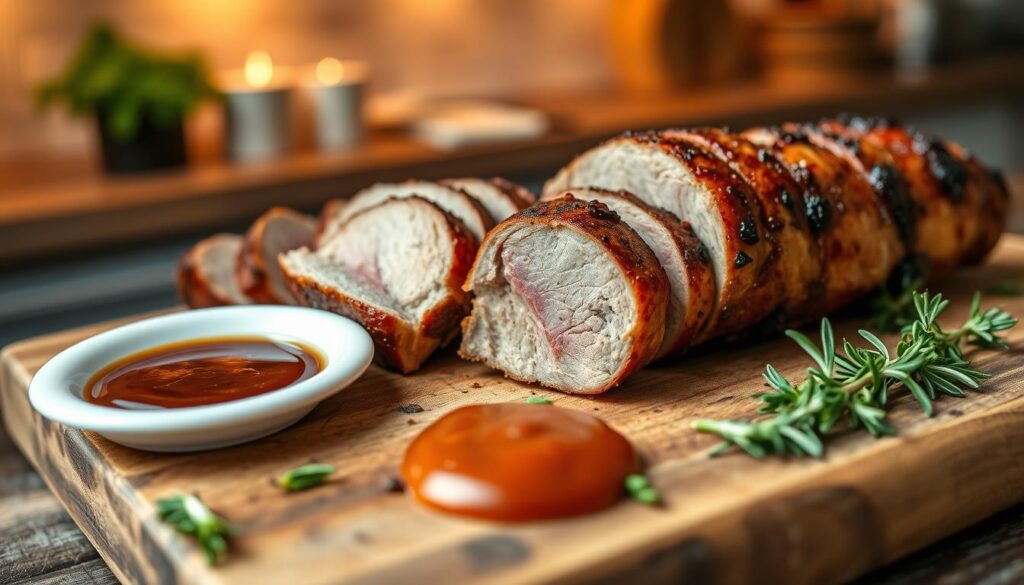
To get the perfect pork doneness, you can’t just look at it. Many people cut into the meat to check the color. But this can make the meat dry and uneven.
Observing the Color of the Juices
Some think clear juices mean the meat is ready. But this is a myth. Color can be deceiving, and clear juices don’t always mean it’s safe.
Just looking at the juice color can lead to overcooked meat. Instead, use a digital thermometer to check the temperature.
Assessing the Firmness of the Meat
The touch test is key for tender pork. Raw meat feels soft and squishy. As it cooks, it gets firmer.
Press the meat’s center with your finger or tongs. It should feel firm but not hard. If it’s mushy, it’s not done yet. If it’s hard, it’s overcooked.
Recognizing the Opaque Appearance
As pork cooks, it changes color. It goes from pink and translucent to solid and opaque. This means it’s almost done.
This color change is a good sign, but don’t rely on it alone. Use a thermometer to make sure your pork is tender and safe.
The Importance of Resting Your Pork Tenderloin
Achieving a truly juicy pork tenderloin is not just about cooking. It’s also about what happens after. Many cooks slice their meat too soon after it’s done. This often results in dry, disappointing meat.
Why Resting Prevents Moisture Loss
When you cook meat, the heat pushes juices to the center. Resting pork lets these juices spread evenly. Cutting into the meat too soon spills these juices out, not keeping them inside.
Resting the meat ensures every bite is juicy. This simple step can make a big difference, turning a dry meal into a restaurant-quality dish.
Determining the Ideal Resting Time
For a standard tenderloin, rest for at least three minutes. Larger or thicker cuts might need five or ten minutes. This patience is key to tender, melt-in-your-mouth pork.
During rest, the meat’s fibers relax and soak up moisture. This makes carving easier. Keep the meat on a warm plate or cutting board to prevent cooling too fast.
How Carryover Cooking Affects Final Temperature
Remember, the meat’s temperature will rise after it’s removed from heat. This is called carryover cooking, adding 3 to 5 degrees. Plan for this rise when you take the meat out.
| Resting Stage | Internal Temp Change | Moisture Retention |
|---|---|---|
| Immediate Slicing | None | Low |
| 3-Minute Rest | +3°F to +5°F | High |
| 10-Minute Rest | +5°F to +8°F | Maximum |
By pulling your meat slightly early, you avoid overcooking. This ensures your tender pork is perfectly cooked. Getting this timing right is a sign of a skilled home chef.
Common Mistakes That Lead to Overcooked Pork
Most kitchen errors come from simple habits. Knowing these mistakes helps you avoid dry pork. You can then serve a meal that’s tender and juicy.
Relying on Time Instead of Temperature
Many recipes tell you to cook meat for a certain time. But this can make the meat tough and overcooked. Always use a meat thermometer for pork to check the meat’s progress.
The Dangers of High Heat Cooking
High heat can make a nice crust, but it’s risky. Excessive heat can dry out the meat before it’s fully cooked. It’s better to sear briefly and then cook at a lower temperature.
Ignoring the Thickness of the Tenderloin
Pork tenderloins come in different sizes and shapes. If you don’t consider the thickness, you’ll get uneven results. Always check the internal temp for pork at the thickest part. This ensures the meat is cooked evenly and safely.
My Preferred Cooking Methods for Consistent Results
I’ve found a few methods that always work. They’re great for both new and experienced cooks. Learning how to cook pork well is key to a tasty meal. Certain pork tenderloin cooking tips can make a simple dinner feel like a fancy restaurant meal.
Searing and Roasting Techniques
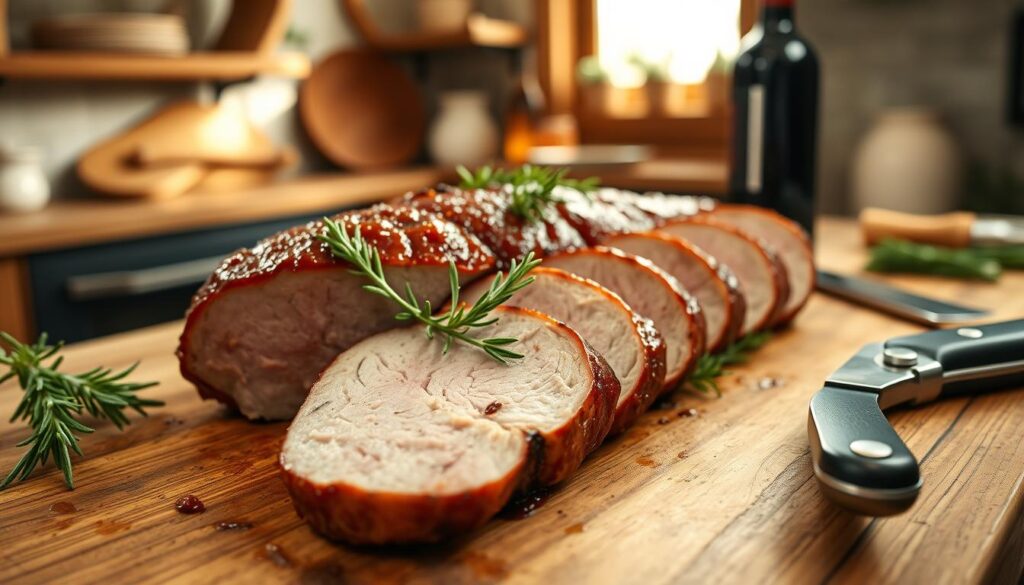
The sear-and-roast method is my favorite for a perfect pork tenderloin. I start by searing the meat in a hot skillet. This creates a flavorful crust. Then, I move it to a preheated oven to cook it gently.
“The secret to a great roast is allowing the heat to penetrate the meat slowly after the initial sear, ensuring the center remains tender and juicy.”
Using a Sous Vide for Guaranteed Perfection
The sous vide method is perfect for precision. It seals the meat in a bag and cooks it in a controlled water bath. This method is the best way to cook pork exactly how you like it.
- Set your immersion circulator to 140°F for a medium-rare finish.
- Ensure the tenderloin is fully submerged for even heat distribution.
- Finish with a quick sear in a hot pan to add texture before serving.
Grilling Tips for Even Heat Distribution
Grilling adds a smoky flavor, but it needs careful attention. To get a perfect pork tenderloin on the grill, I use a two-zone setup. This lets me sear the meat over direct heat and then finish it off without burning.
Here are some pork tenderloin cooking tips for grilling:
- Keep the lid closed to maintain a consistent ambient temperature.
- Rotate the meat frequently to ensure all sides cook at the same rate.
- Use a digital thermometer to verify the internal temperature before removing it from the heat.
Mastering these techniques will make you more confident in how to cook pork for any event. These pork tenderloin cooking tips will help you make a perfect pork tenderloin no matter your kitchen setup.
Preparing Your Pork Tenderloin for Success
The secret to a perfect pork tenderloin starts before cooking. It’s all about the prep work. By focusing on these steps, your dish will be tender, juicy, and full of flavor.
Trimming the Silver Skin Properly
The silver skin is tough and doesn’t break down when cooked. If not removed, it makes the meat chewy. Use a sharp knife to carefully pull it off, keeping the blade angled up.
Consistency is key when removing this layer. You want to remove as little meat as possible. This simple step greatly improves the texture of your meal.
The Role of Brining in Retaining Moisture
Pork tenderloin is lean and can dry out fast. Brining adds flavor and moisture. Soaking the meat in a saltwater solution helps it absorb extra liquid.
“Cooking is at once child’s play and adult joy. And cooking done with care is an act of love.”
I suggest a brine of water, salt, and sugar for about an hour. This keeps your meat moist, even if it’s in the oven a bit longer.
Seasoning Strategies for Better Flavor
After trimming and brining, it’s time to think about flavor. These pork tenderloin cooking tips stress the importance of a dry surface before seasoning. A wet surface steams the meat, preventing a good crust.
I like to use herbs like rosemary and thyme, along with garlic powder and black pepper. Season generously and press it into the meat. This creates a savory crust that enhances the pork’s natural taste.
Troubleshooting Underdone or Overdone Meat
If your dinner plans hit a snag with overcooked or undercooked meat, don’t panic. Even the most experienced cooks face issues with pork doneness sometimes. The key is to stay calm and use these simple strategies to save your meal.
What to Do If the Center Is Stiil Pink
Many people worry when they see a pink center in a tenderloin. But if your digital thermometer reads 145° F, the meat is perfectly safe to eat. This color comes from the meat’s natural proteins, not raw tissue.
If you’re not sure, sear the slices in a hot pan for thirty seconds per side. This adds a nice crust without drying out the inside. Trust your thermometer over your eyes for the best results.
Saving Dry Pork with Sauces and Glazes
If you accidentally overcook the meat, you might struggle to avoid dry pork. A simple way to fix this is by adding moisture. A rich pan sauce made with butter, stock, or wine can mask the texture of overcooked meat.
You can also use a fruit-based glaze, like apple or apricot, to add flavor and moisture. Serving the pork thinly sliced and drizzled with a savory gravy is another trick. These additions improve the mouthfeel and make the meal enjoyable again.
Adjusting Your Technique for Future Meals
Every mistake is a valuable lesson in your culinary journey. To avoid dry pork in the future, track your cooking times and final temperatures in a small notebook. This helps you find where your process might need a slight adjustment.
If you consistently struggle with pork doneness, try lowering your oven temperature by 25 degrees. This slower approach gives you a wider window of time to pull the meat off the heat at the perfect moment. With practice, you’ll soon achieve consistent, juicy results every time.
Conclusion
Creating the perfect meal is all about patience and skill. I focus on precision when cooking pork tenderloin. This way, every bite is juicy and safe.
You now have the tools to improve your cooking. Using a digital thermometer helps avoid overcooked meat. This guide will help you achieve great results every time.
Resting pork before slicing is key. It keeps the meat juicy and enhances the taste. Try this trick with your favorite cuts.
Start your cooking journey with these basics. Share your favorite recipes and sides with perfectly cooked pork. I’m excited to hear about your kitchen successes.
FAQ
What is the safest internal temperature for a pork tenderloin according to modern standards?
I always follow the updated USDA recommendation of 145° F, followed by a mandatory three-minute rest. This is safer than the old 160° F standard. Modern pork is safe from trichinosis, so 145° F is perfect for a juicy meal.
Why is it okay if my pork tenderloin slightly pink in the center?
A pink center means the pork is juicy and perfectly cooked. Color isn’t always a reliable indicator. The only way to check safety is with a digital meat thermometer. If the internal temp is right, the pink color just means the meat is moist.
How do I get the most accurate reading with a meat thermometer?
I use a high-quality tool like a ThermoWorks Thermapen for quick results. I insert the probe into the thickest part of the tenderloin, avoiding the pan or bones. This method ensures accurate results, avoiding uneven cooking due to varying thickness.
What exactly is carryover cooking and why does it matter?
Carryover cooking is when the meat’s internal temperature rises after it’s removed from heat. I remove my pork when it’s a few degrees below my target. This ensures it cooks perfectly during the resting period, keeping it moist and tender.
How does brining help me avoid dry pork?
Brining is key for lean cuts. It helps the meat retain water during cooking. With proper seasoning, even if I slightly overshoot, the meat stays flavorful and moist.
Why is removing the silver skin a non-negotiable step in my preparation?
Trimming the silver skin is essential. It doesn’t break down during cooking and can make the meat tough and uneven. Using a sharp Wüsthof boning knife ensures a better texture.
Can I achieve better results using a sous vide method?
I often use an Anova Precision Cooker for sous vide. It holds the pork at 145° F for even cooking. This method is perfect for those who want precise results without the guesswork of traditional cooking.
What should I do if I accidentally overcook the meat?
If I overcook the meat, I don’t waste it. I slice it thin and serve it with a rich glaze or sauce. Sauces and glazes add back the moisture and flavor lost during cooking, saving the meal.